“Are you sure this is going to work?” my partner asked, eyeing the pile of asparagus and peas I’d just dumped into the sizzling pancetta. Honestly, I was skeptical, too. Carbonara had always been this rich, simple pasta dish—eggs, cheese, pancetta, and pepper—and here I was, tossing in spring vegetables like I was auditioning for a cooking show. It started as a quick fix for a tired weeknight when my fridge was half-empty but bursting with fresh peas and asparagus someone had dropped off unexpectedly. I figured, why not? The pancetta was already crisping nicely, so I threw in those veggies, thinking it might just turn into a colorful mess.
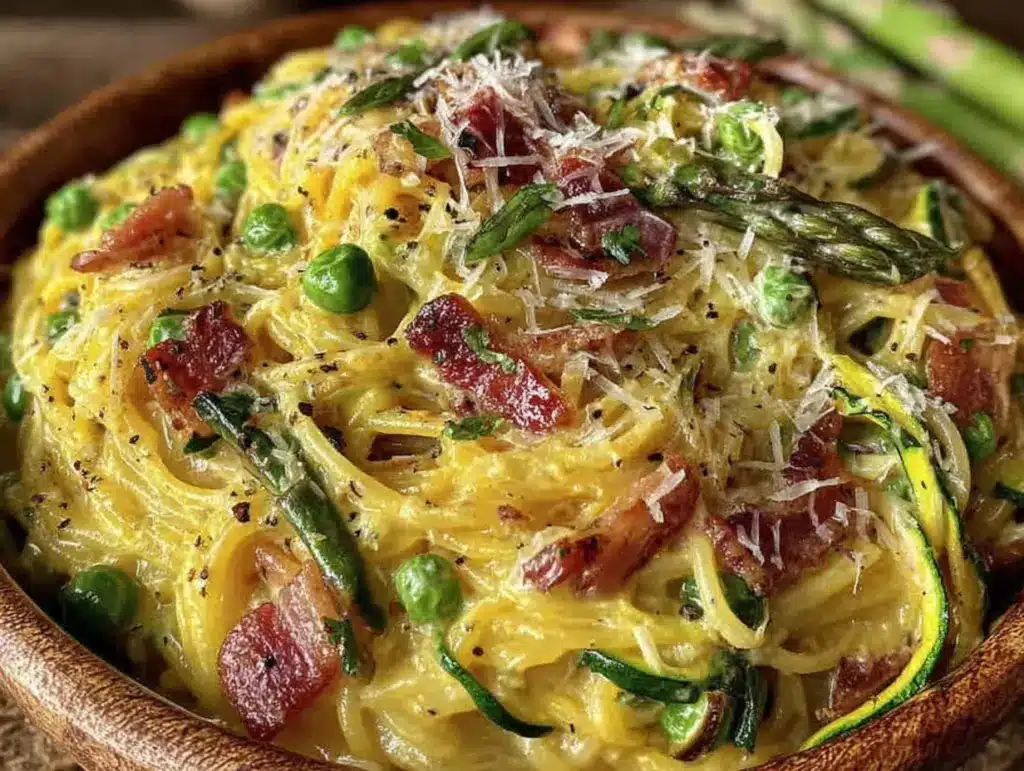
Surprise! The creamy sauce wrapped those tender-crisp veggies perfectly, and the crispy pancetta added that familiar punch of flavor I was craving. It wasn’t just a dinner hack—it quickly became my go-to springtime comfort. You know that moment when a dish feels cozy but also fresh and light? That’s what this creamy spring vegetable carbonara with crispy pancetta does. It’s like the best parts of comfort food met a garden party on your plate.
Since then, I’ve made this recipe more times than I care to admit—sometimes swapping in what’s fresh and seasonal, sometimes doubling the pancetta because, well, bacon fat makes everything better. It’s stuck around not just because it’s easy and delicious, but because it feels like a little celebration of spring in every bite. And honestly, it’s the kind of meal that makes you pause, close your eyes, and savor the moment—even on a chaotic day.
This recipe is one of those rare wins that happened by accident, but now I can’t imagine a spring without it. It’s creamy yet bright, indulgent yet refreshing, and perfectly balanced with the crispy pancetta’s savory crunch. If you’re looking for comfort with a twist or a new way to enjoy your spring veggies, this is the dish to try.
Why You’ll Love This Creamy Spring Vegetable Carbonara Recipe
From my kitchen experiments and countless dinners shared with friends, this creamy spring vegetable carbonara with crispy pancetta has earned its spot as a trusted recipe. It’s a blend of simple ingredients and thoughtful technique that anyone can pull off—even if you’re not really a baker or an experienced chef.
- Quick & Easy: Ready in about 30 minutes, this recipe suits busy weeknights or when you want a comforting dinner without the fuss.
- Simple Ingredients: No need for specialty stores—most of these ingredients are pantry staples or fresh produce you can find at any grocery store.
- Perfect for Spring Dinners: With seasonal veggies like asparagus and peas, this dish celebrates the flavors of spring beautifully.
- Crowd-Pleaser: Everyone—from kids to adults—loves the creamy texture paired with crispy pancetta’s savory punch.
- Unbelievably Delicious: The combination of the silky sauce, fresh vegetables, and crunchy pancetta is next-level comfort food that feels fancy but isn’t.
What sets this recipe apart is the way the sauce clings to tender spring vegetables, not just pasta. The secret? Gently cooking the veggies in the rendered pancetta fat before tossing everything together—this step infuses every bite with smoky richness. Plus, I use a blend of Parmigiano-Reggiano and Pecorino Romano for a perfectly balanced salty, nutty flavor. It’s not just another carbonara; it’s a fresh take that still honors the classic’s soul.
This recipe makes weeknight dinners feel special without stress. And honestly, it’s the kind of meal that sticks with you, the kind that you’ll want to make again and again—like I do, especially when I’m craving the cozy vibes of my one-pan butter Parmesan pasta but want something spring-inspired.
What Ingredients You Will Need
This creamy spring vegetable carbonara recipe uses straightforward, wholesome ingredients that come together for a rich, satisfying meal. Most are pantry staples with a few fresh touches that celebrate the season.
- Pasta: Spaghetti or linguine (8 ounces / 225 grams) – I stick with classic long pasta for a silky mouthfeel.
- Pancetta: 4 ounces (115 grams), diced – crisped until golden and crispy. Can substitute with guanciale or thick-cut bacon if needed.
- Spring Vegetables:
- 1 cup (150 grams) fresh or frozen peas – adds sweetness and pop.
- 1 cup (100 grams) asparagus, trimmed and cut into 1-inch pieces – tender yet crisp texture.
- Eggs: 2 large whole eggs + 1 large egg yolk – for that creamy, silky carbonara sauce.
- Cheese:
- ½ cup (50 grams) finely grated Parmigiano-Reggiano – nutty depth.
- ¼ cup (25 grams) finely grated Pecorino Romano – sharp, salty kick.
- Garlic: 2 cloves minced – adds aromatic warmth.
- Olive oil: 1 tablespoon – for sautéing veggies gently.
- Black pepper: Freshly cracked, to taste – essential for authentic carbonara bite.
- Salt: To taste – for pasta water and seasoning.
Pro tip: I prefer using organic eggs and Parmigiano-Reggiano from a trusted local cheese shop for the best flavor. If you want a vegetarian version, omit the pancetta and add a splash of smoked paprika for depth. For gluten-free pasta options, brown rice or chickpea pasta work well here.
Equipment Needed
- Large pot for boiling pasta – I find a 5-quart pot is just right for even cooking and room to toss.
- Large skillet or frying pan – preferably non-stick or stainless steel for crisping pancetta and sautéing veggies.
- Mixing bowl – to whisk eggs and cheese together.
- Tongs or pasta fork – for handling pasta without breaking strands.
- Fine grater or microplane – to grate cheese finely, ensuring smooth sauce.
- Colander or spider strainer – for draining pasta.
- Measuring cups and spoons – for accuracy, especially with cheese and oil.
If you don’t have a microplane, a regular box grater works fine but aim for the smallest holes to get that fine cheese. For crisping pancetta, I like a heavy-bottomed skillet because it distributes heat evenly, avoiding burning spots. And yes, a reliable timer is your best friend here to keep all the steps flowing smoothly.
Preparation Method
- Boil the pasta: Bring a large pot of salted water to a rolling boil. Add 8 ounces (225 grams) of spaghetti and cook according to package directions until al dente, usually about 8-9 minutes. Reserve 1 cup (240 ml) of pasta water before draining. (Tip: Salty pasta water is key for seasoning the sauce.)
- Crisp the pancetta: While pasta cooks, heat a large skillet over medium heat. Add 4 ounces (115 grams) diced pancetta and cook for 4-5 minutes until golden and crispy, stirring occasionally. Remove pancetta with a slotted spoon, leaving the rendered fat in the pan.
- Sauté the spring vegetables: To the same skillet with pancetta fat, add 1 tablespoon olive oil and 2 minced garlic cloves. Stir for 30 seconds until fragrant. Toss in 1 cup each of peas (fresh or frozen) and chopped asparagus. Cook for 3-4 minutes until veggies are tender but still have a bite. Season lightly with salt and cracked black pepper.
- Mix the sauce: In a mixing bowl, whisk together 2 large whole eggs, 1 egg yolk, ½ cup (50 grams) grated Parmigiano-Reggiano, ¼ cup (25 grams) grated Pecorino Romano, and a generous pinch of black pepper until smooth and creamy.
- Combine pasta and veggies: Add drained pasta to the skillet with sautéed vegetables over low heat. Toss gently to combine.
- Make it creamy: Remove skillet from heat completely (this is important to avoid scrambling eggs). Slowly pour the egg and cheese mixture over the pasta and veggies while tossing quickly with tongs. Add reserved pasta water a little at a time (start with ¼ cup / 60 ml) to loosen the sauce and achieve a silky texture that clings to every strand.
- Finish with pancetta: Stir in the crispy pancetta last, folding it gently into the creamy pasta. Taste and adjust seasoning with extra pepper or cheese if needed.
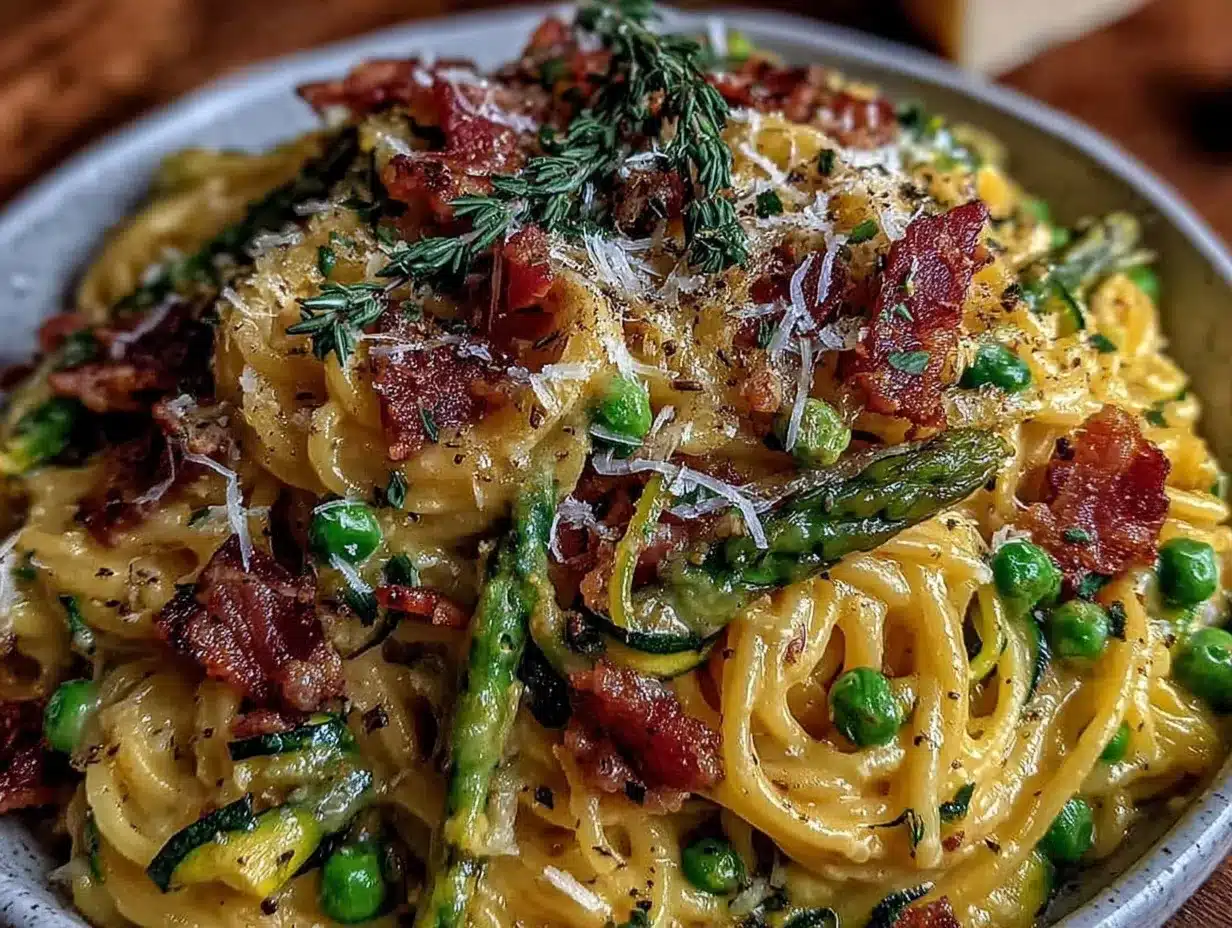
- Serve immediately: Plate the carbonara and add a final sprinkle of black pepper and grated cheese for a perfect finish.
Note: The key to success here is temperature control when adding the egg sauce—too hot and you’ll end up with scrambled eggs, too cold and the sauce won’t emulsify properly. Tossing quickly and adding pasta water in small increments helps create that signature creamy texture. If sauce feels too thick, add a splash more water; too thin, toss a bit longer off the heat.
Cooking Tips & Techniques for Perfect Carbonara Every Time
Carbonara can be intimidating, but a few tips make it almost foolproof. First, patience is your best friend—don’t rush the crisping of pancetta. Let it render slowly to get that deep, smoky flavor and crunchy texture.
When cooking your veggies, keep them slightly crisp to contrast the creamy sauce. Overcooked asparagus or peas turn mushy and lose their fresh appeal. And remember, adding olive oil before veggies helps them cook evenly without sticking.
One classic mistake is overheating the egg-cheese mixture. Always remove the pan from direct heat before adding it to the pasta. Tossing vigorously prevents scrambling and encourages a glossy sauce. If you’re nervous, temper the eggs by slowly whisking in a bit of hot pasta water first.
Timing is crucial—have your sauce ready before draining pasta, so everything comes together quickly. Multitasking helps, but don’t get distracted once you add the egg mixture; it sets fast.
Lastly, don’t skip the pasta water. The starches in the water are magic—they bind the sauce and pasta beautifully. I often toss a little extra pasta water while serving to keep the dish silky and moist.
Variations & Adaptations for Your Taste and Dietary Needs
This creamy spring vegetable carbonara is a flexible recipe that welcomes tweaks based on what you have or prefer.
- Vegetarian Version: Skip the pancetta and add smoked paprika or sautéed mushrooms for umami. You can also stir in some sun-dried tomatoes for sweetness and depth.
- Seasonal Veggie Swap: In summer, swap asparagus and peas for fresh zucchini ribbons and cherry tomatoes. Fall lovers can add roasted butternut squash cubes instead.
- Low-Carb Adaptation: Use spiralized zucchini noodles or shirataki pasta. Just reduce cooking time since these alternatives cook quickly.
- Dairy-Free Option: Replace Parmigiano and Pecorino with nutritional yeast for a cheesy flavor, and use a plant-based milk splash instead of pasta water for creaminess.
- Extra Protein: Add cooked chicken strips or shrimp for a heartier meal. I once tossed in leftover steak slices, and it was a game changer.
Serving & Storage Suggestions
Serve this creamy spring vegetable carbonara immediately, ideally on warmed plates to keep the sauce luscious longer. Garnish with an extra sprinkle of freshly cracked black pepper and a dusting of grated cheese for a restaurant-style finish.
This dish pairs beautifully with a crisp green salad dressed lightly in lemon vinaigrette or a side of garlic bread to sop up the sauce. For drinks, a chilled glass of Pinot Grigio or a sparkling water with lemon complements the flavors well.
Leftovers can be stored in an airtight container in the refrigerator for up to 2 days. When reheating, add a splash of water or broth and warm gently in a skillet over low heat to prevent the eggs from curdling. The pasta may thicken as it sits, but a little liquid and gentle heat bring back the creamy texture.
Flavors tend to mellow and blend overnight, making the next-day meal surprisingly good (if a bit less crisp on the pancetta).
Nutritional Information & Benefits
This creamy spring vegetable carbonara balances indulgence with nutrition. A typical serving contains approximately 550-600 calories, with 25 grams of protein, 50 grams of carbohydrates, and 20 grams of fat (mainly from pancetta and cheese). The inclusion of fresh peas and asparagus boosts fiber, vitamins A, C, and K, and provides antioxidants.
Pancetta offers protein and a savory punch, while eggs contribute essential amino acids and healthy fats. Using seasonal vegetables adds freshness and micronutrients, making this dish a well-rounded option for a satisfying dinner.
For those watching carbs or dairy, adaptations like zucchini noodles or nutritional yeast help tailor the dish without losing flavor. Just note pancetta contains pork, so it’s not suitable for all diets.
Conclusion
This creamy spring vegetable carbonara with crispy pancetta is one of those recipes that feels like a small celebration on the plate. It’s simple enough to make any night of the week but special enough to impress guests or turn an ordinary dinner into a memorable moment. I love how the fresh veggies brighten the rich sauce, and that crispy pancetta adds the perfect savory crunch every time.
Don’t hesitate to make it your own—swap veggies, add protein, or try new cheeses. It’s a forgiving recipe that rewards creativity. I’d love to hear how you put your spin on it or if it became a new favorite in your home.
Feel free to share your thoughts or questions below, and if you enjoy recipes with that perfect balance of creamy, crispy, and fresh, you might appreciate my sticky garlic chicken noodles for another cozy dinner idea.
Happy cooking and savor every bite!
FAQs About Creamy Spring Vegetable Carbonara with Crispy Pancetta
Can I use bacon instead of pancetta?
Yes, thick-cut bacon works well if pancetta isn’t available. Just cook it slowly to render fat and crisp it up nicely.
What’s the best pasta to use for carbonara?
Traditional carbonara uses spaghetti or linguine, but fettuccine or bucatini can also work. Choose a pasta that holds sauce well.
How do I prevent the eggs from scrambling in the sauce?
Remove the pan from heat before adding the egg mixture and toss quickly. Adding reserved pasta water gradually helps create a smooth, creamy sauce.
Can I make this recipe ahead of time?
It’s best served fresh, but leftovers can be refrigerated for up to 2 days. Reheat gently with a splash of water to maintain creaminess.
Is this recipe gluten-free?
Not as written, but you can use gluten-free pasta to make it safe for gluten-sensitive diets.
Pin This Recipe!
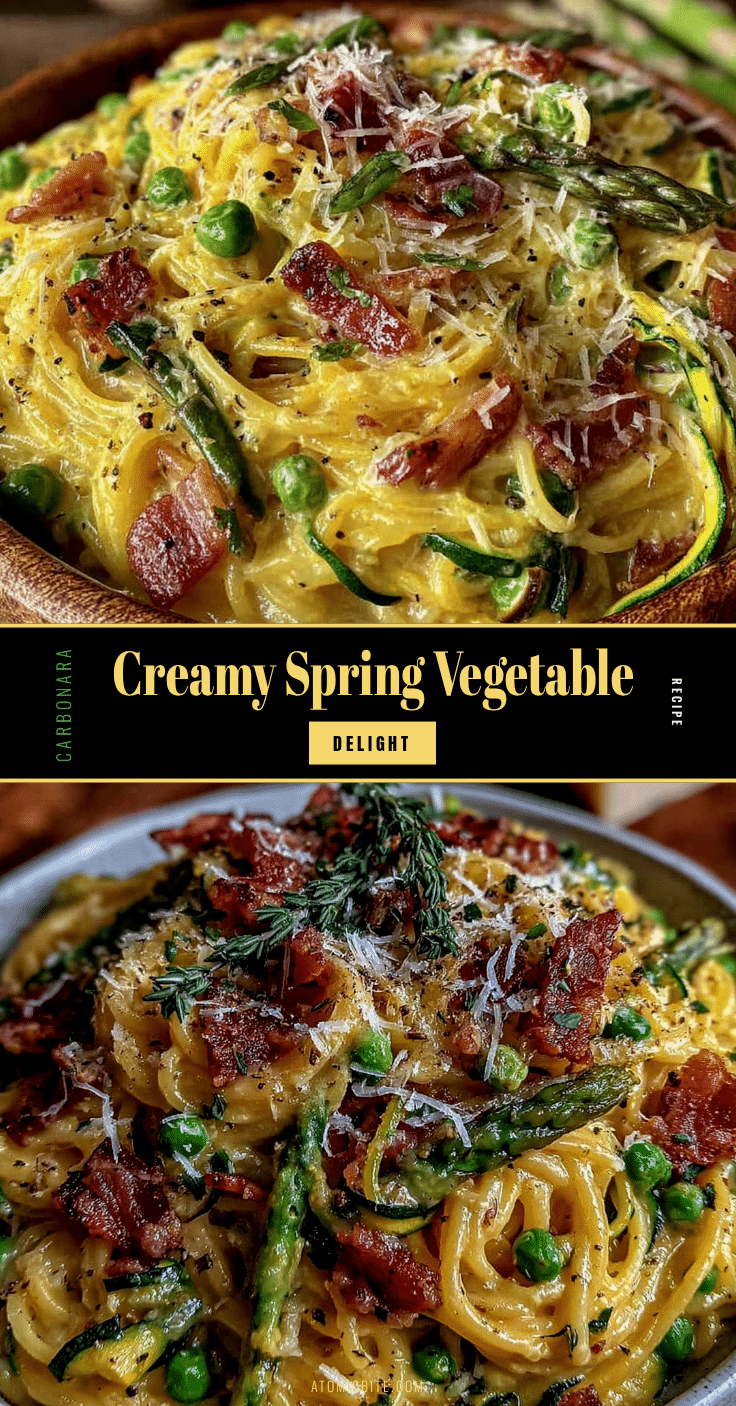
Creamy Spring Vegetable Carbonara with Crispy Pancetta

A fresh twist on classic carbonara featuring tender asparagus and peas in a creamy sauce with crispy pancetta, perfect for a quick and comforting spring dinner.
- Prep Time: 10 minutes
- Cook Time: 20 minutes
- Total Time: 30 minutes
- Yield: 4 servings 1x
- Category: Main Course
- Cuisine: Italian
Ingredients
- 8 ounces (225 grams) spaghetti or linguine
- 4 ounces (115 grams) diced pancetta
- 1 cup (150 grams) fresh or frozen peas
- 1 cup (100 grams) asparagus, trimmed and cut into 1-inch pieces
- 2 large whole eggs
- 1 large egg yolk
- ½ cup (50 grams) finely grated Parmigiano-Reggiano
- ¼ cup (25 grams) finely grated Pecorino Romano
- 2 cloves garlic, minced
- 1 tablespoon olive oil
- Freshly cracked black pepper, to taste
- Salt, to taste
Instructions
- Bring a large pot of salted water to a rolling boil. Add 8 ounces (225 grams) of spaghetti and cook according to package directions until al dente, about 8-9 minutes. Reserve 1 cup (240 ml) of pasta water before draining.
- While pasta cooks, heat a large skillet over medium heat. Add 4 ounces (115 grams) diced pancetta and cook for 4-5 minutes until golden and crispy, stirring occasionally. Remove pancetta with a slotted spoon, leaving the rendered fat in the pan.
- To the same skillet with pancetta fat, add 1 tablespoon olive oil and 2 minced garlic cloves. Stir for 30 seconds until fragrant. Toss in 1 cup each of peas and chopped asparagus. Cook for 3-4 minutes until veggies are tender but still crisp. Season lightly with salt and cracked black pepper.
- In a mixing bowl, whisk together 2 large whole eggs, 1 egg yolk, ½ cup grated Parmigiano-Reggiano, ¼ cup grated Pecorino Romano, and a generous pinch of black pepper until smooth and creamy.
- Add drained pasta to the skillet with sautéed vegetables over low heat. Toss gently to combine.
- Remove skillet from heat completely. Slowly pour the egg and cheese mixture over the pasta and veggies while tossing quickly with tongs. Add reserved pasta water a little at a time (start with ¼ cup / 60 ml) to loosen the sauce and achieve a silky texture.
- Stir in the crispy pancetta last, folding it gently into the creamy pasta. Taste and adjust seasoning with extra pepper or cheese if needed.
- Serve immediately with a final sprinkle of black pepper and grated cheese.
Notes
Control the temperature carefully when adding the egg mixture to avoid scrambling. Toss quickly and add pasta water gradually to create a silky sauce. Use salty pasta water for seasoning. For vegetarian version, omit pancetta and add smoked paprika or sautéed mushrooms. Gluten-free pasta can be used as a substitute.
Nutrition
- Serving Size: 1 serving (about 1/4
- Calories: 575
- Sugar: 4
- Sodium: 600
- Fat: 20
- Saturated Fat: 7
- Carbohydrates: 50
- Fiber: 5
- Protein: 25
Keywords: carbonara, spring vegetables, pancetta, creamy pasta, asparagus, peas, easy dinner, quick recipe, comfort food