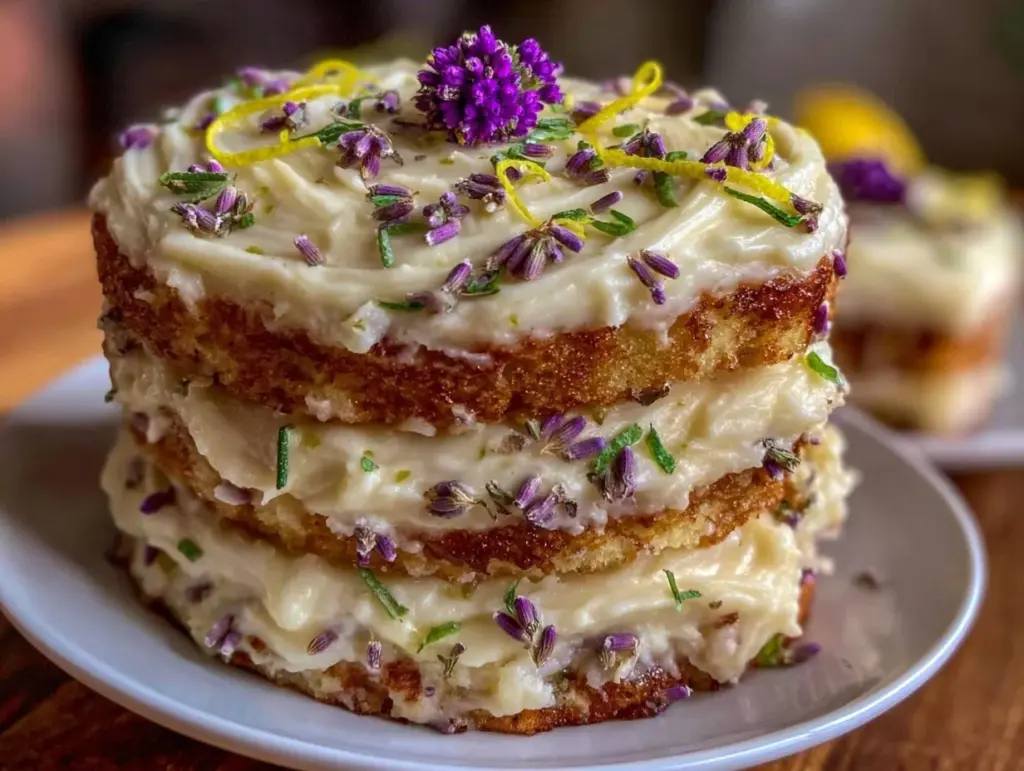
“Mom, you’ve got a surprise waiting in the kitchen,” I texted her on a busy Saturday morning. Truth be told, I was halfway through baking this Perfect Lemon Lavender Layer Cake, not quite sure if the flavors would hit the right note. You know, lemon and lavender aren’t your everyday cake combo—sometimes it’s a gamble. But there was something about that crisp, sunny lemon zest mingling with the gentle floral whisper of lavender that felt like a secret handshake between spring and celebration.
I remember the afternoon sunlight spilling through the kitchen window, the faint hum of bees outside, and the way the cake batter smelled—bright, fresh, and oddly calming. Mom was due for a special treat, and honestly, after a few trial runs (yes, I made this cake three times in one week), I found the balance that made her eyes light up with that quiet, “this is just right” smile. It wasn’t flashy or over the top, just a homemade cake that felt like a warm hug wrapped in delicate flavors.
There’s something about baking for someone you love that changes the whole game. This recipe stuck with me because it’s not just cake; it’s a little moment of calm and sweetness on a day that’s all about her. If you’ve ever wondered how to make a memorable dessert that feels personal but isn’t a kitchen headache, this might just be the one you come back to again and again.
Why You’ll Love This Recipe
After testing this Perfect Lemon Lavender Layer Cake multiple times, I can say it’s the kind of recipe that earns its spot in your baking rotation. Here’s why it stands out:
- Quick & Easy: The layers come together in about 45 minutes, making it perfect for those last-minute celebrations or spontaneous mom moments.
- Simple Ingredients: No need for exotic shopping trips. Basic pantry staples and a touch of culinary lavender bring this cake to life.
- Perfect for Special Days: Whether it’s Mother’s Day, a birthday, or just a quiet Sunday, this cake feels special without being complicated.
- Crowd-Pleaser: Kids and adults alike tend to ask for seconds. The lemon zest brightens the cake while lavender adds a subtle twist that intrigues but doesn’t overwhelm.
- Unbelievably Delicious: Moist layers with a light crumb and a silky lemon buttercream frosting—this cake is all about texture and balance.
What sets this recipe apart? It’s the gentle infusion of culinary lavender, which I learned to use just right after a few attempts (too much and it gets soapy; too little, and you miss the magic). Plus, the frosting incorporates fresh lemon juice, not just zest, giving it a vibrant tang that cuts through sweetness. Honestly, it’s the kind of cake that makes you pause mid-bite and appreciate the little things.
This recipe brings a fresh, floral twist to classic lemon desserts, making it a lovely surprise for anyone who thinks they’ve tried it all. It’s comforting yet sophisticated—perfect for impressing mom without the stress.
What Ingredients You Will Need
This Perfect Lemon Lavender Layer Cake relies on straightforward, wholesome ingredients that work together to create a fresh and inviting flavor profile. Most of these are pantry staples, with just a few special touches.
- All-purpose flour (2 ½ cups / 315g) – for a tender crumb; I prefer King Arthur for consistent results.
- Baking powder (2 ½ tsp) – helps the cake rise beautifully.
- Salt (½ tsp) – balances sweetness.
- Unsalted butter (1 cup / 226g), softened – provides richness and moisture.
- Granulated sugar (1 ¾ cups / 350g) – sweetens the cake layers nicely.
- Large eggs (4), room temperature – add structure and tenderness.
- Whole milk (1 cup / 240ml) – keeps the cake moist; can swap with almond milk if dairy-free.
- Fresh lemon zest (from 2 lemons) – the star of the show, providing bright citrus notes.
- Fresh lemon juice (3 tablespoons) – adds tang to both batter and frosting.
- Culinary lavender buds (1 ½ teaspoons), finely ground – use food-grade lavender only to avoid bitterness.
- Powdered sugar (4 cups / 480g) – for the lemon buttercream frosting.
- Vanilla extract (1 teaspoon) – rounds out the flavor.
Optional but recommended:
- Buttercream stabilizer – if you’re planning on frosting in a warm kitchen.
- Edible flowers – for decoration, if you want to add a pretty touch to the top.
If you’re looking to swap things out, almond flour can replace some of the all-purpose flour for a nuttier texture and a slight gluten-free twist, but the cake won’t rise quite the same. For a vegan version, try a plant-based butter and flax eggs, though I haven’t tested that myself yet.
Equipment Needed
Making this cake is straightforward, and you don’t need fancy equipment, but there are a few tools that really help:
- Two 8-inch round cake pans – I like using non-stick pans for easy release, but lining with parchment paper works just as well.
- Electric mixer (stand or hand) – essential for creaming butter and sugar properly and for smooth frosting.
- Mixing bowls – at least two, for wet and dry ingredients.
- Microplane grater – perfect for zesting lemons and grinding lavender finely.
- Rubber spatula – for folding batter gently without deflating it.
- Measuring cups and spoons – accuracy matters, especially with baking powder and lavender.
- Cooling racks – to let the cake layers cool evenly before frosting.
If you don’t have a microplane, a very fine grater or sharp knife will do for zesting. For grinding lavender, a small mortar and pestle or a clean coffee grinder works wonders.
Preparation Method
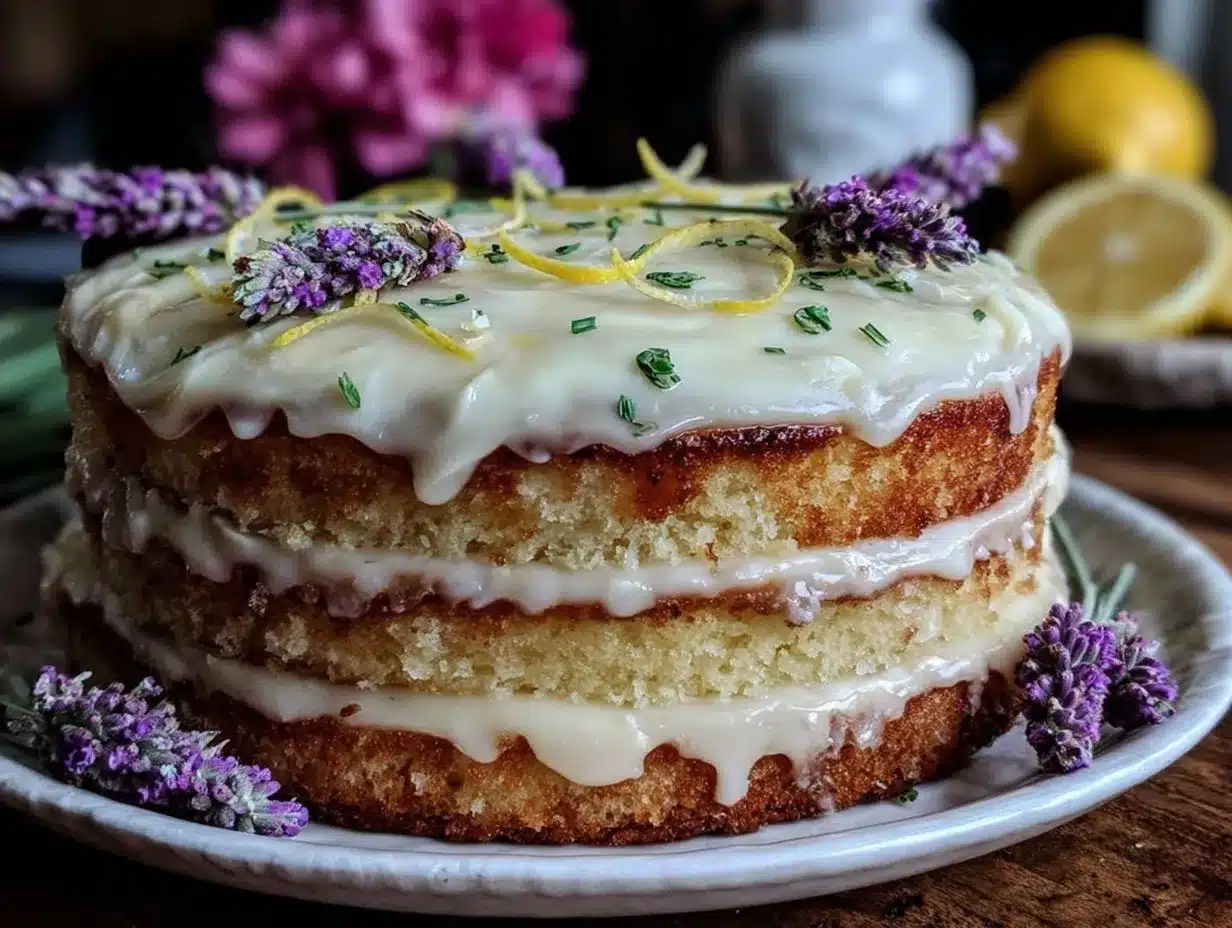
- Preheat your oven to 350°F (175°C). Grease and flour two 8-inch cake pans or line with parchment paper. This step ensures the cakes come out cleanly.
- Mix the dry ingredients: In a medium bowl, sift together 2 ½ cups (315g) all-purpose flour, 2 ½ teaspoons baking powder, and ½ teaspoon salt. Stir in 1 ½ teaspoons finely ground culinary lavender. The lavender should be subtle but present, so don’t skip this step.
- Cream the butter and sugar: In a large bowl, use an electric mixer to beat 1 cup (226g) softened unsalted butter with 1 ¾ cups (350g) granulated sugar until pale and fluffy—about 4-5 minutes. This aerates your batter for a light texture.
- Add eggs one at a time: Beat in 4 large eggs, room temperature, one by one, making sure each is fully incorporated before adding the next. Scrape the bowl occasionally to keep everything well mixed.
- Incorporate lemon zest and vanilla: Stir in the zest of 2 lemons and 1 teaspoon vanilla extract for that bright, aromatic base flavor.
- Alternate adding dry ingredients and milk: Gradually add the dry flour mixture in three parts, alternating with 1 cup (240ml) whole milk and 3 tablespoons fresh lemon juice. Begin and end with the dry ingredients. Mix gently each time—overmixing can make the cake tough.
- Divide batter evenly: Pour the batter equally into the prepared pans. Tap the pans gently on the counter to release any air bubbles.
- Bake: Place pans on the middle rack and bake for 28-32 minutes. Insert a toothpick into the center—it should come out clean or with a few moist crumbs. Avoid overbaking to keep layers moist.
- Cool completely: Let the cakes cool in pans for 10 minutes, then turn out onto wire racks to cool fully. Patience here pays off; frosting warm cake melts and slides off.
- Prepare the lemon buttercream frosting: In a large bowl, beat 1 cup (226g) softened unsalted butter until creamy. Gradually add 4 cups (480g) powdered sugar, 3 tablespoons fresh lemon juice, and a pinch of salt. Beat until fluffy and spreadable. Adjust lemon juice or sugar to your desired consistency. If frosting seems too soft, chill for 10 minutes.
- Assemble the cake: Place one cake layer on a serving plate. Spread a thick, even layer of frosting on top. Add the second layer and frost the top and sides smoothly. For a pretty finish, use a spatula or piping bag.
- Optional decoration: Scatter edible flowers or a light dusting of powdered sugar for a delicate presentation.
Quick tip: If your frosting gets too soft while assembling, pop it in the fridge for 15 minutes to firm up before continuing. Also, be gentle when spreading to keep those layers intact.
Cooking Tips & Techniques
Getting this cake just right took a few rounds of trial and error, so here are some tips I swear by:
- Don’t skip room temperature eggs and butter. Cold ingredients won’t blend well, leading to a dense cake.
- Be careful with lavender. Culinary lavender is potent—too much gives a soapy taste. Grinding it finely and measuring precisely is key.
- Use fresh lemon zest and juice. Bottled lemon juice won’t give the same bright, fresh flavor.
- Mix batter gently. Overmixing develops gluten, which can toughen the crumb.
- Check your oven temperature. Oven temps vary, so test with an oven thermometer if you can. Too hot and the cake browns too fast; too cool and it won’t rise well.
- Let cakes cool completely before frosting. This avoids melting the frosting and keeps it smooth.
- For even layers, weigh your batter. Use a kitchen scale to split the batter evenly between pans.
One time, I rushed and frosted right out of the oven—let’s just say it was a mess that tasted good but looked like a disaster. Learned my lesson there!
Variations & Adaptations
If you want to shake things up or accommodate dietary needs, here are some ways to adapt this cake:
- Gluten-Free: Swap all-purpose flour for a 1:1 gluten-free baking blend. Add ½ tsp xanthan gum if your blend lacks it for structure.
- Vegan: Use vegan butter and substitute eggs with flax eggs (1 tbsp flaxseed meal + 3 tbsp water per egg). Use plant-based milk like oat or almond.
- Herbal Twist: Replace lavender with fresh thyme or rosemary for a different floral-herbal note. Use sparingly to avoid overpowering.
- Berry Burst: Add fresh or frozen blueberries between layers or swirl into the batter for a fruity surprise.
- Frosting Alternatives: Try cream cheese frosting with lemon zest for tangy richness or a light whipped coconut cream for dairy-free options.
I once tried adding a drizzle of honey lavender syrup between layers for an extra floral pop—delicious but a bit sweet, so I’d recommend cutting back on the sugar in the frosting if you do that.
Serving & Storage Suggestions
This Perfect Lemon Lavender Layer Cake shines when served at room temperature. The flavors are more pronounced, and the texture is tender. Here’s how I like to serve and store it:
- Serving: Slice with a warm knife for clean cuts. Pair with a light tea like Earl Grey or a cold glass of sparkling lemonade.
- Presentation: A few edible flowers or a light dusting of powdered sugar adds charm without fuss.
- Storing: Keep covered in the fridge for up to 3 days. Bring to room temp before serving to enjoy the full flavor.
- Freezing: Wrap individual layers tightly in plastic wrap and foil, freeze up to 1 month. Thaw in the fridge overnight and frost the next day.
- Reheating: Avoid microwaving whole slices—it changes the texture. Instead, let it warm naturally at room temperature.
Flavors tend to mellow and deepen after a day, making leftovers even better. This cake pairs well with light brunch dishes like the crispy baked ham and cheese croissants, creating a delightful spread for any special morning.
Nutritional Information & Benefits
This lemon lavender cake isn’t just a pretty face; it offers some nutritional perks too. A typical slice (1/12th of the cake) contains approximately:
| Calories | 350 |
|---|---|
| Fat | 18g (mostly from butter) |
| Carbohydrates | 45g |
| Protein | 4g |
Lemon provides vitamin C and antioxidants, while culinary lavender is known for its calming properties. The cake is naturally gluten-containing but can easily be adapted for gluten-free diets. It does contain dairy and eggs, so it’s not suitable for those with allergies to those ingredients.
From my perspective, this cake strikes a nice balance between indulgence and thoughtful ingredient choices. It’s a treat that feels wholesome enough for a special occasion without tipping too far into sugar overload.
Conclusion
This Perfect Lemon Lavender Layer Cake has become my go-to for treating Mom on her day, and honestly, for whenever I want to bring a little sunshine into the kitchen. The blend of citrus and floral notes is subtle but memorable, which makes it stand apart from the usual cake crowd. I encourage you to give it a try, tweaking the lavender or lemon intensity to suit your taste buds.
It’s forgiving enough for bakers who aren’t “really bakers” but rewarding enough to impress the most discerning dessert lovers. If you want something special that feels both homemade and a touch fancy, this cake delivers.
Feel free to share how you make it your own, whether that’s adding berries or swapping the frosting, and let me know if it becomes your mom’s new favorite too!
FAQs
Can I make this cake ahead of time?
Yes! You can bake the layers a day or two in advance and keep them wrapped tightly in the fridge. Frost the cake on the day you plan to serve for the best texture.
Is it okay to use dried lavender instead of fresh?
Use only culinary-grade dried lavender buds, not fresh. Fresh lavender isn’t typically used in baking because it’s too strong and woody. Dried buds ground finely work best for this recipe.
How can I prevent the cake from becoming dry?
Don’t overbake and be sure to measure flour correctly (spoon and level, don’t scoop). Also, using room temperature ingredients helps maintain moisture.
Can I substitute the butter with oil?
Butter gives this cake its rich flavor and texture, but you can replace half the butter with a neutral oil like vegetable oil for a moister crumb. Full substitution will change the flavor and texture significantly.
What if I don’t have lemon juice—can I use bottled lemon juice?
Fresh lemon juice is best for bright flavor. Bottled juice can be used in a pinch, but the taste will be less vibrant. Adjust sugar slightly if your bottled juice is sweetened.
Pin This Recipe!
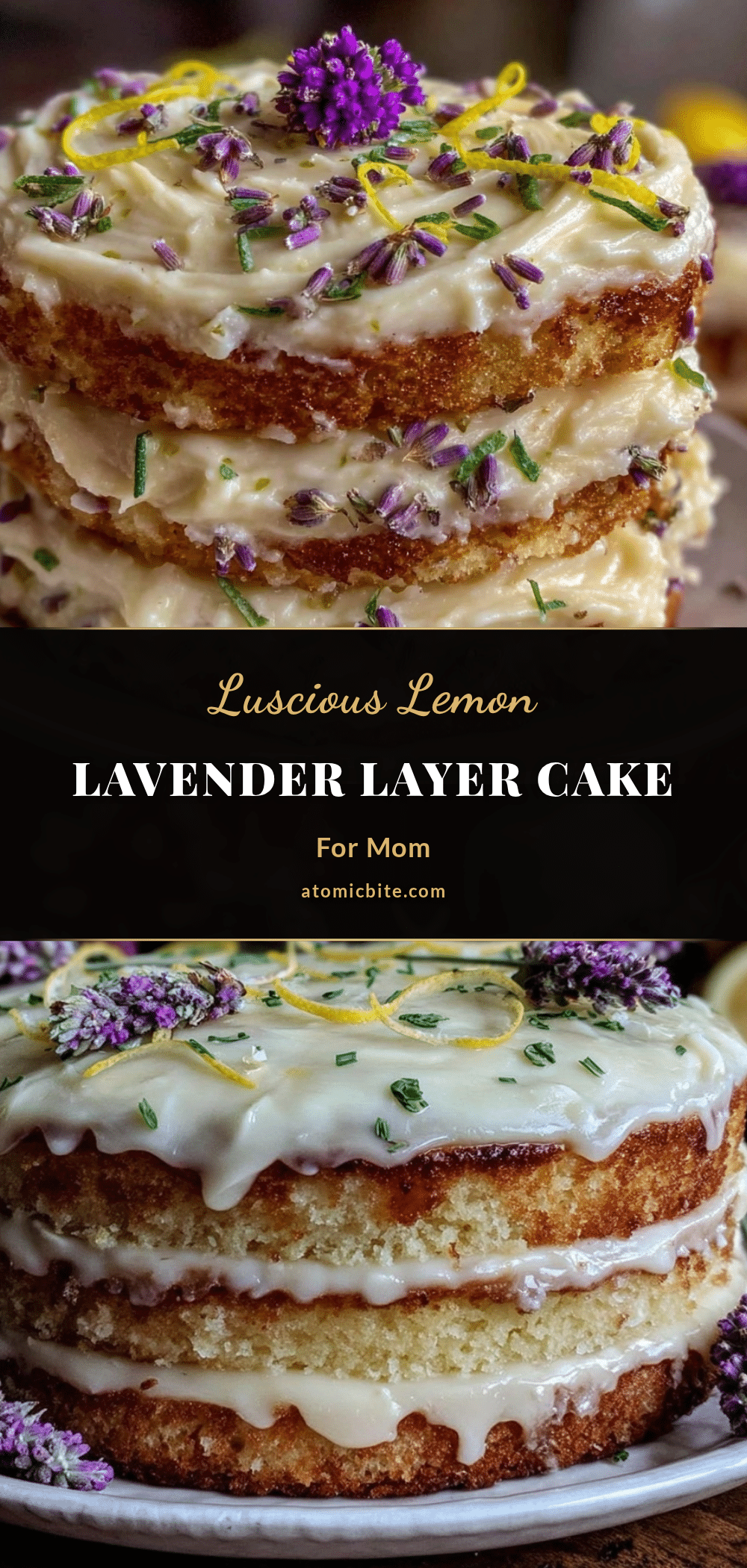
Perfect Lemon Lavender Layer Cake

A moist and delicate lemon cake infused with culinary lavender, layered with a silky lemon buttercream frosting. Perfect for special occasions like Mother’s Day or any celebration.
- Prep Time: 15 minutes
- Cook Time: 30 minutes
- Total Time: 45 minutes
- Yield: 12 servings 1x
- Category: Dessert
- Cuisine: American
Ingredients
- 2 ½ cups (315g) all-purpose flour
- 2 ½ teaspoons baking powder
- ½ teaspoon salt
- 1 ½ teaspoons finely ground culinary lavender buds
- 1 cup (226g) unsalted butter, softened
- 1 ¾ cups (350g) granulated sugar
- 4 large eggs, room temperature
- 1 cup (240ml) whole milk (can substitute almond milk for dairy-free)
- Zest of 2 lemons
- 3 tablespoons fresh lemon juice
- 4 cups (480g) powdered sugar
- 1 teaspoon vanilla extract
- Pinch of salt (for frosting)
- Optional: buttercream stabilizer (for warm kitchens)
- Optional: edible flowers (for decoration)
Instructions
- Preheat oven to 350°F (175°C). Grease and flour two 8-inch cake pans or line with parchment paper.
- In a medium bowl, sift together flour, baking powder, salt, and finely ground culinary lavender.
- In a large bowl, beat softened butter and granulated sugar with an electric mixer until pale and fluffy, about 4-5 minutes.
- Add eggs one at a time, beating well after each addition and scraping the bowl as needed.
- Stir in lemon zest and vanilla extract.
- Alternately add the dry ingredients and milk with lemon juice in three parts, beginning and ending with the dry ingredients. Mix gently to avoid overmixing.
- Divide batter evenly between prepared pans and tap pans gently to release air bubbles.
- Bake for 28-32 minutes or until a toothpick inserted in the center comes out clean or with a few moist crumbs.
- Cool cakes in pans for 10 minutes, then turn out onto wire racks to cool completely.
- For frosting, beat softened butter until creamy. Gradually add powdered sugar, lemon juice, and a pinch of salt. Beat until fluffy and spreadable. Chill if too soft.
- Assemble cake by placing one layer on a plate, spreading frosting evenly on top, then adding the second layer and frosting the top and sides smoothly.
- Optionally decorate with edible flowers or a light dusting of powdered sugar.
Notes
[‘Use room temperature eggs and butter for best texture.’, ‘Measure lavender carefully to avoid a soapy taste.’, ‘Use fresh lemon zest and juice for bright flavor.’, ‘Mix batter gently to avoid tough cake.’, ‘Check oven temperature with a thermometer for accuracy.’, ‘Cool cakes completely before frosting to prevent melting.’, ‘Weigh batter to ensure even layers.’, ‘If frosting softens during assembly, chill for 10-15 minutes.’, ‘Butter can be partially substituted with neutral oil for moister crumb but will alter flavor and texture.’]
Nutrition
- Serving Size: 1 slice (1/12th of c
- Calories: 350
- Fat: 18
- Carbohydrates: 45
- Protein: 4
Keywords: lemon cake, lavender cake, layer cake, lemon buttercream, homemade dessert, Mother's Day cake, floral cake, easy cake recipe