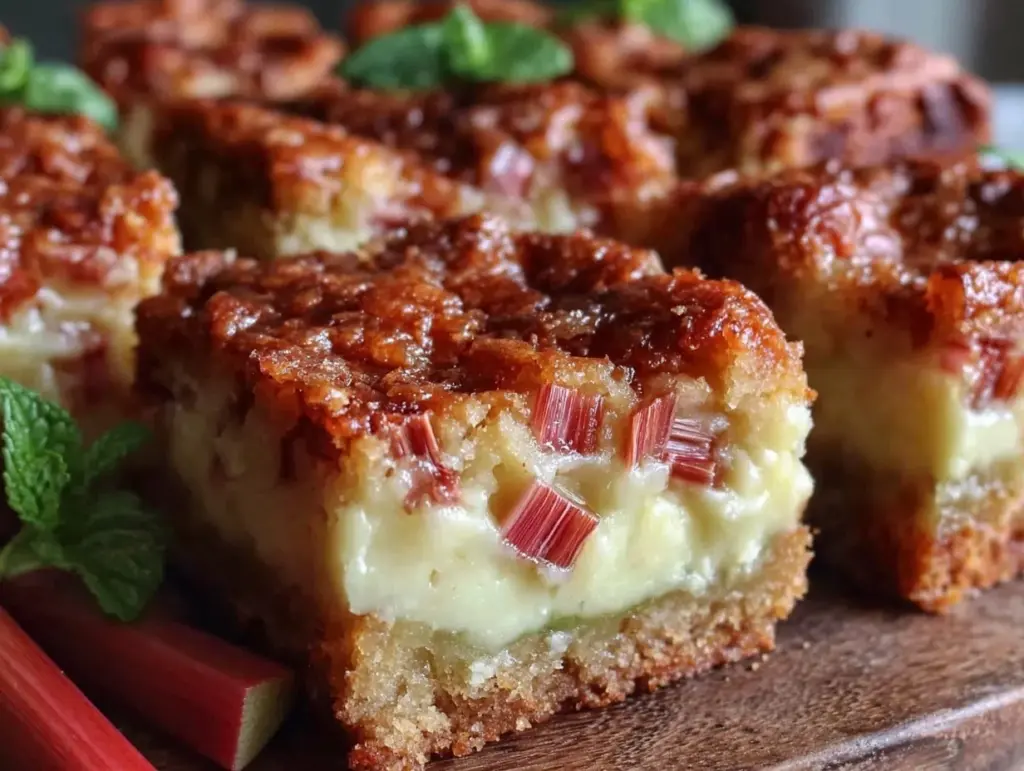
“You’ve got rhubarb? What are you planning to do with it?” My neighbor’s skeptical voice echoed as I held up the bright crimson stalks, fresh from my garden patch. Honestly, I wasn’t sure at first either. Rhubarb had always seemed like a tricky ingredient—too tart, too odd, and honestly, a bit intimidating. But one late afternoon, tired and craving something sweet yet refreshing, I fiddled around in the kitchen and made what would soon become my favorite tangy rhubarb custard bars with buttery shortbread crust. The crust was flaky but sturdy enough to hold that silky custard, and the rhubarb brought just the right punch of tartness without overwhelming the balance.
I found myself making these bars more than a few times that week—sometimes for a quick treat, other times as a surprise for friends stopping by. They weren’t just dessert; they felt like a small celebration of spring’s bounty, something honest and comforting. Those bars have stuck with me because they remind me that sometimes the simplest ingredients, like rhubarb and butter, can come together in unexpectedly delightful ways. No fancy gadgets or hard-to-find ingredients, just a quiet moment in the kitchen and a recipe worth trusting.
Why You’ll Love This Recipe
This tangy rhubarb custard bars recipe is one of those gems that’s easy to make but leaves a lasting impression. I’ve tested it countless times, and it reliably delivers that perfect blend of tart and sweet, with a crust that’s nothing short of addictive.
- Quick & Easy: Ready in about an hour from start to finish, perfect for squeezing into busy days.
- Simple Ingredients: Uses pantry basics and seasonal rhubarb—no need for specialty shopping.
- Perfect for Spring & Summer: Ideal for brunches, potlucks, or afternoon coffee breaks.
- Crowd-Pleaser: Kids and adults alike ask for seconds without hesitation.
- Unbelievably Delicious: The contrast of buttery crust, creamy custard, and tangy rhubarb is next-level comfort food.
What makes this recipe stand out? For one, the shortbread crust is buttery but not greasy, with just the right crumbly texture that supports the custard without getting soggy. I also blend the rhubarb into the custard filling rather than just layering chunks on top, which gives it a smooth yet tangy profile. It’s a subtle trick that transforms ordinary rhubarb bars into something that makes you close your eyes with the first bite.
Honestly, these bars aren’t just dessert—they’re a little moment of joy that’s easy to pull off, whether you’re impressing guests or treating yourself after a long day. If you’ve enjoyed treats like the maraschino cherry shortbread cookies, you’ll appreciate how this recipe brings that same buttery base to a new, tangy level.
What Ingredients You Will Need
This recipe uses simple, wholesome ingredients to deliver bold flavor and satisfying texture without the fuss. Most are pantry staples, and the rhubarb can be fresh or frozen depending on the season.
- For the Buttery Shortbread Crust:
- All-purpose flour – 1 ¾ cups (220 g), sifted for a tender crumb
- Granulated sugar – ⅓ cup (65 g), adds subtle sweetness
- Unsalted butter – ¾ cup (170 g), softened (I prefer Kerrygold for depth of flavor)
- Salt – ¼ teaspoon, balances sweetness
- Vanilla extract – 1 teaspoon, for a warm aroma
- For the Tangy Rhubarb Custard Filling:
- Fresh rhubarb – 2 cups chopped (about 250 g), or frozen if fresh isn’t available
- Granulated sugar – ½ cup (100 g), adjust slightly if your rhubarb is very tart
- Large eggs – 3, room temperature for smooth mixing
- Heavy cream – 1 cup (240 ml), adds richness (can substitute half-and-half for lighter bars)
- All-purpose flour – 2 tablespoons (16 g), helps thicken the custard
- Salt – a pinch, to enhance flavor
- Lemon zest – 1 teaspoon, optional but recommended for brightness
If rhubarb isn’t your jam or you want to tweak this, frozen strawberries or raspberries are a nice seasonal swap, though the tang won’t be quite the same. For a gluten-free crust, almond flour works well but expect a different texture—more crumbly, less shortbread-like.
Equipment Needed
You don’t need anything fancy to make these bars, which is part of the charm. Here’s what I use:
- 8×8-inch (20×20 cm) square baking pan – glass or metal both work fine.
- Mixing bowls – one for crust, one for custard.
- Electric mixer or sturdy whisk – makes combining the butter and sugar easier.
- Measuring cups and spoons – precise measurements make all the difference.
- Rubber spatula – for folding and scraping the batter smoothly.
- Food processor (optional) – handy for making the crust quickly, but you can also mix by hand.
- Fine mesh sieve or blender – useful if you want an ultra-smooth rhubarb puree for the custard.
If you don’t have a food processor, no worries. I once made the crust by hand using just a fork and patience—it took a bit longer but the results were still delicious. For budget-friendly baking pans, I like using a sturdy aluminum pan with a nonstick coating; it heats evenly and cleans easily.
Preparation Method
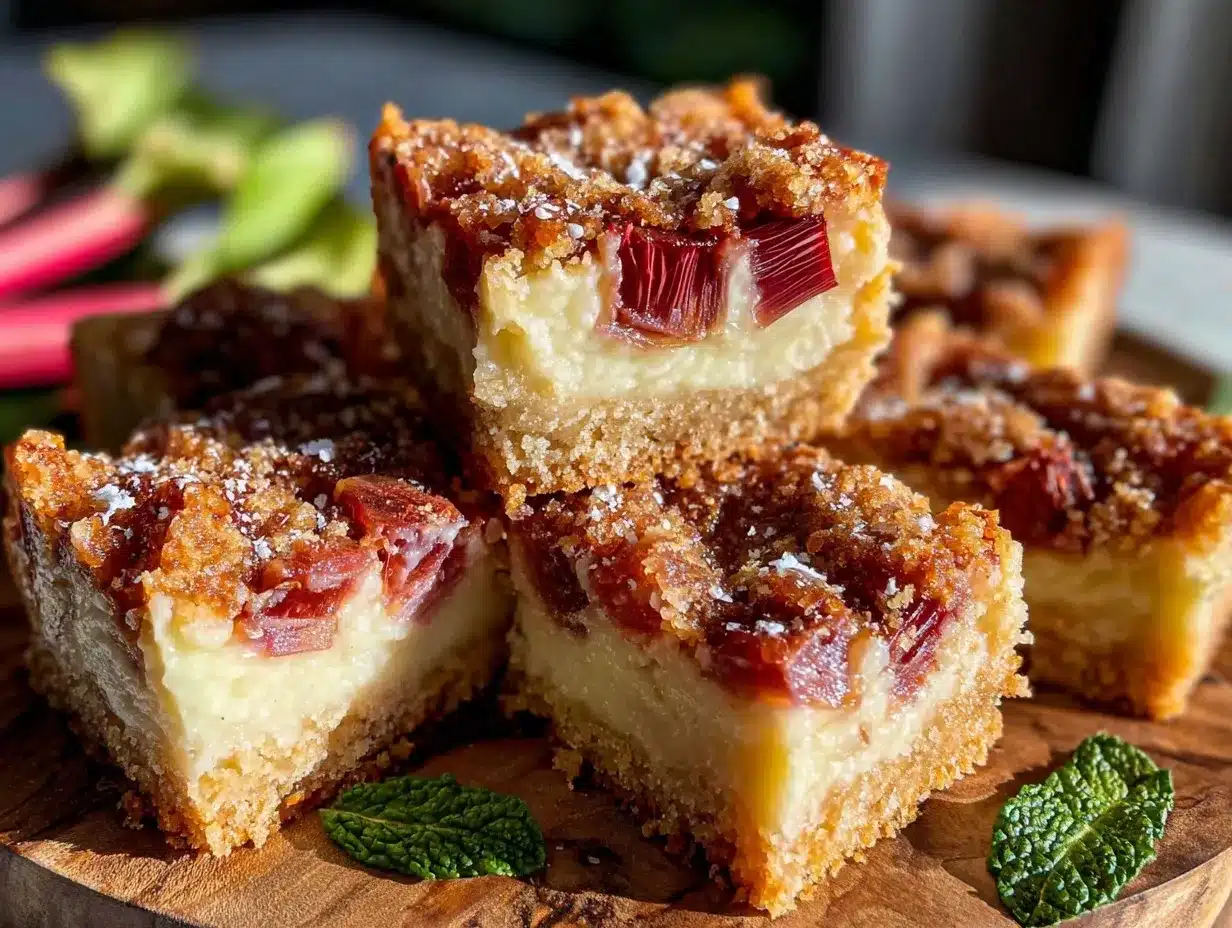
- Prepare the Crust: Preheat your oven to 350°F (175°C). In a mixing bowl, cream the softened butter with granulated sugar until light and fluffy (about 3-4 minutes). Add vanilla extract and salt, then gradually mix in the sifted flour until just combined. The dough should come together but remain slightly crumbly.
Tip: Don’t overwork the dough or the crust will get tough. - Press and Bake the Crust: Transfer the dough into your greased 8×8-inch pan. Press it evenly into the bottom using your fingers or the back of a spoon, making sure it’s compact. Bake for 18-20 minutes until the edges turn a light golden brown. Remove from oven and let cool slightly.
Note: The crust will firm up as it cools, crucial for holding the custard layer. - Prepare the Rhubarb Custard Filling: While the crust bakes, chop fresh rhubarb into small pieces. Place in a blender or food processor and pulse until finely pureed but not watery (you want some texture). In a bowl, whisk together eggs, sugar, heavy cream, flour, salt, and lemon zest until smooth. Fold in the rhubarb puree gently.
Advice: If you don’t have a blender, finely chop rhubarb and cook it down slightly on the stove to soften before mixing. - Assemble and Bake: Pour the rhubarb custard evenly over the warm crust. Return the pan to the oven and bake for 30-35 minutes at 350°F (175°C) until the custard is set and just slightly jiggly in the center.
Sensory cue: The bars should be lightly golden on top and smell like a buttery lemon-rhubarb dream. - Cool and Serve: Let the bars cool completely in the pan on a wire rack, then refrigerate for at least 2 hours to fully set. Cut into squares and enjoy.
Pro tip: Use a sharp knife dipped in hot water and wiped dry to get clean edges.
Cooking Tips & Techniques
One lesson I learned early is that getting the crust right is half the battle. The butter needs to be softened, not melted—otherwise, the dough won’t crumb properly. When mixing the crust, watch your flour carefully; too much and the crust gets dry, too little and it falls apart.
For the rhubarb filling, pureeing rather than chunking the rhubarb helped me avoid that overly tart surprise bite. Blending it smooth but keeping some texture means the custard holds its tang without shocking your palate. If you’re using frozen rhubarb, thaw and drain it well to avoid excess moisture diluting your custard.
Timing is key: the crust needs a head start in the oven, so it doesn’t get soggy under the custard. I like to multitask by prepping the filling as the crust bakes—keeps things moving smoothly. Don’t rush the cooling step; these bars need time to firm up or you’ll have a messy slice.
Lastly, I use a glass pan often because it heats evenly and you can watch the custard’s progress without opening the oven door too much. If you want to try something a little different, the crispy baked ham and cheese croissants taught me a lot about how heat interacts with buttery doughs, which helped improve my crust technique here.
Variations & Adaptations
This recipe is pretty versatile, and I’ve played around with a few tweaks to suit different tastes and dietary needs.
- Berry Rhubarb Bars: Stir in a handful of fresh raspberries or blueberries with the rhubarb puree for extra fruity complexity.
- Vegan Version: Substitute butter with coconut oil or vegan margarine, and replace eggs with a chia or flaxseed egg. Use coconut cream instead of heavy cream for richness.
- Gluten-Free Crust: Swap all-purpose flour for a gluten-free blend or almond flour. Note: almond flour will make the crust more crumbly but still delicious.
- Spiced Custard: Add a pinch of ground ginger or cinnamon to the custard for a warm twist that pairs beautifully with rhubarb’s tang.
One variation I keep coming back to is adding a thin layer of creamy apple delight between the crust and custard—adds a subtle sweetness and texture contrast that’s pretty lovely.
Serving & Storage Suggestions
These rhubarb custard bars are best served chilled or at room temperature. I like to plate them with a dusting of powdered sugar or a dollop of whipped cream for a little extra indulgence. They pair wonderfully with a cup of black tea or a simple iced coffee.
For parties or potlucks, cut into small squares for easy sharing. If you want something savory alongside, the crispy baked turkey sliders make a nice counterpoint to the tangy sweetness.
Store leftovers in an airtight container in the refrigerator for up to 4 days. The custard thickens and flavors deepen overnight, so the next day’s bite is just as good if not better. These bars freeze well too—wrap tightly and freeze for up to 2 months. Thaw in the fridge and serve cold or briefly warm them in a low oven to soften.
Nutritional Information & Benefits
Each serving of these tangy rhubarb custard bars provides a moderate amount of calories, mostly from butter and cream, balanced by the natural fiber and vitamin C from rhubarb. Rhubarb is known for its antioxidants and digestive benefits, making these bars a somewhat guilt-mitigated treat.
While not low-calorie, the recipe’s portion control and simple ingredients make it easier to enjoy without overdoing sugar or additives. You can reduce sugar slightly or swap in dairy-free cream for a lighter version. Note: this recipe contains gluten, dairy, and eggs, so it’s not suitable for all allergies.
From a personal wellness perspective, I appreciate that this dessert feels homemade and real—no preservatives or weird ingredients. It’s a satisfying way to include seasonal produce in your diet while still enjoying a sweet treat.
Conclusion
Tangy rhubarb custard bars with a buttery shortbread crust are proof that humble ingredients can deliver big smiles. This recipe has become a favorite not because it’s fancy, but because it’s reliable, delicious, and full of character. Whether you’re baking for friends, family, or just to treat yourself, these bars adapt well to your kitchen rhythm and taste preferences.
Feel free to experiment a little—add your own twists, swap ingredients, or pair with other dishes. It’s the kind of recipe that invites creativity without stress. I love coming back to it because it’s like a warm handshake from the oven, every single time.
If you try these bars, I’d be thrilled to hear how they turned out or how you made them your own. There’s something special about sharing recipes that bring people together, and I’m happy this one might do just that for you.
FAQs About Tangy Rhubarb Custard Bars
Can I use frozen rhubarb for this recipe?
Yes, frozen rhubarb works well. Just thaw and drain it thoroughly to remove excess moisture before pureeing for the custard.
How do I prevent the crust from getting soggy?
Baking the crust first until lightly golden helps it set and hold up under the custard. Also, letting the bars cool completely before slicing helps maintain the crust’s texture.
Can I make these bars dairy-free?
Absolutely. Use coconut oil or a vegan butter substitute for the crust and coconut cream or a plant-based cream for the custard. Replace eggs with flax or chia eggs to keep the structure.
What’s the best way to cut clean squares?
Use a sharp knife dipped in hot water and wiped dry between cuts. This prevents the custard from sticking and gives you neat edges.
How long can I store these bars?
Store them in an airtight container in the fridge for up to 4 days. They also freeze well for up to 2 months—just thaw overnight in the fridge before serving.
Pin This Recipe!
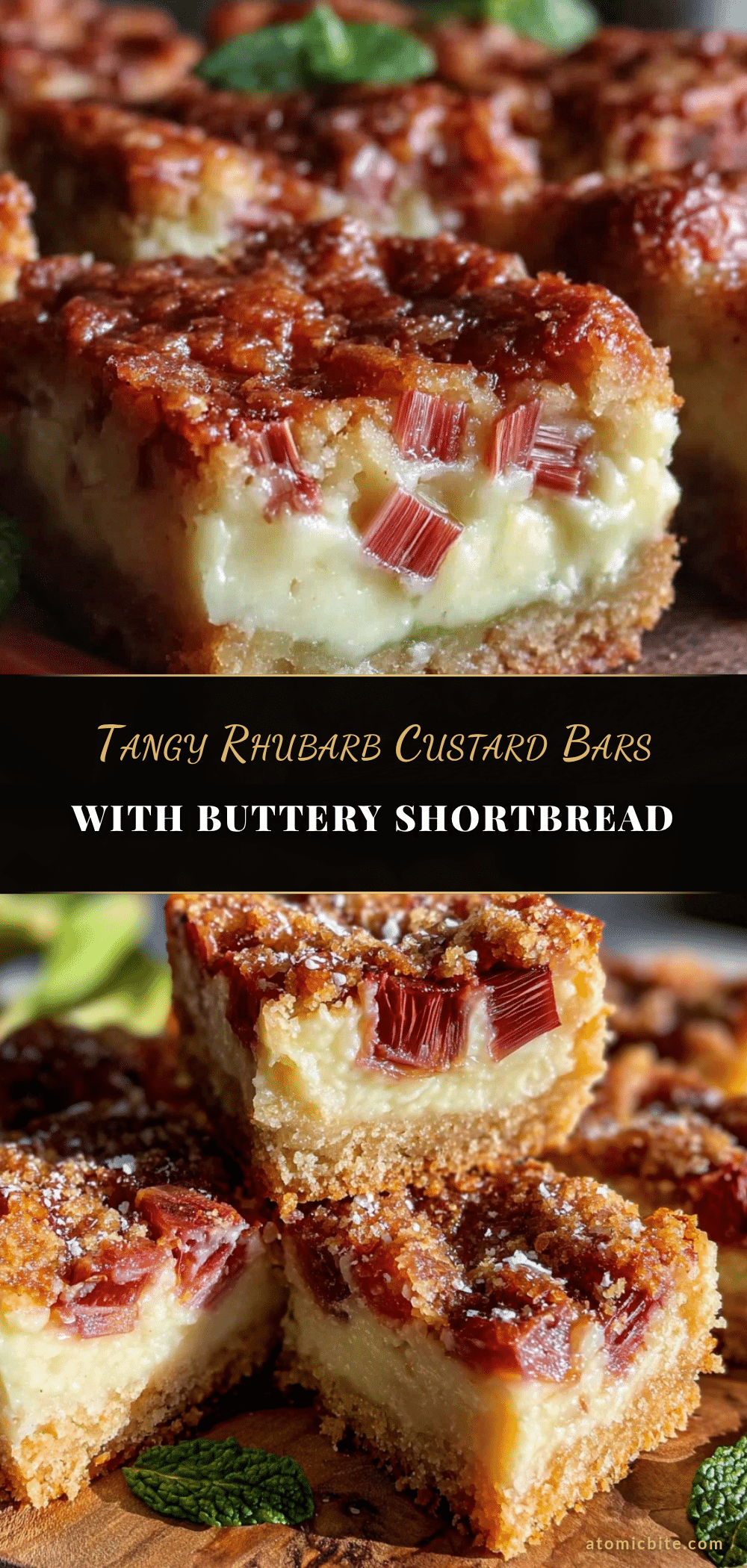
Tangy Rhubarb Custard Bars

These tangy rhubarb custard bars feature a buttery shortbread crust with a smooth, tangy rhubarb custard filling, perfect for spring and summer treats.
- Prep Time: 15 minutes
- Cook Time: 50 minutes
- Total Time: 1 hour 5 minutes
- Yield: 16 servings 1x
- Category: Dessert
- Cuisine: American
Ingredients
- 1 ¾ cups all-purpose flour (220 g), sifted
- ⅓ cup granulated sugar (65 g)
- ¾ cup unsalted butter (170 g), softened
- ¼ teaspoon salt
- 1 teaspoon vanilla extract
- 2 cups fresh rhubarb, chopped (about 250 g) or frozen
- ½ cup granulated sugar (100 g)
- 3 large eggs, room temperature
- 1 cup heavy cream (240 ml) or half-and-half
- 2 tablespoons all-purpose flour (16 g)
- Pinch of salt
- 1 teaspoon lemon zest (optional)
Instructions
- Preheat oven to 350°F (175°C). In a mixing bowl, cream softened butter with granulated sugar until light and fluffy (3-4 minutes). Add vanilla extract and salt, then gradually mix in sifted flour until just combined. Dough should be slightly crumbly. Do not overwork.
- Press dough evenly into a greased 8×8-inch (20×20 cm) baking pan. Bake for 18-20 minutes until edges are light golden brown. Remove and let cool slightly.
- While crust bakes, chop rhubarb and puree in a blender or food processor until finely pureed but still textured. In a bowl, whisk eggs, sugar, heavy cream, flour, salt, and lemon zest until smooth. Fold in rhubarb puree gently.
- Pour rhubarb custard evenly over warm crust. Bake at 350°F (175°C) for 30-35 minutes until custard is set but slightly jiggly in center and top is lightly golden.
- Cool bars completely in pan on wire rack, then refrigerate at least 2 hours to fully set. Cut into squares and serve.
Notes
Use softened butter, not melted, for the crust to ensure proper crumbly texture. Puree rhubarb for smooth custard but keep some texture. Bake crust first to prevent sogginess. Cool bars completely before slicing. For dairy-free, substitute butter with coconut oil and heavy cream with coconut cream; replace eggs with flax or chia eggs.
Nutrition
- Serving Size: 1 bar (1/16th of rec
- Calories: 230
- Sugar: 14
- Sodium: 110
- Fat: 15
- Saturated Fat: 9
- Carbohydrates: 22
- Fiber: 1
- Protein: 3
Keywords: rhubarb custard bars, shortbread crust, tangy dessert, spring dessert, easy baking, rhubarb recipe