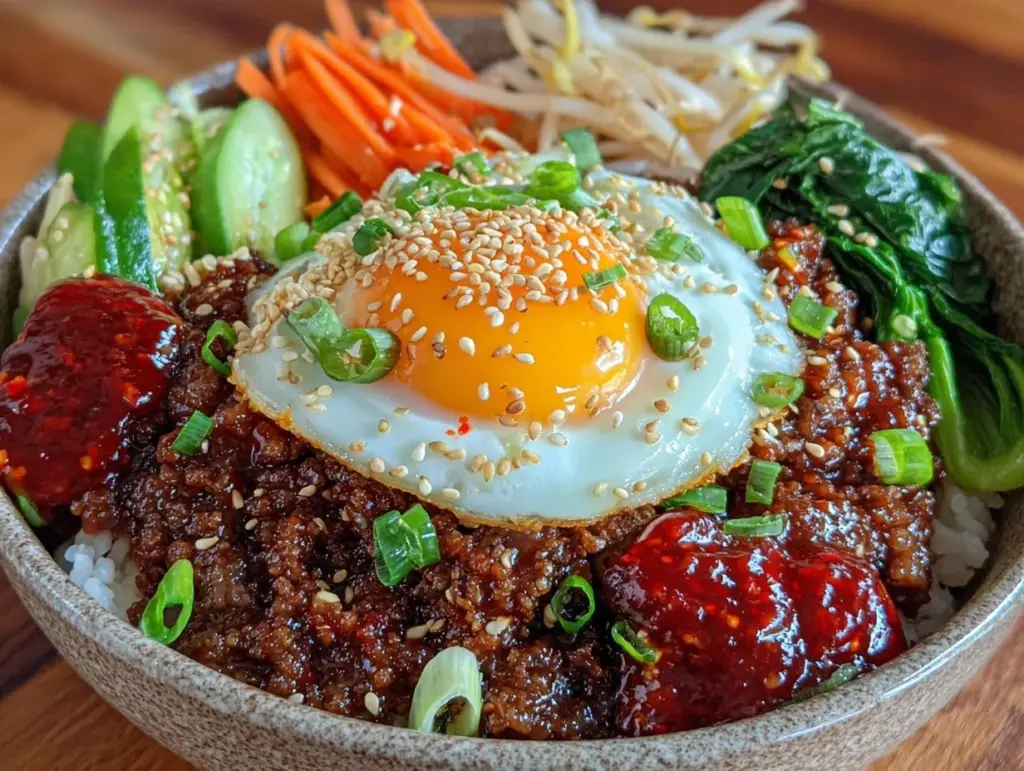
“You’ve got to try this spicy Korean ground beef bibimbap bowl,” my coworker said, sliding a container across the lunch table. Honestly, I was skeptical. I mean, I’ve had my share of Korean dishes, but ground beef bibimbap? It sounded like a quick fix, not the real deal. Yet, one bite later, I was hooked. The spicy, savory beef mingled with crisp veggies and a perfectly cooked egg—it was like a flavor party that didn’t need hours in the kitchen.
That day turned lunchtime from just another break into a mini celebration. I ended up making my own version that same week, tweaking the spice level and playing with textures. It quickly became my go-to when I needed something fast but satisfying—kind of like comfort food with a kick. The real magic? How simple ingredients come together to create layers of flavor that feel authentically Korean but without the fuss.
There’s something about this easy spicy Korean ground beef bibimbap bowl that just sticks with you. It’s the kind of dish you find yourself craving again and again, whether it’s a busy weeknight or a casual weekend meal. And honestly, it’s a relief to have something that tastes like you put in lots of work, when really, it’s mostly about smart shortcuts and fresh ingredients. After all, who says you can’t enjoy a delicious bowl of bibimbap without a ton of prep? This one’s proof it’s possible—and pretty darn good.
Why You’ll Love This Recipe
After testing this recipe multiple times (and yes, eating it way more than I should), I can say this spicy Korean ground beef bibimbap bowl recipe hits all the right notes. It’s a blend of quick, tasty, and approachable that suits any home cook who wants bold flavors without feeling overwhelmed.
- Quick & Easy: Ready in under 20 minutes, perfect for those hectic evenings when dinner needs to happen fast.
- Simple Ingredients: You probably have most of these in your pantry already—no need to hunt down obscure sauces or spices.
- Perfect for Weeknight Dinners: This bowl feels special enough to impress but simple enough to whip up any night.
- Crowd-Pleaser: Mildly spicy but customizable, it gets nods from kids and adults alike (and even picky eaters).
- Unbelievably Delicious: The combination of spicy beef, crunchy veggies, and warm rice creates a satisfying texture and flavor combo you won’t forget.
What makes this recipe stand out? It’s the balance—the beef is seasoned just right with Korean chili paste and soy sauce, giving it a deep, umami-rich heat that isn’t overpowering. Plus, the quick sauté method keeps the beef tender and juicy. I’ve tried other versions that overcook the meat or drown it in sauce, but this recipe keeps everything bright and fresh. Tossing in quick-pickled cucumbers or a fried egg on top adds that extra layer of coziness and authenticity.
In fact, I find it pairs wonderfully with other easy, crowd-pleasing dishes like the crispy baked turkey sliders when hosting friends, or as a quick dinner alongside the sticky garlic chicken noodles for a cozy night in. This bibimbap bowl is proof that you don’t need to sacrifice flavor for speed or simplicity.
What Ingredients You Will Need
This easy spicy Korean ground beef bibimbap bowl uses simple, wholesome ingredients that come together to deliver bold flavor and satisfying texture without the fuss. Most are pantry staples or fresh produce you can easily find at any grocery store.
- Ground beef (80/20 blend): The perfect fat ratio to keep the beef juicy and flavorful.
- Gochujang (Korean chili paste): The star of the spice, providing that signature heat and depth. I like Chung Jung One brand for authenticity.
- Soy sauce: Adds savory umami; use low sodium if preferred.
- Sesame oil: Toasty, aromatic, and essential for Korean dishes.
- Garlic, minced: For that punch of flavor.
- Ginger, minced: Adds freshness and slight warmth.
- Brown sugar: Balances the spice with a touch of sweetness.
- Cooked white rice: The base of the bowl; short grain or jasmine works best.
- Vegetables: Julienned carrots, sliced cucumber, and spinach (blanched or fresh) add crunch and color.
- Green onions, chopped: For garnish and mild sharpness.
- Eggs: Fried sunny side up, the runny yolk ties the bowl together.
- Optional toppings: Toasted sesame seeds and kimchi for extra flavor and texture.
If you’re feeling adventurous, swap the rice for cauliflower rice to keep it low-carb, or use turkey instead of beef for a leaner protein option. And if you don’t have gochujang on hand, a mixture of chili garlic sauce and a touch of miso paste can mimic the flavor closely.
Equipment Needed
- Large non-stick skillet or wok – for cooking the ground beef evenly without sticking.
- Medium pot – to cook the rice perfectly fluffy.
- Small bowl – to whisk the sauce ingredients together.
- Spatula or wooden spoon – for stirring the beef as it cooks.
- Frying pan – for cooking eggs sunny side up.
If you don’t have a wok, a large skillet works just fine. I’ve used both cast iron and non-stick pans for this recipe, and each brings its own charm—cast iron adds a nice sear on the beef, but non-stick prevents sticking and makes cleanup easier. For rice, a rice cooker can save time, but a pot with a tight lid works perfectly well.
Preparation Method
- Cook the rice: Rinse 1 ½ cups (270g) of white rice under cold water until the water runs clear. Combine with 2 cups (475ml) water in a pot, bring to a boil, then reduce heat to low, cover, and simmer for 15 minutes. Remove from heat and let stand 5 minutes covered. Fluff with a fork. (If you use a rice cooker, follow your model’s instructions.)
- Prepare the sauce: In a small bowl, whisk together 2 tablespoons gochujang, 1 tablespoon soy sauce, 1 tablespoon brown sugar, 1 teaspoon sesame oil, 1 teaspoon minced garlic, and 1 teaspoon minced ginger. Set aside.
- Cook the ground beef: Heat 1 tablespoon vegetable oil in a large skillet over medium-high heat. Add 1 pound (450g) ground beef and cook, breaking it up with a spatula, until browned and cooked through, about 6-8 minutes. Drain any excess fat if necessary.
- Add the sauce: Pour the prepared sauce over the beef, stirring to coat evenly. Cook for another 2-3 minutes until the sauce thickens slightly and clings to the meat. Taste and adjust seasoning if needed—add a pinch of salt or more gochujang for heat.
- Prepare the vegetables: While beef cooks, julienne 1 carrot and slice 1 cucumber thinly. Blanch 2 cups fresh spinach in boiling water for 30 seconds, then drain and squeeze out excess water.
- Fry the eggs: In a separate pan, heat a teaspoon of oil over medium heat. Crack 4 eggs and cook sunny side up until the whites are set but yolks remain runny, about 3-4 minutes.
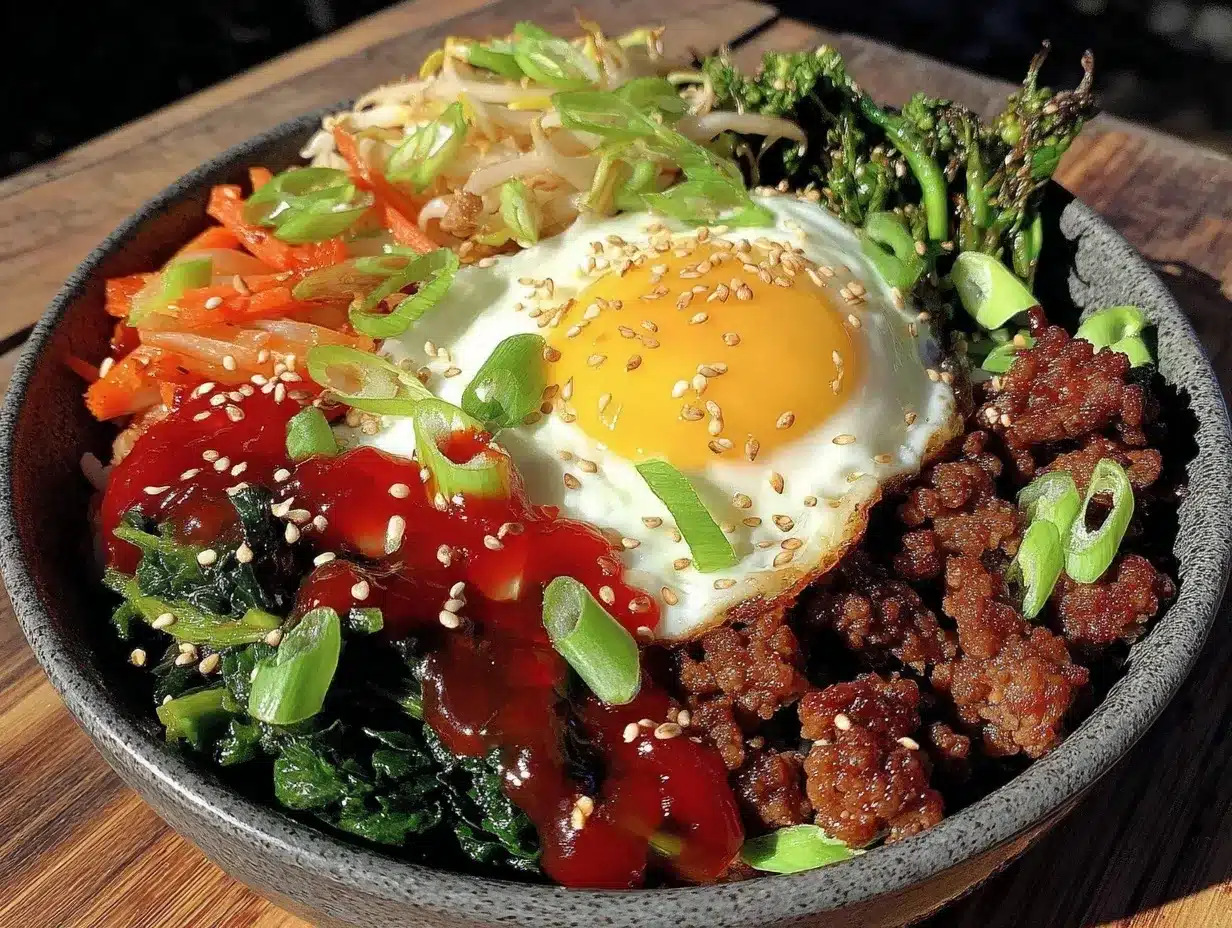
- Assemble the bowls: Divide cooked rice into 4 bowls. Top with spicy ground beef, arranged vegetables, and a fried egg. Garnish with chopped green onions, toasted sesame seeds, and kimchi if using.
Pro tip: When cooking the beef, don’t overcrowd the pan—this helps it brown nicely instead of steaming. Also, let the rice rest after cooking; this gives you fluffier grains instead of mushy clumps.
Cooking Tips & Techniques
Getting the perfect balance of flavors and textures in this bibimbap bowl is easier than you might think, but a few tricks make a world of difference.
- Use fresh ingredients: Fresh garlic and ginger really boost the brightness of the sauce. Pre-minced options can work but won’t give the same punch.
- Don’t rush browning: Take your time cooking the beef over medium-high heat. Stir occasionally but let it sit a bit to develop that caramelized flavor.
- Balance the spice: Gochujang can vary in heat. Start with less and add more if you want it spicier. Mixing in a little brown sugar mellows the heat and adds depth.
- Vegetable prep matters: Thinly slicing or julienning the veggies keeps them crisp and easy to eat with the beef and rice. Blanching spinach quickly softens it without losing its vibrant color.
- Egg perfection: Sunny side up eggs are classic here—the runny yolk adds a creamy sauce-like quality. If you prefer, a soft-boiled egg works too.
- Multitask smartly: Cook the rice first and let it rest while you prepare everything else. This keeps the workflow efficient, especially on busy nights.
From personal experience, I once overcooked the beef and ended up with dry meat. Lesson learned: patience and medium heat are your friends here. Also, using a well-seasoned cast iron skillet gives a nice crust on the beef that tastes amazing.
Variations & Adaptations
This spicy Korean ground beef bibimbap bowl is versatile, and you can easily tweak it based on what you have or your dietary needs.
- Vegetarian/Vegan: Swap ground beef for crumbled tofu or tempeh, and replace the egg with sautéed mushrooms or avocado slices. Use a vegan gochujang (some brands contain fish sauce) and soy sauce.
- Low-Carb: Substitute rice with cauliflower rice or shredded cabbage for a lighter bowl.
- Different Proteins: Ground turkey or chicken works well, though the beef flavor is classic. For seafood fans, try seasoned shrimp in place of beef.
- Extra Veggies: Add pickled radishes, bean sprouts, or shredded zucchini for more crunch and nutrition.
- Spice Level: Adjust by adding more or less gochujang or tossing in fresh sliced chilies for heat.
One time, I tried mixing in kimchi fried rice instead of plain rice, and it brought a whole new tangy dimension to the bowl. It’s fun to experiment until you find your favorite version!
Serving & Storage Suggestions
This bibimbap bowl is best served hot with the egg freshly cooked on top. The yolk makes a lovely sauce that ties all the flavors together, so eat it right away for the best experience.
Pair it with a light side like creamy dill pickle cheese ball or a crisp cucumber salad for contrast. For drinks, a chilled green tea or light lager complements the spicy beef nicely.
If you have leftovers, store the components separately in airtight containers in the fridge for up to 3 days. Reheat the beef and rice gently in a skillet or microwave, then add a freshly cooked egg on top for serving. Avoid reheating eggs—they get rubbery fast.
Flavors actually deepen overnight, especially if you toss in some kimchi or pickled veggies. So, this bowl can taste even better as leftovers if you don’t mind reheating carefully.
Nutritional Information & Benefits
Each serving of this spicy Korean ground beef bibimbap bowl provides approximately:
| Calories | 480 kcal |
|---|---|
| Protein | 28g |
| Carbohydrates | 45g |
| Fat | 18g |
| Fiber | 4g |
The beef offers a solid protein source, while the veggies contribute fiber and vitamins. Gochujang is made from fermented chili paste, which adds probiotics that support gut health. The sesame oil brings healthy fats with a rich nutty flavor.
This recipe is naturally gluten-free if you use tamari instead of soy sauce. It’s a balanced meal that keeps you satisfied without being heavy, and you can easily adjust it for low-carb or vegetarian diets.
Conclusion
This easy spicy Korean ground beef bibimbap bowl has become one of those meals I turn to when I want something quick, comforting, and packed with flavor. It strikes the perfect balance between spicy and savory, fresh and hearty, and it never feels like a chore to prepare.
Feel free to make it your own—swap veggies, adjust the spice, or try different proteins. For me, it’s a recipe that brings a little everyday joy to the dinner table without any fuss.
Give it a shot and let me know how it goes! I’m always curious about tweaks and adaptations, and I’d love to hear what you add to your bowl to make it uniquely yours.
Frequently Asked Questions
What can I substitute for gochujang if I don’t have it?
You can mix chili garlic sauce with a bit of miso paste or soy sauce to mimic the sweet and spicy flavor. It won’t be exact but works in a pinch.
Can I make this recipe ahead of time?
Yes, you can prepare the beef and rice in advance and store separately. Fry fresh eggs just before serving to keep the texture perfect.
Is this recipe spicy?
It has a moderate heat level from the gochujang but can be adjusted by adding more or less chili paste according to your preference.
Can I use brown rice instead of white rice?
Absolutely! Brown rice adds more fiber and a nuttier flavor, but it will take longer to cook.
What’s the best way to store leftovers?
Keep rice and beef in airtight containers in the refrigerator for up to 3 days. Reheat gently and add a fresh egg on top before serving.
Pin This Recipe!
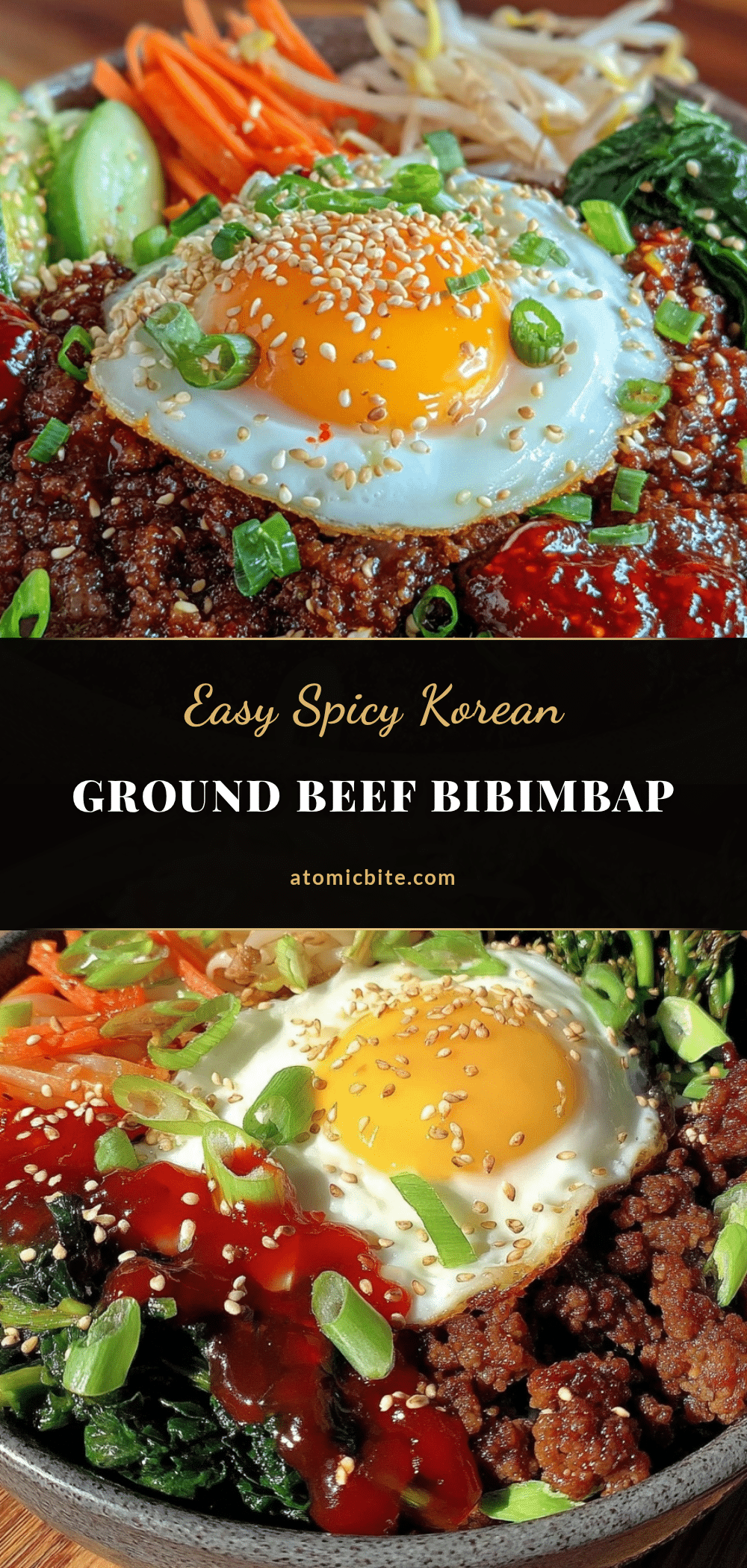
Easy Spicy Korean Ground Beef Bibimbap Bowl Recipe

A quick and flavorful Korean bibimbap bowl featuring spicy ground beef, crisp vegetables, and a sunny side up egg, perfect for a satisfying weeknight dinner.
- Prep Time: 10 minutes
- Cook Time: 15 minutes
- Total Time: 25 minutes
- Yield: 4 servings 1x
- Category: Main Course
- Cuisine: Korean
Ingredients
- 1 pound (450g) ground beef (80/20 blend)
- 2 tablespoons gochujang (Korean chili paste)
- 1 tablespoon soy sauce (low sodium preferred)
- 1 teaspoon sesame oil
- 1 teaspoon minced garlic
- 1 teaspoon minced ginger
- 1 tablespoon brown sugar
- 1 ½ cups (270g) cooked white rice (short grain or jasmine)
- 1 carrot, julienned
- 1 cucumber, thinly sliced
- 2 cups fresh spinach, blanched
- 4 eggs
- 2 green onions, chopped
- Toasted sesame seeds (optional)
- Kimchi (optional)
- 1 tablespoon vegetable oil (for cooking beef)
- 1 teaspoon oil (for frying eggs)
Instructions
- Rinse 1 ½ cups (270g) of white rice under cold water until the water runs clear. Combine with 2 cups (475ml) water in a pot, bring to a boil, then reduce heat to low, cover, and simmer for 15 minutes. Remove from heat and let stand 5 minutes covered. Fluff with a fork.
- In a small bowl, whisk together 2 tablespoons gochujang, 1 tablespoon soy sauce, 1 tablespoon brown sugar, 1 teaspoon sesame oil, 1 teaspoon minced garlic, and 1 teaspoon minced ginger. Set aside.
- Heat 1 tablespoon vegetable oil in a large skillet over medium-high heat. Add ground beef and cook, breaking it up with a spatula, until browned and cooked through, about 6-8 minutes. Drain any excess fat if necessary.
- Pour the prepared sauce over the beef, stirring to coat evenly. Cook for another 2-3 minutes until the sauce thickens slightly and clings to the meat. Taste and adjust seasoning if needed.
- While beef cooks, julienne the carrot and slice the cucumber thinly. Blanch spinach in boiling water for 30 seconds, then drain and squeeze out excess water.
- In a separate pan, heat a teaspoon of oil over medium heat. Crack 4 eggs and cook sunny side up until the whites are set but yolks remain runny, about 3-4 minutes.
- Divide cooked rice into 4 bowls. Top with spicy ground beef, arranged vegetables, and a fried egg. Garnish with chopped green onions, toasted sesame seeds, and kimchi if using.
Notes
Do not overcrowd the pan when cooking beef to ensure proper browning. Let rice rest after cooking for fluffier grains. Adjust spice level by varying gochujang amount. Use fresh garlic and ginger for best flavor. Sunny side up eggs add a creamy texture; soft-boiled eggs can be used as an alternative. Store components separately and reheat gently. Avoid reheating eggs to prevent rubbery texture.
Nutrition
- Serving Size: 1 bowl (includes ric
- Calories: 480
- Sugar: 8
- Sodium: 600
- Fat: 18
- Saturated Fat: 6
- Carbohydrates: 45
- Fiber: 4
- Protein: 28
Keywords: bibimbap, Korean, ground beef, spicy, quick dinner, easy recipe, weeknight meal