“You really need to try this katsu curry,” a coworker insisted one hectic afternoon, waving a takeout box like a trophy. I was skeptical — Japanese curry always seemed a bit too exotic for my weeknight dinner routine. But after one bite of that crispy, golden fried cutlet swimming in a thick, rich tonkatsu sauce, all doubts faded away. Honestly, it was the kind of dish that made me pause, close my eyes, and just savor the moment. That day, I found myself craving this crispy Japanese katsu curry again and again, turning it into a near-weekly ritual. I even started experimenting with the sauce, tweaking spices and textures until it felt just right.
What stuck with me wasn’t just the crunch or the warmth of the curry — it was the way the flavors and textures came together in this comforting, almost soulful meal. I remember the quiet moments in my kitchen, the sizzle of the panko crust hitting the pan, the aroma of the curry simmering gently, and the satisfying snap when slicing into the perfectly fried cutlet. This recipe isn’t fancy, but it’s honest food that fills the belly and soothes the soul, especially when life feels chaotic.
If you’ve ever wondered how to nail crispy Japanese katsu curry with rich tonkatsu sauce at home without complicated fuss, this recipe is for you. It’s become my go-to for cozy dinners that feel special but don’t demand hours in the kitchen. Plus, it pairs beautifully with a side of steamed rice or a crisp salad, making it a balanced and hearty meal. Let’s just say, once you try this, it might become your secret weapon for easy comfort food nights.
Why You’ll Love This Crispy Japanese Katsu Curry Recipe
After countless tests in my kitchen, this crispy Japanese katsu curry with rich tonkatsu sauce stands out for several reasons that make it a winner every time:
- Quick & Easy: You can have this dish ready in under 40 minutes, which is perfect for those busy weeknights when you want something satisfying but don’t want to slave over the stove.
- Simple Ingredients: No need for obscure imports here — most of what you’ll need is likely already in your pantry or local grocery store. Trust me, this is a recipe that’s approachable.
- Perfect for Cozy Dinners: Whether you’re unwinding solo or feeding a small group, it’s a crowd-pleaser that feels like a warm hug on a plate.
- Crispy & Flavorful: The panko crust crisps up beautifully, giving you that irresistible crunch that contrasts with the silky curry and tonkatsu sauce.
- Rich Tonkatsu Sauce: This sauce isn’t just a drizzle — it’s the heart of the dish, with a deep umami flavor that complements the fried cutlet perfectly. I’ve fine-tuned this sauce recipe to have just the right balance of sweetness and tang.
This isn’t just another katsu curry recipe floating around on the internet. The secret lies in the perfectly balanced seasoning and the technique of breading the pork cutlets, which makes the crust stay crispy even after being drenched in the sauce. If you’re used to the typical takeout versions, this homemade approach will surprise you with its freshness and flavor depth.
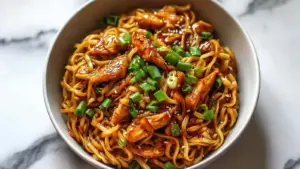
And you know, it’s the kind of meal that makes you close your eyes after the first bite — that little moment of being fully present and content. If you’ve enjoyed dishes like my sticky garlic chicken noodles or the hearty hobo casserole, this katsu curry will fit right into your repertoire of go-to comfort foods.
What Ingredients You Will Need for Crispy Japanese Katsu Curry
This recipe uses simple, wholesome ingredients to deliver bold flavor and satisfying texture without the fuss. Most are pantry staples or easy to find, and a few key items bring everything together:
- Pork cutlets: Thinly sliced boneless pork loin or center-cut pork chops, pounded to about ½ inch thickness for even cooking and tenderness.
- Salt and pepper: For seasoning the pork before breading.
- Flour: All-purpose flour for dredging — creates a base for the egg to stick to.
- Eggs: Beaten, room temperature — helps the panko crumbs adhere perfectly.
- Panko breadcrumbs: Japanese-style panko breadcrumbs are essential for that signature crispiness. I recommend brands like Kikkoman or Nishiki for best texture.
- Vegetable oil: For frying — neutral oils like canola or sunflower work best for high heat without overpowering flavors.
- For the curry sauce:
- Onions, finely chopped (adds sweetness and depth)
- Garlic and ginger, minced (for warmth and aroma)
- Carrots, diced (classic veggie for curry)
- Potatoes, peeled and cubed (for hearty texture)
- Japanese curry roux blocks (I prefer Golden Curry brand, mild or medium heat)
- Chicken or vegetable broth (builds the sauce base)
- Soy sauce and Worcestershire sauce (for umami and tang)
- Honey or sugar (balances the savory with a touch of sweetness)
- For the tonkatsu sauce:
- Ketchup (adds a sweet tomato base)
- Worcestershire sauce (classic tang and depth)
- Soy sauce (umami boost)
- Mirin or rice vinegar (for mild acidity)
- Brown sugar (sweetens and thickens)
- Dijon mustard (adds a subtle kick)
If you want to switch things up, you can swap pork for chicken breasts or thighs for a different protein option. Also, for gluten-free, use gluten-free panko and tamari in place of soy sauce. In summer, I like adding fresh peas or green beans to the curry for a pop of color and freshness.
Equipment Needed
- Sharp chef’s knife and cutting board — for prepping the pork and vegetables cleanly.
- Meat mallet or rolling pin — to pound the pork cutlets evenly, which is key for tender, uniform cooking.
- Three shallow bowls or plates — for the dredging station: flour, beaten eggs, and panko breadcrumbs.
- Large skillet or frying pan — for shallow frying the katsu. A heavy-bottomed pan helps maintain steady heat.
- Medium saucepan — for simmering the curry sauce.
- Wooden spoon or spatula — for stirring the curry without scratching your cookware.
- Slotted spoon or tongs — to safely remove the cutlets from the hot oil.
- Paper towels — to drain excess oil from the fried cutlets.
You don’t need a deep fryer — a sturdy skillet works perfectly well. For budget-friendly options, a basic non-stick pan will do, but cast iron can give you more even heat. Just be sure to keep the oil temperature consistent to avoid soggy crusts. After frying, you might want to rest the cutlets on a wire rack placed over a baking sheet instead of paper towels to keep them crisper longer.
Preparation Method for Crispy Japanese Katsu Curry
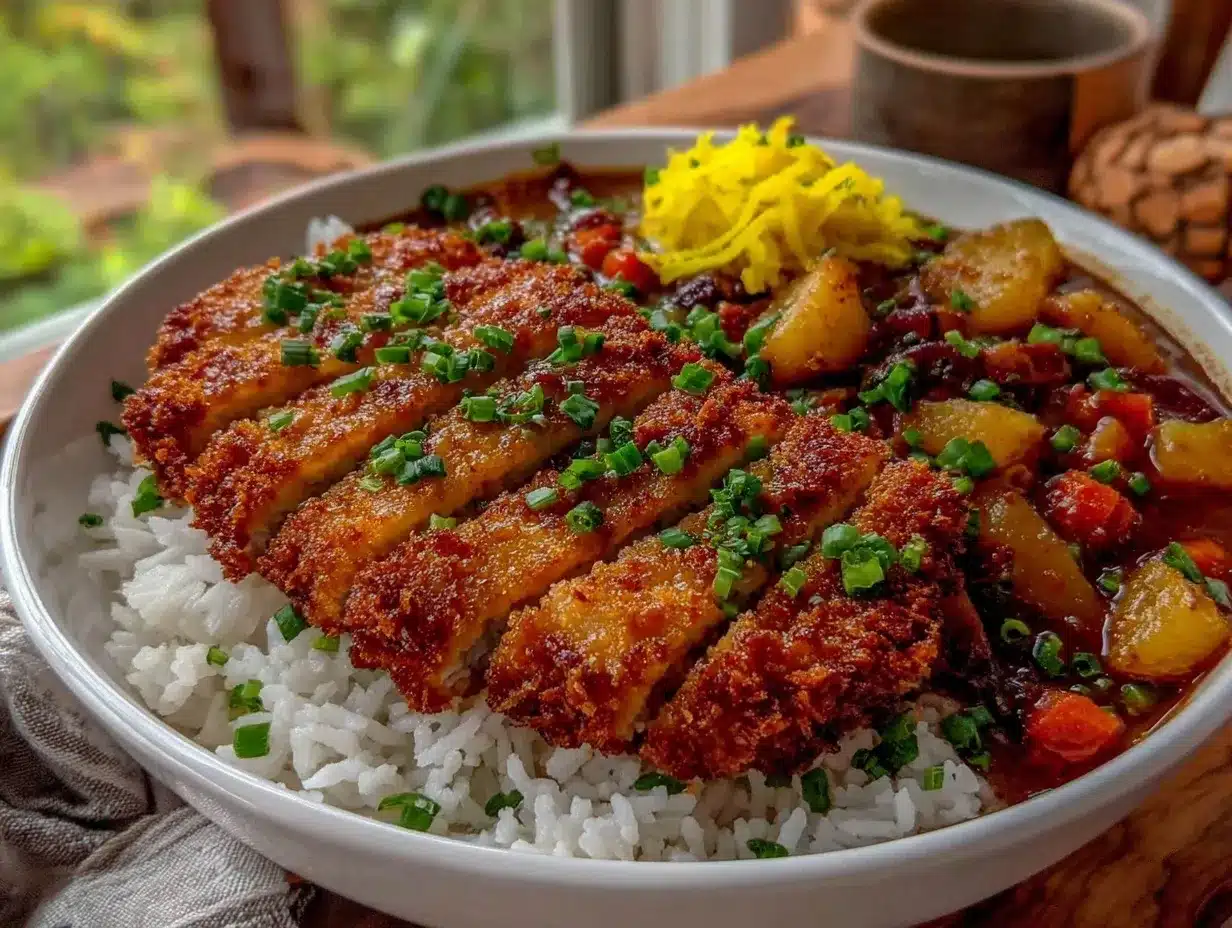
- Prepare the pork cutlets: Pat the pork dry and season both sides lightly with salt and pepper. Using a meat mallet, gently pound each cutlet to about ½ inch (1.3 cm) thickness for even cooking — this helps keep them juicy and tender.
- Set up breading station: Place flour in one shallow dish, beaten eggs in another, and panko breadcrumbs in a third. Make sure the eggs are well beaten and at room temperature for better coating.
- Bread the pork: Dredge each cutlet in flour, shaking off excess, then dip into the egg, letting extra drip off. Finally, press into the panko breadcrumbs, coating thoroughly. For extra crunch, gently press the panko onto the meat to help it stick well.
- Heat oil: Pour about ½ inch (1.27 cm) of vegetable oil into a large skillet and heat over medium-high until it reaches 350°F (175°C). Use a thermometer if you have one — this is crucial for crispy crust without greasiness.
- Fry the cutlets: Carefully place breaded cutlets in the hot oil, cooking for 3–4 minutes per side until golden brown and cooked through. Avoid overcrowding the pan; fry in batches if needed. You want a nice sizzle when they hit the oil.
- Drain and rest: Transfer fried cutlets to a wire rack over a baking sheet or plate lined with paper towels to drain excess oil. Rest for 5 minutes — this helps the crust set and keeps it crispy.
- Make the curry sauce: In a saucepan, sauté finely chopped onions in a bit of oil over medium heat until translucent and slightly caramelized, about 8–10 minutes. Add minced garlic and ginger; cook for 1–2 minutes until fragrant.
- Add vegetables: Stir in diced carrots and potatoes. Pour in 3 cups (720 ml) chicken or vegetable broth and bring to a gentle boil. Reduce heat and simmer for 15 minutes or until the veggies are tender.
- Thicken the curry: Break the Japanese curry roux blocks into chunks and stir into the pot until fully dissolved and sauce thickens. Add soy sauce, Worcestershire sauce, and a touch of honey or sugar to balance flavors. Simmer for 5 more minutes, stirring occasionally.
- Prepare the tonkatsu sauce: In a small bowl, whisk together ketchup, Worcestershire sauce, soy sauce, mirin or rice vinegar, brown sugar, and Dijon mustard until smooth. Adjust sweetness and tang to taste.
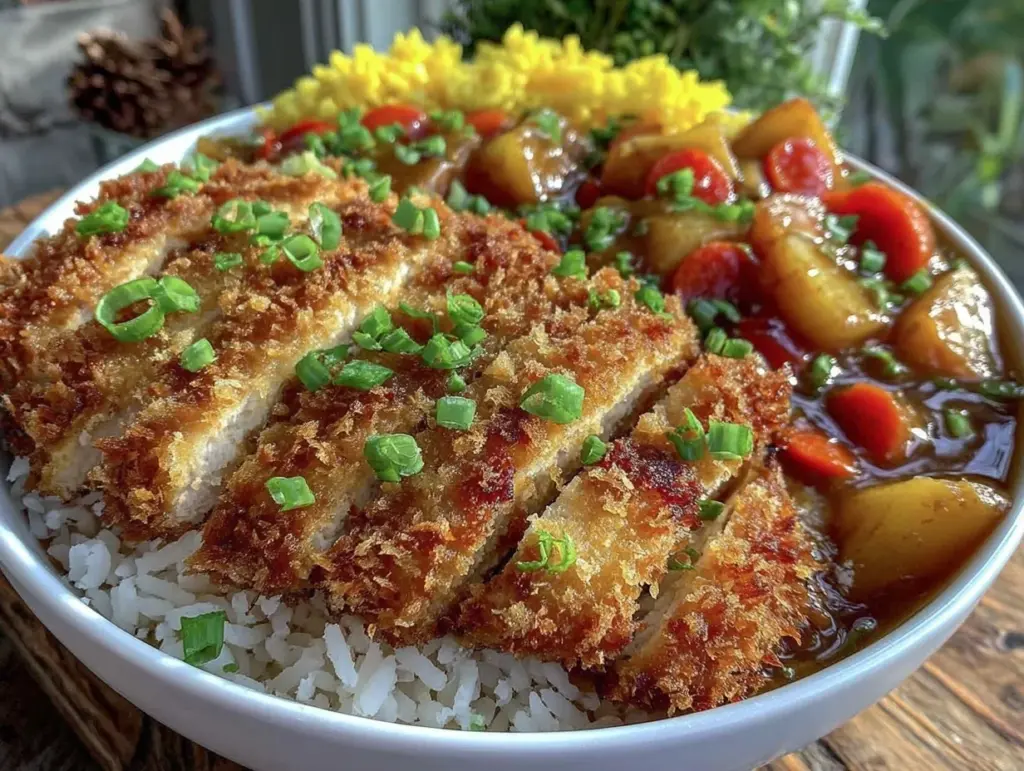
- Assemble the dish: Slice the rested katsu into strips. Serve over steamed white rice, ladle generous portions of curry sauce on the side or over the cutlets, then drizzle with the rich tonkatsu sauce for that signature flavor punch.
Tip: If you’re pressed for time, you can prepare the curry sauce and tonkatsu sauce ahead and reheat gently while frying the cutlets fresh. The layering of freshly fried katsu with warm curry and cool tangy sauce is what makes this dish truly satisfying.
Cooking Tips & Techniques for Perfect Japanese Katsu Curry
One thing I learned early on is that the secret to crispy Japanese katsu curry is all in the breading and frying technique. Here are some tips to get that perfect crunch every time:
- Don’t skip pounding the pork: Flattening the cutlets to an even thickness ensures they cook evenly and stay juicy inside while crisping up outside.
- Use cold eggs: Room-temperature eggs help the panko stick better. Also, make sure the panko breadcrumbs are fresh — stale crumbs won’t crisp up well.
- Maintain oil temperature: Too hot and the crust burns before the pork cooks; too cool and the cutlets absorb oil and become soggy. Use a thermometer or do a test with a small breadcrumb before frying all cutlets.
- Don’t overcrowd the pan: Fry in batches if needed to keep oil temperature steady, which is key for that light, crunchy crust.
- Drain on a wire rack: Let cutlets rest on a wire rack instead of paper towels for better air circulation — this keeps the crust crispy longer.
- Simmer curry gently: Low and slow is best for the sauce — it lets the flavors meld and the vegetables soften without breaking down too much.
At first, I struggled with soggy cutlets, but switching to panko instead of regular breadcrumbs and carefully monitoring the oil temperature made all the difference. Also, don’t rush the curry sauce — letting it simmer develops that deep, comforting flavor that makes you crave seconds. If you want, multitask by prepping the curry while the cutlets rest after frying, making the process smooth and efficient.
Variations & Adaptations
This crispy Japanese katsu curry recipe is flexible and welcomes creativity:
- Protein swaps: Try chicken breasts or thighs instead of pork. For a vegetarian option, bread and fry thick slices of eggplant or tofu — they soak up the curry beautifully.
- Spice level: Adjust the heat by choosing mild, medium, or hot Japanese curry roux blocks. Add a pinch of cayenne or chili flakes to the curry sauce for an extra kick.
- Gluten-free: Use gluten-free panko breadcrumbs and tamari in place of soy sauce. Rice flour works well for dredging instead of all-purpose flour.
- Seasonal veggies: In spring or summer, swap carrots and potatoes for fresh green beans, peas, or bell peppers for a lighter twist.
- Homemade curry roux: If you want to skip the store-bought curry blocks, you can make your own roux with butter, flour, curry powder, and garam masala — just be prepared for a more hands-on approach.
I once made a version with crispy chicken katsu and a side of steamed broccoli and mushrooms, which became a hit with my family. The crispy texture paired with earthy mushrooms and that rich sauce is a combo worth trying if you want to mix things up.
Serving & Storage Suggestions
Serve your crispy Japanese katsu curry hot, straight from the pan, with freshly steamed white rice or Japanese short-grain rice for the best texture. For a touch of freshness, a simple cabbage slaw or pickled vegetables balance the richness nicely.
If you want to turn it into a meal prep winner, store the curry sauce separately in an airtight container and refrigerate for up to 3 days. Keep the fried cutlets wrapped loosely in foil or parchment paper in the fridge to help retain crispness. Reheat the cutlets in a toaster oven or under a broiler for a few minutes to bring back their crunch — microwaving tends to soften the crust.
Flavors in the curry sauce deepen over time, so leftovers often taste even better the next day. Just be sure to reheat gently and add a splash of broth or water if the sauce thickens too much.
Nutritional Information & Benefits
This dish offers a balanced mix of protein, carbohydrates, and vegetables. A serving of pork cutlet provides a good source of lean protein and essential B vitamins. The vegetables in the curry contribute fiber and antioxidants, while the tonkatsu sauce adds flavor without excessive calories.
Using panko breadcrumbs and shallow frying helps keep the fat content moderate compared to deep-frying. For a lighter version, baking the katsu cutlets is an option, though you might sacrifice some crispiness. This recipe can fit nicely into a balanced diet and can be adapted for gluten-free or lower-carb needs by swapping ingredients accordingly.
Just a heads up: the dish contains soy and gluten unless substitutions are made. The homemade tonkatsu sauce avoids preservatives found in store-bought versions, making it a cleaner choice.
Conclusion
Crispy Japanese katsu curry with rich tonkatsu sauce isn’t just a meal; it’s a comforting experience that sticks with you — the kind you want to recreate whenever life calls for a little extra warmth and crunch. The recipe is straightforward enough to make on a busy night but special enough to impress guests or treat yourself.
Feel free to tweak the seasoning, swap proteins, or add your favorite veggies to make it your own. Personally, this recipe has become one of my most cherished weeknight dinners, a dish that’s both cozy and exciting to eat.
If you’ve enjoyed hearty dishes like the crispy baked turkey sliders or crave the comforting layers of a creamy ground beef and potatoes casserole, this katsu curry might just become your new favorite. Don’t hesitate to share your own twists or questions below — I’d love to hear how you make this recipe your own!
Here’s to many crispy, saucy, satisfying meals ahead.
FAQs About Crispy Japanese Katsu Curry with Rich Tonkatsu Sauce
What cut of pork is best for katsu?
Thin pork loin or center-cut pork chops work best because they’re tender and cook quickly, especially when pounded to an even thickness.
Can I bake the katsu instead of frying?
Yes, baking is a healthier alternative. Coat the cutlets with panko and bake at 425°F (220°C) for about 20 minutes, flipping halfway, but expect slightly less crispiness.
Where can I find Japanese curry roux blocks?
Most Asian grocery stores carry brands like Golden Curry or Vermont Curry. You can also find them online or in the international aisle of larger supermarkets.
How do I keep the katsu crispy when serving with curry?
Serve the cutlets sliced and place the curry sauce beside or drizzle just before eating to prevent sogginess. Resting cutlets on a wire rack also helps.
Is tonkatsu sauce the same as Worcestershire sauce?
Not quite. Tonkatsu sauce is thicker and sweeter, made from a blend of fruits, vegetables, soy, and spices. Worcestershire sauce is one ingredient in it but much thinner and tangier.
Pin This Recipe!
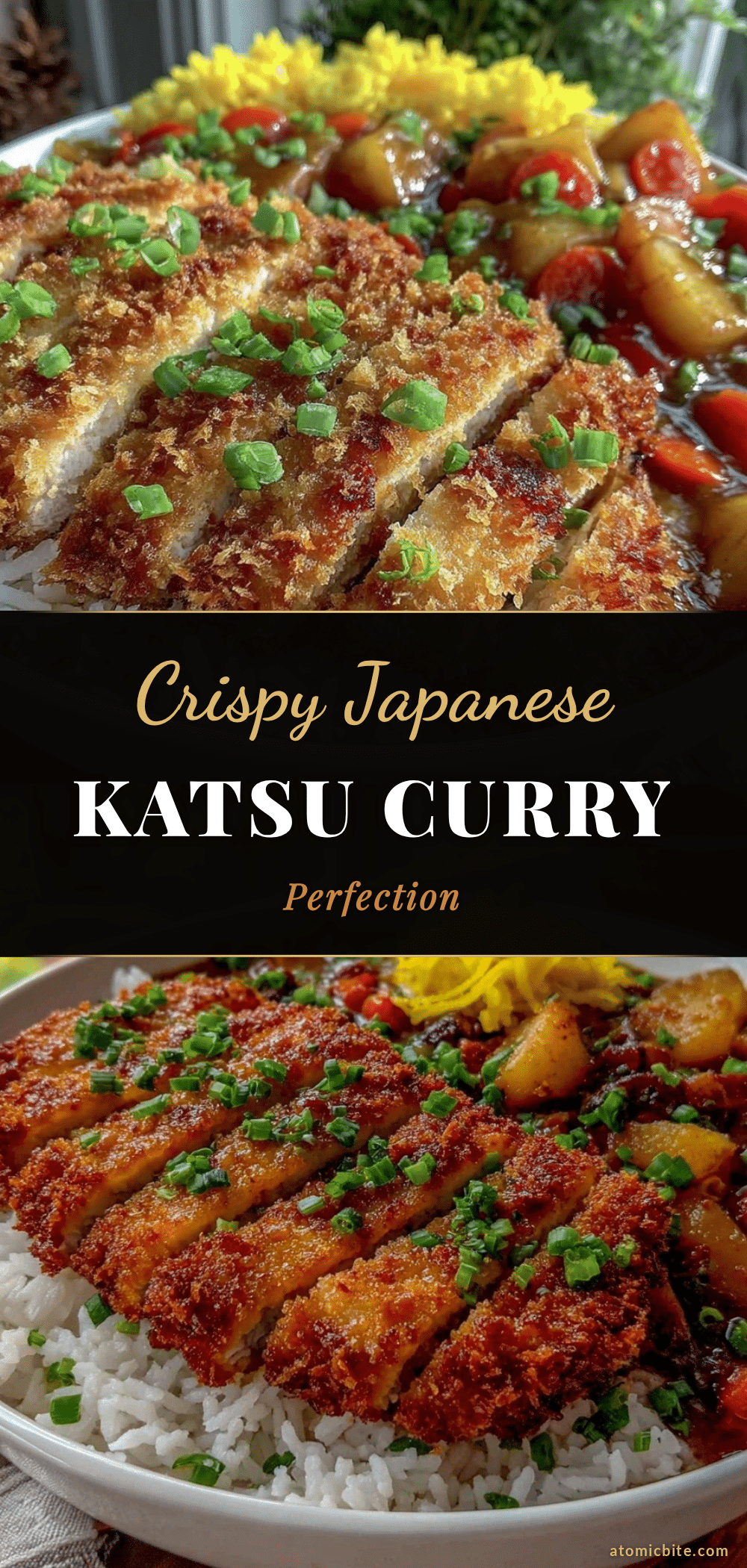
Crispy Japanese Katsu Curry Recipe with Rich Tonkatsu Sauce Easy and Best

A comforting and crispy Japanese katsu curry featuring golden fried pork cutlets served with a rich tonkatsu sauce and flavorful curry. Perfect for cozy dinners and quick weeknight meals.
- Prep Time: 15 minutes
- Cook Time: 25 minutes
- Total Time: 40 minutes
- Yield: 4 servings
- Category: Main Course
- Cuisine: Japanese
Ingredients
- Thinly sliced boneless pork loin or center-cut pork chops, pounded to about ½ inch thickness
- Salt and pepper, for seasoning
- All-purpose flour, for dredging
- Eggs, beaten, room temperature
- Japanese-style panko breadcrumbs
- Vegetable oil (canola or sunflower) for frying
- For the curry sauce:
- – Onions, finely chopped
- – Garlic, minced
- – Ginger, minced
- – Carrots, diced
- – Potatoes, peeled and cubed
- – Japanese curry roux blocks (Golden Curry brand preferred, mild or medium heat)
- – Chicken or vegetable broth (3 cups)
- – Soy sauce
- – Worcestershire sauce
- – Honey or sugar
- For the tonkatsu sauce:
- – Ketchup
- – Worcestershire sauce
- – Soy sauce
- – Mirin or rice vinegar
- – Brown sugar
- – Dijon mustard
Instructions
- Pat the pork cutlets dry and season both sides lightly with salt and pepper. Pound each cutlet to about ½ inch thickness for even cooking.
- Set up a breading station with three shallow dishes: flour, beaten eggs, and panko breadcrumbs.
- Dredge each cutlet in flour, shaking off excess, then dip into the beaten eggs, letting extra drip off. Press into panko breadcrumbs to coat thoroughly.
- Pour about ½ inch of vegetable oil into a large skillet and heat over medium-high until it reaches 350°F (175°C).
- Fry the breaded cutlets for 3–4 minutes per side until golden brown and cooked through. Fry in batches if necessary.
- Transfer fried cutlets to a wire rack over a baking sheet or paper towels to drain excess oil. Rest for 5 minutes.
- To make the curry sauce, sauté onions in a saucepan over medium heat until translucent and slightly caramelized (8–10 minutes). Add garlic and ginger; cook 1–2 minutes.
- Add diced carrots and potatoes, pour in chicken or vegetable broth, and bring to a boil. Reduce heat and simmer for 15 minutes until vegetables are tender.
- Break curry roux blocks into chunks and stir into the pot until dissolved and sauce thickens. Add soy sauce, Worcestershire sauce, and honey or sugar. Simmer 5 more minutes.
- Prepare the tonkatsu sauce by whisking together ketchup, Worcestershire sauce, soy sauce, mirin or rice vinegar, brown sugar, and Dijon mustard until smooth. Adjust to taste.
- Slice the rested katsu into strips. Serve over steamed white rice, ladle curry sauce on the side or over cutlets, and drizzle with tonkatsu sauce.
Notes
Use a thermometer to maintain oil temperature at 350°F for crispy crust without greasiness. Rest cutlets on a wire rack to keep crust crispy longer. Curry sauce and tonkatsu sauce can be prepared ahead and reheated. For gluten-free, use gluten-free panko and tamari instead of soy sauce. Baking the katsu is a healthier alternative but may reduce crispiness.
Nutrition
- Serving Size: 1 serving (includes
- Calories: 650
- Sugar: 12
- Sodium: 900
- Fat: 30
- Saturated Fat: 6
- Carbohydrates: 60
- Fiber: 6
- Protein: 35
Keywords: katsu curry, Japanese curry, tonkatsu sauce, crispy pork cutlets, comfort food, easy dinner, weeknight meal