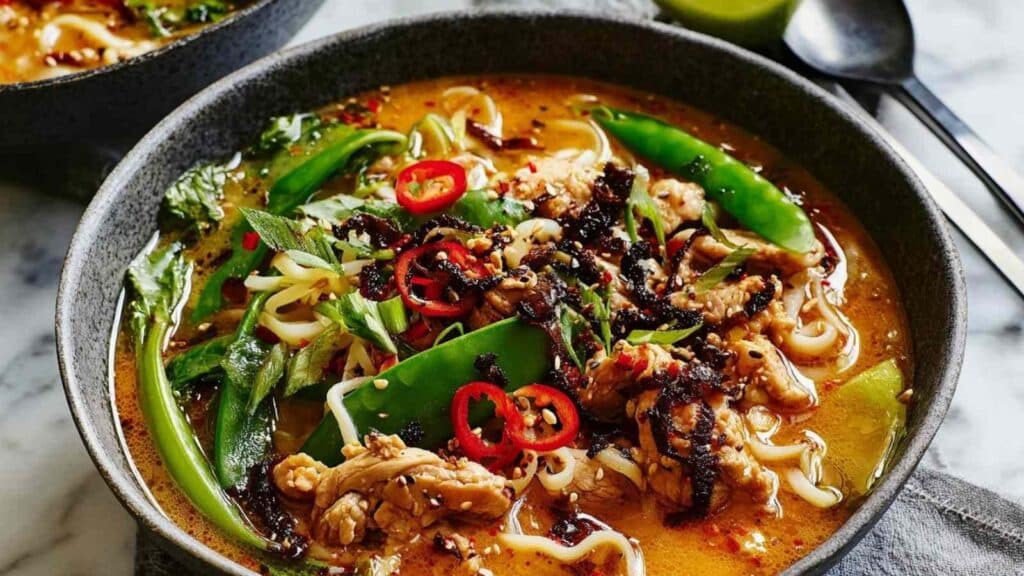
“You sure this combo works?” my friend texted as I was halfway through stirring a pot of something that smelled like a spicy sesame dream. Honestly, I was winging it—half tired, half curious, trying to fix a fridge that was shockingly bare except for a lonely turkey breast and a few odds and ends. The tahini and gochujang (that fiery Korean chili paste) seemed like an odd pair at first. I’d never thought to mix creamy, nutty tahini with the bold, spicy kick of gochujang in a noodle broth. But there I was, noodling around with flavors late at night, and guess what? It turned out to be something special.
That herb-crusted turkey? Just a quick idea sparked by a packet of mixed dried herbs, a little olive oil, and a craving for something crispy, savory, and comforting. The broth soaked up all those flavors, making the noodles sing. Honestly, it felt like the kitchen was whispering, “Keep this one.”
What stuck with me most was the balance—rich and spicy, creamy and fresh, hearty but not heavy. It’s the kind of recipe that quietly invites you to slow down, take a deep breath, and savor something unexpected but totally satisfying. So if you ever find yourself staring into your fridge, wondering how to make magic out of a few ingredients, this flavorful tahini gochujang noodle broth with herb-crusted turkey might just be your next quiet kitchen win.
Why You’ll Love This Recipe
This recipe has become a regular in my rotation because it’s one of those rare dishes that feels fancy but actually comes together with ease. After testing it multiple times, here’s why I keep coming back:
- Quick & Easy: Ready in under 40 minutes, making it perfect for busy weeknights or when you want something comforting without fuss.
- Simple Ingredients: Uses pantry staples like tahini and gochujang, plus turkey breast and basic herbs you probably have on hand.
- Perfect for Cozy Dinners: Whether it’s a chilly evening or you just want a bowl that warms you from the inside out, this hits the spot.
- Crowd-Pleaser: The spicy-sesame broth appeals to those who love bold flavors, while the herb-crusted turkey keeps it grounded and approachable.
- Unbelievably Delicious: The creamy tahini balances the heat of gochujang, creating a silky broth that clings to every noodle perfectly.
What sets this apart is the herb-crusted turkey. Instead of just shredded meat, the crust adds texture and flavor contrast that brings the whole dish to life. Plus, the broth’s flavor is a little different from your typical noodle soup—it’s rich but fresh, spicy but soothing. It’s the kind of recipe that makes you close your eyes with the first slurp, appreciating the layers of taste.
It’s also forgiving—if you want to swap in chicken or go vegetarian, you can, and it still works beautifully. Honestly, I think this broth could be the star of your next cozy dinner, especially if you like the sound of a sticky garlic chicken noodles but want something with a little more kick and creaminess.
What Ingredients You Will Need
This recipe uses simple, wholesome ingredients to deliver bold flavor and satisfying texture without the fuss. Most are pantry staples or easy to find at your local store.
- For the Broth:
- 2 tablespoons tahini (I like Soom brand for its smoothness)
- 1.5 tablespoons gochujang (Korean chili paste; Chung Jung One is my favorite)
- 4 cups low-sodium chicken broth (or vegetable broth for a lighter base)
- 2 tablespoons soy sauce (use tamari for gluten-free)
- 1 tablespoon rice vinegar (adds brightness)
- 1 teaspoon toasted sesame oil (just a touch for that nutty aroma)
- 2 cloves garlic, minced (for punch)
- 1 teaspoon fresh ginger, grated (optional, but recommended)
- For the Herb-Crusted Turkey:
- 1 pound turkey breast, skin removed and patted dry
- 2 tablespoons olive oil (for coating)
- 1 tablespoon dried oregano
- 1 tablespoon dried thyme
- 1 teaspoon garlic powder
- Salt and freshly ground black pepper, to taste
- Noodles and Garnishes:
- 8 ounces fresh or dried ramen or udon noodles
- 2 green onions, thinly sliced (for freshness)
- 1 cup fresh cilantro leaves or parsley (optional, for brightness)
- 1 teaspoon toasted sesame seeds (optional, for crunch)
- Red pepper flakes (optional, if you want extra heat)
If you can’t find gochujang, a mix of chili paste and a touch of miso can substitute, but the flavor won’t be quite the same. For gluten-free, swap soy sauce with coconut aminos and use rice noodles instead of wheat-based ones. This flexibility makes the recipe easy to tailor.
Equipment Needed
- Large pot or Dutch oven – to simmer the broth and cook noodles comfortably
- Medium skillet or cast-iron pan – for searing and crisping the herb-crusted turkey
- Mixing bowls – to toss the turkey with herbs and oil
- Whisk or spoon – for blending the tahini and gochujang into the broth evenly
- Sharp knife and cutting board – for prepping garlic, ginger, herbs, and turkey
- Fine mesh strainer (optional) – handy if you want to rinse noodles or strain broth
Honestly, you don’t need fancy gadgets here. A well-seasoned skillet makes the turkey crust crisp up beautifully, but any non-stick pan works fine too. I’ve tried this with a simple stainless steel pan, and it still turns out well as long as the pan is hot.
If you have a noodle strainer or spider skimmer, that makes transferring noodles easier, but a slotted spoon will do in a pinch. Also, keeping your knife sharp will save you some grief when slicing the turkey thinly for plating.
Preparation Method
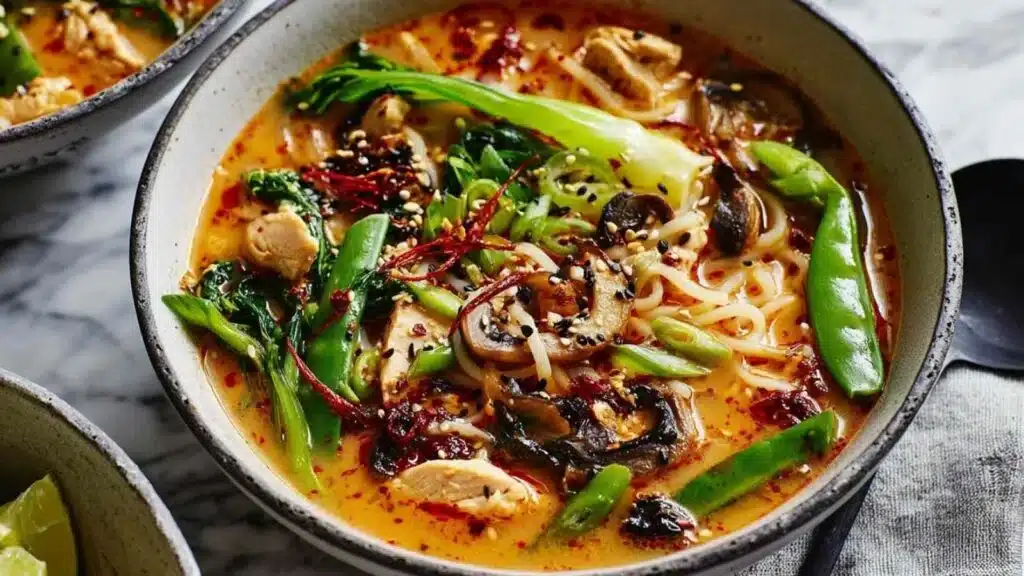
- Prep the Turkey: Pat the turkey breast dry with paper towels, then rub it evenly with olive oil. Combine oregano, thyme, garlic powder, salt, and pepper in a small bowl, and sprinkle this mixture generously over the turkey, pressing it in to form a herb crust. Let it sit while you start the broth (about 10 minutes).
- Cook the Turkey: Heat a medium skillet over medium-high heat. When hot, add the turkey and sear on each side for about 4-5 minutes until golden and crusted. Reduce heat to medium-low and cook for another 5-7 minutes, turning occasionally, until the internal temperature reaches 165°F (74°C). Remove from heat and let rest for 5 minutes before slicing thinly against the grain.
- Make the Broth Base: While turkey cooks, in a large pot, whisk together tahini and gochujang until smooth. Slowly add chicken broth, whisking to combine. Stir in soy sauce, rice vinegar, sesame oil, minced garlic, and fresh ginger. Bring to a gentle simmer over medium heat, letting the flavors meld for about 10 minutes. Taste and adjust seasoning as needed—sometimes a splash more soy or vinegar brightens it up.
- Cook the Noodles: In a separate pot, boil water and cook noodles according to package instructions until just tender (usually 3-5 minutes for fresh noodles, longer for dried). Drain and rinse briefly under warm water to stop cooking.
- Assemble the Bowls: Divide noodles among serving bowls. Ladle the hot tahini gochujang broth over noodles, then top with sliced herb-crusted turkey. Garnish with green onions, fresh cilantro or parsley, toasted sesame seeds, and a pinch of red pepper flakes if you like it hotter.
- Final Taste Check: Take a moment to smell that aroma—the tangy, spicy broth mingling with herbs and turkey. Sip a little broth to see if it needs a pinch of salt or a squeeze of lime for brightness (totally optional but can add a nice pop).
- Serve Immediately: This dish is best enjoyed fresh, while the broth is piping hot and the turkey maintains its crisp crust.
Pro tip: Resting the turkey after cooking is key to keeping it juicy and tender. Also, don’t skip whisking the tahini and gochujang together first—it helps prevent clumps and ensures that smooth, luscious broth texture.
Cooking Tips & Techniques
Working with tahini and gochujang together can be a bit intimidating at first, but a few things make the process smoother:
- Warm Your Tahini: If your tahini is thick or cold, gently warming it makes whisking easier and helps it blend evenly into the broth.
- Control the Heat: Gochujang varies in spiciness by brand, so start with a smaller amount and add more to taste. It’s easier to add heat than to tone it down.
- Herb Crust Secrets: Patting the turkey completely dry before oiling and seasoning helps the herb crust stick and crisp properly.
- Rest Meat Properly: Letting the turkey rest after cooking prevents drying out and makes slicing easier.
- Noodle Timing: Cook noodles just before serving to prevent them from getting mushy in the broth. If prepping ahead, keep them lightly tossed in oil to avoid sticking.
- Multitask Smart: While the broth simmers, cook the turkey and noodles simultaneously to save time without rushing.
- Texture Balance: For a little extra crunch, sprinkling toasted sesame seeds or even crushed peanuts adds a nice contrast to the creamy broth.
One early attempt I made was tossing the turkey directly into the broth, but the crust softened too much. Since then, I serve the sliced turkey on top so each bite has that crisp bite alongside silky noodles. It really makes all the difference.
Variations & Adaptations
This recipe is a solid base to customize depending on your taste or what’s in your kitchen:
- Vegetarian Version: Skip the turkey and add pan-seared tofu or roasted mushrooms for umami-packed protein. The broth stays just as flavorful and creamy.
- Spice Level: For a milder broth, reduce gochujang and add a teaspoon of honey or maple syrup to balance heat. For spice lovers, add extra chili flakes or a drizzle of chili oil.
- Herb Swaps: Use fresh herbs like rosemary or sage if you prefer over dried. Fresh herbs give a fragrant punch but add them sparingly to avoid overpowering flavors.
- Noodle Choice: Udon or ramen noodles work beautifully, but rice noodles or soba can be swapped in for gluten-free or different textures.
- Turkey Alternatives: Chicken breast or pork tenderloin can be herb-crusted and cooked the same way. Even smoked turkey from deli slices works in a pinch for a quicker fix.
One variation I tried recently was adding a soft-boiled egg on top, like a ramen bowl. The yolk mixed into the broth added a luscious creaminess that was pure comfort. If you love dishes like the lasagna soup recipe, this noodle broth hits a similar cozy note but with an Asian twist.
Serving & Storage Suggestions
Serve this flavorful tahini gochujang noodle broth hot, right after assembling, so you get the full contrast of textures—the steaming broth, silky noodles, and crisp turkey crust.
For presentation, a deep bowl garnished with fresh herbs and a sprinkle of sesame seeds makes it look inviting and vibrant. Pair it with a light Asian-style cucumber salad or steamed greens to round out the meal.
Leftovers store well in the fridge but keep the broth separate from noodles and turkey if possible to prevent sogginess. Reheat broth gently on the stove, then add noodles and turkey back just before serving.
Flavors actually develop and deepen if you make the broth a day ahead, so it’s great for meal prep. Just reheat and assemble fresh for best texture.
Nutritional Information & Benefits
This dish is packed with protein from the turkey, healthy fats from tahini and sesame oil, and vitamins from fresh herbs and garlic. The broth is low in calories but rich in flavor, making it a satisfying yet light meal option.
Tahini adds calcium and magnesium, while gochujang contributes capsaicin, which may aid metabolism. Using lean turkey keeps the fat content moderate without sacrificing tenderness or taste.
For those watching carbs, swapping noodles for spiralized veggies or shirataki noodles works well. This recipe is naturally gluten-free if you choose gluten-free soy sauce and noodles.
Conclusion
This flavorful tahini gochujang noodle broth with herb-crusted turkey is one of those recipes that feels like a little secret worth sharing. It’s approachable, comforting, and full of character—perfect for when you want something warming with a bit of a spicy kick but without the fuss.
I love how adaptable it is, from the broth’s creamy-spicy blend to the crispy turkey that adds texture and depth. Plus, it’s a great way to use turkey breast beyond the usual roasting or sandwiches (though if you want a fun turkey twist for parties, you might enjoy my crispy baked turkey sliders recipe too).
Give it a try, tweak it to your liking, and let me know how you make it your own. Cooking is all about experimenting and sharing those little wins that brighten your day.
Frequently Asked Questions
Can I prepare the broth ahead of time?
Yes! The broth tastes even better the next day. Store it separately from noodles and turkey, then reheat gently before serving.
What type of noodles works best?
Fresh ramen or udon noodles work great, but dried versions or even rice noodles are fine substitutes depending on your preference.
Is this recipe very spicy?
The heat level depends on the amount of gochujang you use. Start with less and add more if you want extra kick. You can also balance heat with a bit of sweetness like honey.
Can I use leftover cooked turkey?
Absolutely! Slice it thinly and warm it gently in the broth before serving. Just keep in mind you won’t get the same crust texture.
What’s a good side dish to serve with this noodle broth?
A crisp cucumber salad or steamed greens complement the rich broth nicely. For a heartier meal, consider a simple vegetable stir-fry or pickled veggies.
Pin This Recipe!
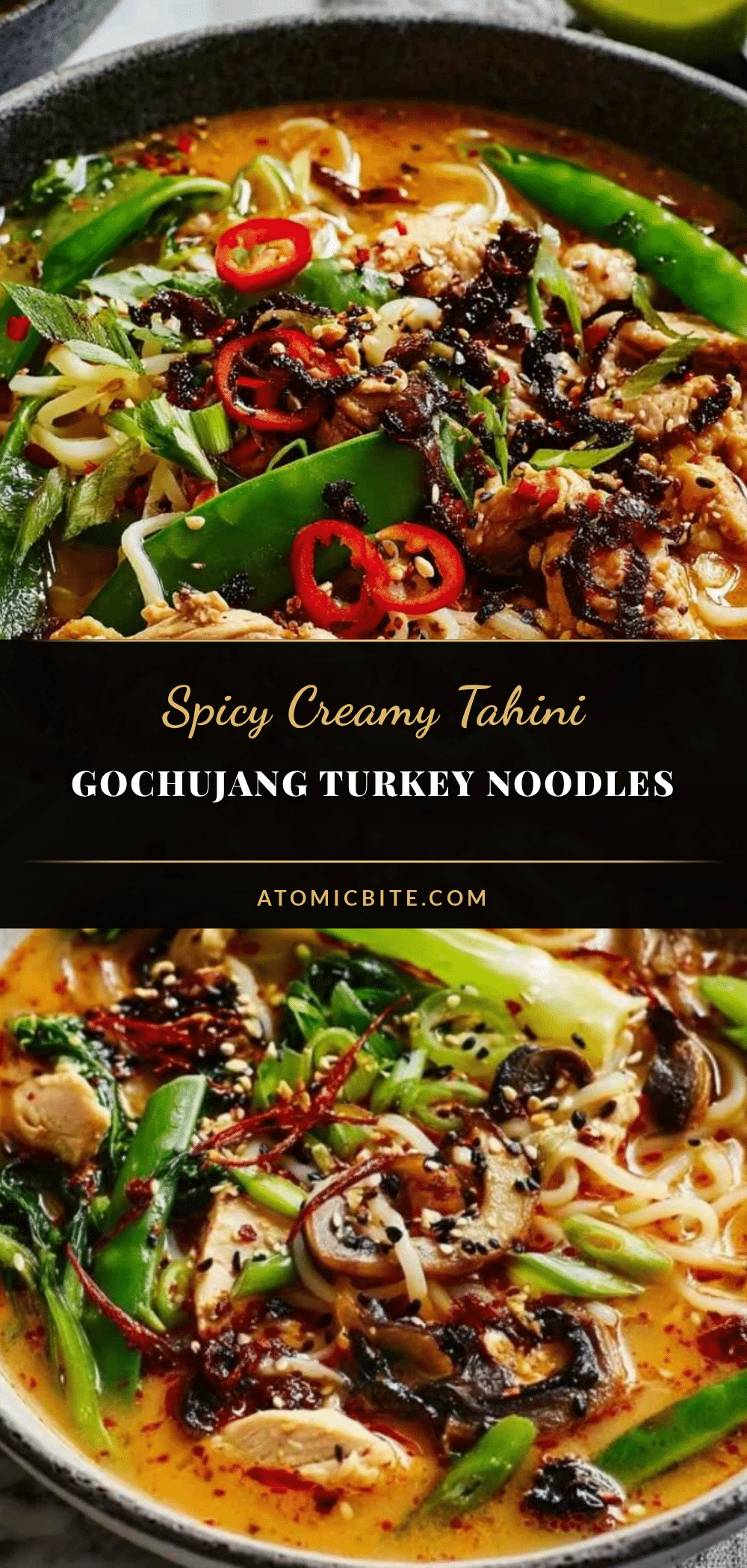
Flavorful Tahini Gochujang Noodle Broth Recipe with Easy Herb-Crusted Turkey

A creamy, spicy noodle broth combining nutty tahini and fiery gochujang, topped with a crispy herb-crusted turkey breast. This quick and easy recipe delivers bold flavors and comforting textures perfect for cozy dinners.
- Prep Time: 15 minutes
- Cook Time: 25 minutes
- Total Time: 40 minutes
- Yield: 4 servings 1x
- Category: Main Course
- Cuisine: Korean-Asian Fusion
Ingredients
- 2 tablespoons tahini
- 1.5 tablespoons gochujang (Korean chili paste)
- 4 cups low-sodium chicken broth (or vegetable broth)
- 2 tablespoons soy sauce (use tamari for gluten-free)
- 1 tablespoon rice vinegar
- 1 teaspoon toasted sesame oil
- 2 cloves garlic, minced
- 1 teaspoon fresh ginger, grated (optional)
- 1 pound turkey breast, skin removed and patted dry
- 2 tablespoons olive oil
- 1 tablespoon dried oregano
- 1 tablespoon dried thyme
- 1 teaspoon garlic powder
- Salt and freshly ground black pepper, to taste
- 8 ounces fresh or dried ramen or udon noodles
- 2 green onions, thinly sliced
- 1 cup fresh cilantro leaves or parsley (optional)
- 1 teaspoon toasted sesame seeds (optional)
- Red pepper flakes (optional)
Instructions
- Pat the turkey breast dry with paper towels, then rub it evenly with olive oil. Combine oregano, thyme, garlic powder, salt, and pepper in a small bowl, and sprinkle this mixture generously over the turkey, pressing it in to form a herb crust. Let it sit for about 10 minutes.
- Heat a medium skillet over medium-high heat. When hot, add the turkey and sear on each side for about 4-5 minutes until golden and crusted. Reduce heat to medium-low and cook for another 5-7 minutes, turning occasionally, until the internal temperature reaches 165°F (74°C). Remove from heat and let rest for 5 minutes before slicing thinly against the grain.
- While turkey cooks, in a large pot, whisk together tahini and gochujang until smooth. Slowly add chicken broth, whisking to combine. Stir in soy sauce, rice vinegar, sesame oil, minced garlic, and fresh ginger. Bring to a gentle simmer over medium heat, letting the flavors meld for about 10 minutes. Taste and adjust seasoning as needed.
- In a separate pot, boil water and cook noodles according to package instructions until just tender (usually 3-5 minutes for fresh noodles). Drain and rinse briefly under warm water to stop cooking.
- Divide noodles among serving bowls. Ladle the hot tahini gochujang broth over noodles, then top with sliced herb-crusted turkey. Garnish with green onions, fresh cilantro or parsley, toasted sesame seeds, and a pinch of red pepper flakes if desired.
- Taste the broth and add a pinch of salt or a squeeze of lime for brightness if desired.
- Serve immediately while the broth is piping hot and the turkey crust remains crisp.
Notes
Resting the turkey after cooking keeps it juicy and tender. Whisk tahini and gochujang first to prevent clumps and ensure a smooth broth. Adjust gochujang amount to control spice level. Cook noodles just before serving to avoid mushiness. For gluten-free, use tamari or coconut aminos and rice noodles. The broth tastes better the next day if stored separately from noodles and turkey.
Nutrition
- Serving Size: 1 bowl (approximatel
- Calories: 380
- Sugar: 4
- Sodium: 700
- Fat: 15
- Saturated Fat: 2.5
- Carbohydrates: 30
- Fiber: 3
- Protein: 30
Keywords: tahini, gochujang, noodle broth, herb-crusted turkey, spicy sesame broth, ramen, udon, easy dinner, quick recipe, gluten-free option