
“You sound like you could use a good broth,” my friend said over the phone, her voice carrying that knowing calm only people who’ve survived a brutal cold can muster. I was halfway through a foggy, sniffly day, juggling work calls with a head stuffed full of congestion. Somehow, that simple suggestion sparked something—I dragged myself to the kitchen, tossed a hodgepodge of vegetables into a pot, and let it simmer. The result? This Wholesome Medicinal Veggie Broth for Natural Healing that’s since become my trusted go-to whenever I need a little reset.
It’s funny how something so simple—just veggies, herbs, and patience—can feel like a warm hug on a chilly evening or a balm after a long run of sleepless nights. Honestly, I wasn’t expecting much the first time. I thought, “Sure, a broth is just broth.” But the depth of flavor and the way it seemed to clear my sinuses and soothe my soul was surprising. After making it a few times in one week (yes, I was on a bit of an obsession phase), I realized this was more than just a recipe. It became a ritual, a moment of calm in the chaos, and a reminder that healing often starts in the kitchen.
What made this veggie broth stick with me is that it’s nourishing without being fussy. The ingredients are straightforward, no complicated spice blends or exotic roots—just honest, natural goodness. It’s not just about feeling better physically; it’s about that quiet moment when you sip the broth and feel a little more grounded. And that’s why I still come back to this recipe, no matter the season.
Why You’ll Love This Recipe
This medicinal veggie broth is not your average soup base. After testing countless versions (and yes, tweaking amounts here and there), I can say this one nails the balance between healing and flavor. It’s a humble recipe but with some thoughtful touches that make a big difference.
- Quick & Easy: Ready to simmer in under 15 minutes, and the slow cooking does the magic while you relax or tackle other tasks.
- Simple Ingredients: Uses pantry staples and fresh veggies you likely already have on hand—no extra trips to specialty stores.
- Perfect for Recovery: Ideal for those under the weather, post-workout soreness, or just when you want to nourish your body gently.
- Crowd-Pleaser: The mild but savory flavor appeals to all ages, making it a comforting choice for the whole family.
- Unbelievably Delicious: The slow simmering draws out a rich, layered taste that feels hearty without heaviness.
What sets this broth apart is the use of fresh ginger and garlic in generous amounts, which add natural anti-inflammatory and immune-boosting properties. Plus, the combination of herbs like thyme and bay leaves gives it a subtle depth that most veggie broths miss. I’ve even swapped in low-sodium soy sauce occasionally to add umami punch without overpowering the gentle healing vibe. This isn’t just a broth; it’s a little bowl of natural comfort, perfect for those quiet nights or as a starter before a meal like the sticky garlic chicken noodles.
What Ingredients You Will Need
This recipe uses simple, wholesome ingredients to deliver bold flavor and satisfying texture without the fuss. Most of these are pantry staples, and a few fresh veggies make the broth lively and bright. Feel free to swap or skip items based on what’s available or your taste.
- Vegetables for the Broth Base:
- 2 large carrots, peeled and roughly chopped (adds sweetness and depth)
- 2 celery stalks, chopped (classic aromatic foundation)
- 1 large onion, quartered (yellow or white, for natural savoriness)
- 4 cloves garlic, smashed (immune-boosting and flavorful)
- 1 small parsnip, peeled and chopped (optional, adds earthiness)
- 1 cup mushrooms, sliced (creamy texture and umami)
- Herbs & Seasonings:
- 2 bay leaves (classic broth enhancer)
- 3 sprigs fresh thyme (or 1 tsp dried)
- 1-inch piece fresh ginger, sliced thin (anti-inflammatory powerhouse)
- ½ tsp black peppercorns (whole for gentle spice)
- Salt to taste (start light—you can always add more)
- Liquids & Extras:
- 10 cups filtered water (or low-sodium vegetable broth for a richer start)
- 1 tbsp apple cider vinegar (helps extract minerals from veggies)
- Optional: 1 tbsp low-sodium soy sauce or tamari (for umami depth)
I like using organic vegetables when possible, especially for the broth base, since you’re simmering them for hours. For ginger and garlic, fresher is better—avoid dry or shriveled pieces. If you want a gluten-free broth, tamari is a great soy sauce alternative. In the warmer months, swapping parsnips for fresh zucchini or summer squash adds a lighter touch. This broth is flexible, so don’t stress about exact measurements. Just keep the veggie-to-liquid ratio roughly the same.
Equipment Needed
To make this wholesome medicinal veggie broth, you don’t need fancy kitchen gadgets—just the basics. A large, heavy-bottomed pot or stockpot works best to evenly distribute heat and prevent scorching during the long simmer.
- Large stockpot or Dutch oven (at least 6 quarts/5.7 liters)
- Sharp chef’s knife for chopping vegetables
- Cutting board
- Wooden spoon or heat-resistant spatula
- Fine mesh strainer or cheesecloth for straining the broth
- Storage containers for leftovers (glass jars or BPA-free plastic)
If you don’t have a stockpot, a large saucepan will do, but you may need to divide the broth into batches. I’ve tried using a slow cooker for this recipe, which works well if you want to set it and forget it for 6–8 hours on low. Just be sure to strain thoroughly afterward. For straining, a fine mesh sieve is easier than cheesecloth for quick cleanup. Personally, I keep a dedicated broth pot because it’s such a frequent staple in my kitchen, and cleaning it regularly keeps it stain-free and ready for the next batch.
Preparation Method

- Prep your vegetables: Rinse all fresh produce under cold water. Peel the carrots and parsnip, then chop them roughly into large chunks—about 1.5-inch pieces work well. Quarter the onion and smash the garlic cloves with the side of your knife to release flavor. Slice the mushrooms thinly, and chop celery into 1-inch pieces. (Prep time: 10 minutes)
- Sauté aromatics (optional but recommended): Heat a tablespoon of olive oil or neutral oil in your stockpot over medium heat. Add the onion, garlic, ginger, and celery. Stir occasionally for 5 minutes until fragrant and slightly softened. This step deepens flavor but you can skip it if you’re pressed for time.
- Add remaining vegetables and seasonings: Toss in carrots, parsnip, mushrooms, bay leaves, thyme sprigs, and peppercorns. Pour in the filtered water and apple cider vinegar. Stir gently to combine everything.
- Bring to a boil, then reduce heat: Heat the pot over medium-high until it reaches a rolling boil. Immediately reduce heat to low and cover loosely with a lid, allowing the broth to simmer gently. (Simmer time: 2 to 3 hours)
- Check periodically: Every 30 minutes or so, give the broth a stir and skim off any foam or impurities that float to the top with a spoon. This keeps the broth clear and clean-tasting.
- Strain the broth: Once the simmering is done, remove the pot from heat. Use a fine mesh sieve or cheesecloth-lined colander to strain the broth into a large bowl or another pot. Press gently on the solids to extract as much liquid as possible without breaking them up too much.
- Season to taste: Add salt gradually and taste as you go. If you want a bit more depth, stir in soy sauce or tamari now. Avoid over-salting; you can always add more when reheating.
- Cool and store: Let the broth cool at room temperature for 20 minutes, then transfer to airtight containers. Store in the fridge for up to 5 days or freeze in smaller portions for up to 3 months.
One little trick I learned is to save the strained vegetables and blend them into a smoothie or add to compost—nothing goes wasted around here. Also, don’t rush the simmering; the longer, slower cook extracts more nutrients and flavor. If you’re curious about a heartier soup base, this broth pairs beautifully with a dash of cream or blended beans for richness.
Cooking Tips & Techniques
Making a medicinal veggie broth isn’t rocket science, but a few insider tips can turn a good batch into something memorable.
- Don’t rush the simmer: Slow and steady wins the flavor race. High heat breaks down veggies too quickly, resulting in bitter notes. A gentle simmer allows flavors to meld and nutrients to leach out gently.
- Use fresh, firm vegetables: Wilted or old veggies can lead to dull broth. Crisp carrots and onions are key to that natural sweetness and aroma.
- Skim the foam: As the broth simmers, impurities rise to the surface. Removing this foam keeps your broth clear and prevents a cloudy, off flavor.
- Don’t over-salt early: Salt intensifies as broth reduces. Taste near the end to keep it balanced.
- Experiment with herbs: Thyme, rosemary, or parsley stems add different nuances. Just remember to remove woody stems before serving.
I once tried skipping the apple cider vinegar, thinking it was just a fad, but the broth lacked that subtle brightness that lifts all the flavors. Lesson learned! Also, multitasking works well here—start the broth first, then prep a quick snack like these crispy baked turkey sliders for when your energy rebounds.
Variations & Adaptations
This veggie broth is a great canvas, and tweaking it for different preferences or seasons is easy.
- Immune-Boosting Variation: Add a teaspoon of turmeric powder and a splash of lemon juice after straining for extra anti-inflammatory benefits.
- Low-Sodium Option: Skip the soy sauce and keep salt minimal, relying on fresh herbs like dill or basil for flavor.
- Winter Warmer: Toss in a few slices of fresh jalapeño or a pinch of cayenne pepper for gentle heat to help clear sinuses.
- Vegan Protein Boost: Add a handful of cooked lentils or chickpeas during simmering to enrich the broth with plant protein.
- Slow Cooker Method: Combine ingredients in a slow cooker and cook on low for 6–8 hours, then strain as usual.
One of my favorite twists is adding miso paste at the end for a creamy, fermented tang that feels like a warm hug. If you’re interested in a heartier meal, this broth works beautifully as a base in a lasagna soup too.
Serving & Storage Suggestions
This broth shines served warm, either sipped on its own or as a nourishing base for soups and stews. A simple garnish of fresh parsley or a squeeze of lemon can brighten the bowl beautifully.
For a complete meal, pair it with crusty bread or light salads. It’s also a gentle way to start a meal loaded with richer dishes, like a cozy batch of creamy ground beef and potatoes casserole.
Store leftover broth in airtight containers in the refrigerator for up to five days. For longer storage, freeze in ice cube trays or freezer-safe jars for up to three months. When reheating, gently warm on the stove or microwave—avoid boiling to keep flavors intact.
Over time, the broth’s flavor deepens, so leftovers often taste even better the next day. Just give it a quick stir before serving, and if needed, adjust seasoning to refresh.
Nutritional Information & Benefits
This veggie broth is low in calories (about 40 calories per cup/240 ml) but rich in vitamins and minerals thanks to the simmered vegetables and herbs.
- Loaded with antioxidants and anti-inflammatory compounds from garlic, ginger, and turmeric (if added)
- Good source of hydration and electrolytes, especially with added celery and carrots
- Supports immune function naturally, making it ideal during cold and flu season
- Gluten-free, vegan, and low-carb by default, suitable for many dietary needs
Personally, I appreciate how this broth feels like a gentle reset for my digestion and energy levels. It’s a reminder that simple, real food can be medicine without any extra fuss.
Conclusion
Making this Wholesome Medicinal Veggie Broth for Natural Healing feels like a small act of self-care every time. The comforting aroma, the nourishing taste, and the quiet moments spent sipping it create a ritual I’ve come to cherish. It’s a recipe that’s forgiving and flexible, welcoming your personal twists and preferences.
Whether you’re looking to soothe a scratchy throat, recharge after a workout, or simply enjoy a warm, wholesome drink, this broth has your back. I love how it transforms humble ingredients into something special—something that feels like a little kindness in a bowl.
If you try it, I’d love to hear your thoughts or any variations you come up with. Sharing those little kitchen experiments makes this whole food adventure even better. Here’s to health, warmth, and many cozy bowls ahead!
FAQs
Can I use frozen vegetables for this broth?
Yes, frozen veggies work fine if fresh aren’t available. Just add them slightly later in the simmering process as they cook faster.
How long can I store homemade veggie broth?
Refrigerated broth lasts about 5 days in a sealed container. For longer storage, freeze portions for up to 3 months.
Is this broth suitable for people with allergies?
This recipe is naturally gluten-free and vegan. Avoid soy sauce if you have soy allergies, or substitute with coconut aminos.
Can I add other herbs or spices?
Absolutely! Rosemary, parsley, or even a pinch of turmeric can enhance flavor and benefits. Just avoid overpowering the delicate balance.
What’s the best way to reheat the broth?
Warm gently on the stove or in the microwave; avoid boiling to keep flavors fresh and prevent bitterness.
Pin This Recipe!
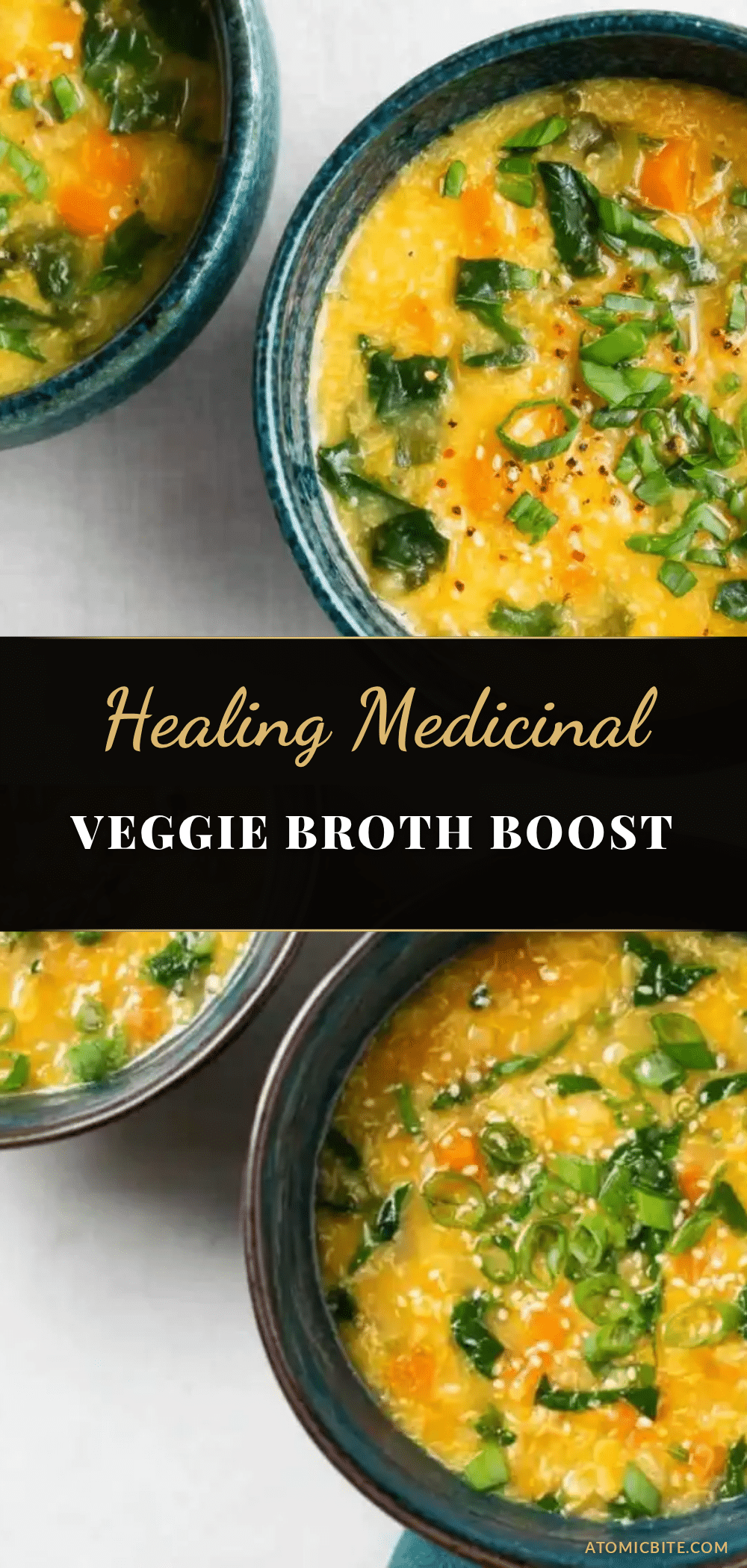
Wholesome Medicinal Veggie Broth Recipe for Natural Healing at Home

A nourishing and flavorful vegetable broth designed to support natural healing and recovery, made with simple pantry staples and fresh vegetables simmered slowly to extract maximum flavor and nutrients.
- Prep Time: 10 minutes
- Cook Time: 2 to 3 hours
- Total Time: 2 hours 10 minutes to 3 hours 10 minutes
- Yield: 8 servings 1x
- Category: Soup / Broth
- Cuisine: American / General
Ingredients
- 2 large carrots, peeled and roughly chopped
- 2 celery stalks, chopped
- 1 large onion, quartered (yellow or white)
- 4 cloves garlic, smashed
- 1 small parsnip, peeled and chopped (optional)
- 1 cup mushrooms, sliced
- 2 bay leaves
- 3 sprigs fresh thyme (or 1 tsp dried)
- 1-inch piece fresh ginger, sliced thin
- ½ tsp black peppercorns (whole)
- Salt to taste
- 10 cups filtered water (or low-sodium vegetable broth)
- 1 tbsp apple cider vinegar
- Optional: 1 tbsp low-sodium soy sauce or tamari
Instructions
- Rinse all fresh produce under cold water. Peel the carrots and parsnip, then chop them roughly into large chunks about 1.5 inches. Quarter the onion and smash the garlic cloves with the side of your knife. Slice the mushrooms thinly and chop celery into 1-inch pieces. (Prep time: 10 minutes)
- Optional: Heat 1 tablespoon olive oil or neutral oil in a stockpot over medium heat. Add onion, garlic, ginger, and celery. Stir occasionally for 5 minutes until fragrant and slightly softened.
- Add carrots, parsnip, mushrooms, bay leaves, thyme sprigs, and peppercorns to the pot. Pour in filtered water and apple cider vinegar. Stir gently to combine.
- Bring the pot to a rolling boil over medium-high heat. Immediately reduce heat to low and cover loosely with a lid. Let simmer gently for 2 to 3 hours.
- Every 30 minutes, stir the broth and skim off any foam or impurities that rise to the surface.
- Remove the pot from heat. Strain the broth through a fine mesh sieve or cheesecloth-lined colander into a large bowl or pot. Press gently on solids to extract liquid without breaking them up too much.
- Season the broth gradually with salt to taste. Stir in soy sauce or tamari if desired for extra umami depth.
- Let the broth cool at room temperature for 20 minutes, then transfer to airtight containers. Store in the refrigerator for up to 5 days or freeze in portions for up to 3 months.
Notes
Slow and gentle simmering is key to extracting maximum flavor and nutrients without bitterness. Skim foam regularly to keep broth clear. Use fresh, firm vegetables for best results. Salt near the end to avoid over-salting. Optional sautéing of aromatics deepens flavor but can be skipped for time. Save strained vegetables for smoothies or compost. For gluten-free soy sauce alternative, use tamari or coconut aminos. Variations include adding turmeric, lemon juice, jalapeño, or plant protein like lentils.
Nutrition
- Serving Size: 1 cup (240 ml)
- Calories: 40
- Sugar: 4
- Sodium: 50
- Fat: 0.2
- Carbohydrates: 9
- Fiber: 2
- Protein: 1
Keywords: vegetable broth, healing broth, medicinal broth, immune-boosting, natural healing, vegan broth, gluten-free broth, homemade broth, slow simmer broth