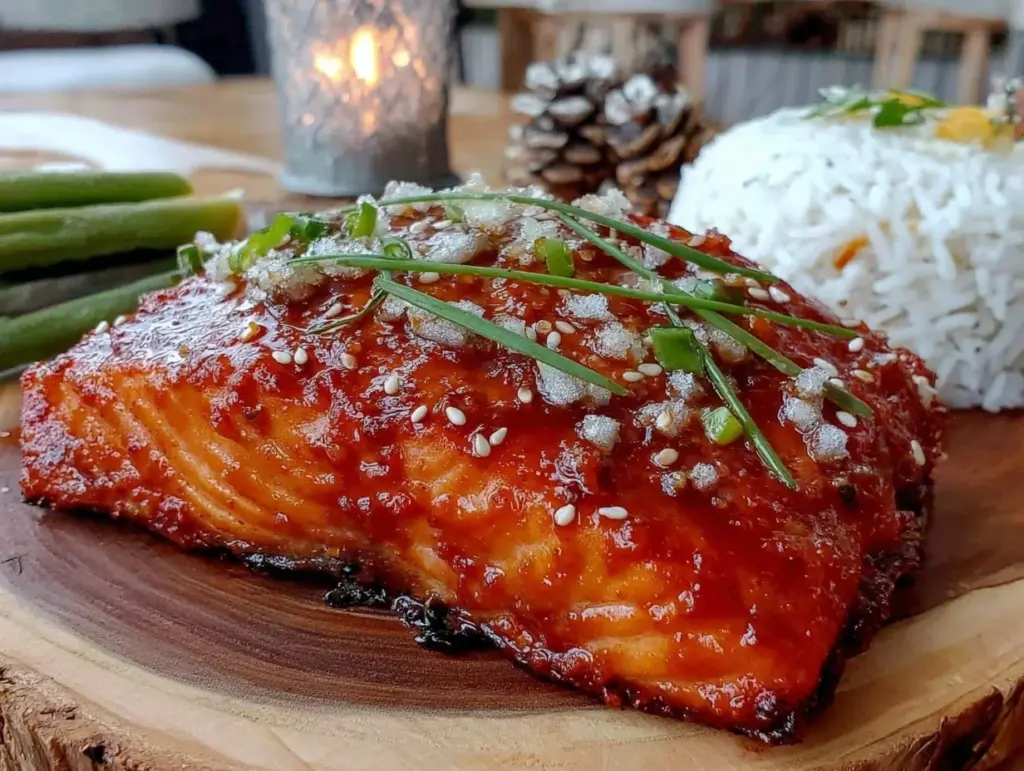
“Are you sure this isn’t a dessert?” my friend asked, eyeing the shiny, sticky glaze on the salmon fillets. Honestly, that was my reaction the first time I tried this flavorful gochujang salmon with spicy-sweet glaze too. I’d been fumbling around the kitchen after a long day, craving something fast but with a punch of flavor. I grabbed a jar of gochujang—Korean chili paste I’d bought on a whim—and mixed it with honey, soy sauce, and a few pantry staples. The result? A glaze that balanced heat and sweetness in a way I didn’t expect, turning simple salmon into a mouthwatering meal that had me hooked for days.
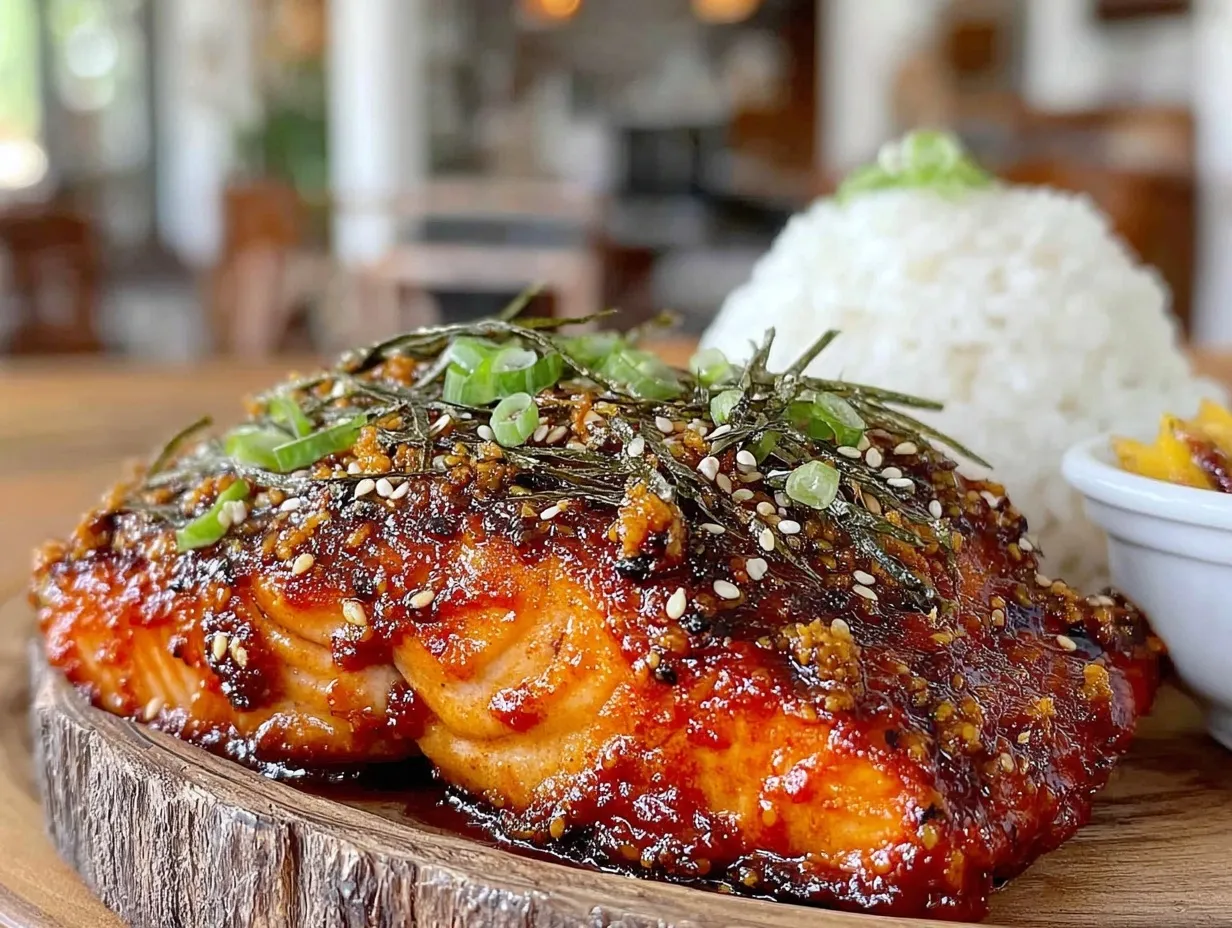
The glaze caramelized perfectly in the oven, creating this glossy, slightly charred coating that made every bite pop with flavor. It was one of those accidental wins where I thought, “Why haven’t I done this before?” Since then, I’ve made this salmon more times than I can count, sometimes swapping sides but always keeping that signature spicy-sweet glaze. It’s become my go-to when I want something impressive but don’t have an hour to fuss over dinner.
There’s just something about the way the gochujang’s smokiness mingles with honey’s mellow sweetness, and soy’s saltiness that feels both comforting and exciting. If you’re curious about a recipe that’s quick, packed with bold flavor, and honestly a little addictive, this one might quietly become your favorite too. No fancy ingredients, no complicated steps—just a simple recipe that hits all the right notes every time.
Why You’ll Love This Recipe
After testing countless variations, this flavorful gochujang salmon recipe with spicy-sweet glaze consistently stood out. Here’s why it’s a winner in my kitchen:
- Quick & Easy: Ready in under 30 minutes, perfect for hectic weeknights or last-minute dinner plans.
- Simple Ingredients: Uses pantry staples and fresh salmon—no need for specialty stores or hard-to-find spices.
- Perfect for Any Occasion: Whether it’s a casual family dinner or a laid-back gathering, it’s a dish that impresses without stress.
- Crowd-Pleaser: The spicy-sweet glaze appeals to kids and adults alike, making it a hit even with picky eaters.
- Unbelievably Delicious: The texture contrast between tender salmon and caramelized glaze delivers a mouthwatering experience every time.
What sets this recipe apart? It’s the balance. Instead of overpowering heat, the gochujang blends with honey and soy sauce to create a glaze that’s spicy, sweet, and just a little smoky. I’ve found that gently roasting the salmon ensures the glaze thickens beautifully without burning, which is a trick I hadn’t mastered until this version.
Honestly, this recipe isn’t just about flavor—it’s about turning a simple ingredient like salmon into something that feels special and satisfying. If you’ve ever made salmon that turned out bland or boring, this glaze is a game changer. Plus, pairing it with easy sides like steamed rice or roasted veggies makes for a balanced meal that doesn’t leave you hungry or overwhelmed.
What Ingredients You Will Need
This recipe uses simple, wholesome ingredients to create bold, balanced flavor without fuss. Most are pantry staples, and substitutions are easy if you want to tweak the heat or sweetness.
- Salmon Fillets: Skin-on, about 6 ounces (170 grams) each. I prefer wild-caught for flavor, but farmed works too.
- Gochujang (Korean Chili Paste): About 3 tablespoons. This is the star—look for a reputable brand like Chung Jung One for authentic taste.
- Honey: 2 tablespoons. Adds natural sweetness and helps caramelize the glaze.
- Soy Sauce: 2 tablespoons, low sodium preferred to control saltiness.
- Rice Vinegar: 1 tablespoon. Balances the sweetness with a mild tang.
- Sesame Oil: 1 teaspoon. Adds a subtle nutty depth.
- Garlic: 2 cloves, minced. Fresh garlic brings a punchy aroma and flavor.
- Fresh Ginger: 1 teaspoon, grated. Optional but recommended for a warm, spicy note.
- Black Pepper: To taste.
- Sesame Seeds: For garnish, adds crunch and visual appeal.
- Green Onions: Thinly sliced, for garnish and freshness.
Substitution Tips: If you don’t have honey, maple syrup or brown sugar work fine but adjust sweetness to your taste. For gluten-free, swap soy sauce with tamari. If you want less heat, reduce gochujang to 1-2 tablespoons or mix with a spoonful of tomato paste for milder flavor.
Equipment Needed
- Baking Sheet or Ovenproof Pan: For roasting the salmon evenly. I prefer a rimmed baking sheet lined with foil for easy cleanup.
- Mixing Bowl: To whisk together the glaze ingredients.
- Brush or Spoon: For spreading the glaze over the salmon fillets.
- Knife and Cutting Board: For prepping garlic, ginger, and green onions.
- Measuring Spoons: To ensure precise measurements of the glaze ingredients.
If you don’t have a baking sheet, a cast iron skillet works well and adds a nice sear. Just keep an eye on the glaze so it doesn’t burn. For smaller kitchens or budget-conscious cooks, these tools are easy to find and often already on hand.
Preparation Method
- Preheat the oven to 400°F (200°C). Line a baking sheet with foil or parchment paper for easier cleanup. This step helps the salmon cook evenly and the glaze to caramelize nicely.
- Prepare the glaze: In a medium bowl, whisk together 3 tablespoons gochujang, 2 tablespoons honey, 2 tablespoons soy sauce, 1 tablespoon rice vinegar, 1 teaspoon sesame oil, minced garlic, and grated ginger until smooth. The mixture should be thick but spreadable. If it’s too thick, add a splash of water.
- Pat the salmon fillets dry with paper towels to help the glaze stick better. Place salmon skin-side down on the baking sheet, leaving space between each piece.
- Brush a generous layer of the glaze over the top of each fillet, making sure to cover every bit. Reserve a small amount of glaze for basting halfway through cooking.
- Roast the salmon for 10 minutes. Then, quickly brush the reserved glaze on top and continue roasting for another 5–7 minutes, or until salmon flakes easily with a fork and the glaze is caramelized but not burnt.
- Remove from oven and let rest for a couple of minutes. Sprinkle with toasted sesame seeds and sliced green onions for garnish before serving.
Tips: Keep an eye on the salmon after the second glaze application—oven temperatures vary, and the sugars in the glaze can burn quickly. The salmon is done when it flakes easily but still feels moist. Overcooking can dry it out.
For a hands-off approach, try this recipe alongside a quick side like steamed rice or roasted broccoli. This glaze also works beautifully on salmon cooked in a skillet; just sear skin-side down first, then flip and coat with glaze to finish in the oven or covered on the stovetop.
Cooking Tips & Techniques
Getting the glaze just right is crucial, so here are some of the tricks I’ve learned after a few trial runs:
- Don’t skip drying the salmon: Moisture is the enemy of glaze adherence. Patting the fillets dry helps the glaze stick and caramelize rather than slide off.
- Use room temperature salmon: Taking the chill off the fish before cooking helps it cook more evenly and prevents the glaze from cracking.
- Watch the oven: Because of the honey and gochujang sugars, the glaze can burn fast. I usually set a timer for 12 minutes and check frequently after that.
- Adjust heat to taste: If you’re sensitive to spice, blend the gochujang with a little tomato paste or extra honey for milder flavor.
- Resting is key: Let the salmon rest for a couple of minutes after cooking. It allows the juices to redistribute and the glaze to set perfectly.
One personal fail I remember was rushing the glaze step and spreading it too thin. The salmon ended up bland, and the glaze barely caramelized. Lesson learned: be generous with that spicy-sweet goodness!
Variations & Adaptations
This recipe is flexible and can be tailored to different tastes and dietary needs. Here are some ideas I’ve tried or recommend:
- Spicy Kick: Add a pinch of red pepper flakes or a drizzle of sriracha to the glaze for an extra punch.
- Gluten-Free: Substitute soy sauce with tamari or coconut aminos—both work beautifully without altering the flavor much.
- Low-Sugar: Reduce honey and replace with a splash of orange juice for natural sweetness while cutting down sugar.
- Grilled Version: Brush the glaze on salmon fillets and grill over medium heat for about 4-5 minutes per side, basting once more with glaze to build layers.
- Mix Up the Protein: This spicy-sweet glaze pairs wonderfully with other fish like cod or halibut, or even chicken thighs.
Once, I swapped the honey for maple syrup and added a dash of smoked paprika. It gave the salmon a subtle smokiness that was unexpected but delicious. It’s fun to tweak the glaze a bit to keep things interesting.
Serving & Storage Suggestions
This salmon is best served warm, right out of the oven, so the glaze is sticky and aromatic. For sides, steamed jasmine rice or even a simple cucumber salad balances the spice perfectly. I often serve it alongside roasted garlic broccoli or a light Asian slaw to add crunch.
Leftovers keep well in an airtight container in the refrigerator for up to 2 days. When reheating, I recommend warming gently in a skillet or oven to preserve the glaze’s texture—microwaving can make it soggy.
Over time, the flavors deepen, so if you make this ahead, the glaze mellows and tastes almost like a sweet barbecue sauce the next day. It’s a great make-ahead option for busy nights.
If you enjoy dishes like this, you might appreciate the bold flavors in the sticky garlic chicken noodles or the fun finger food vibe of the crispy baked turkey sliders. Both complement the spicy-sweet profile beautifully and make weeknight dinners feel special.
Nutritional Information & Benefits
Each serving (one 6-ounce fillet with glaze) provides approximately:
| Calories | 350 kcal |
|---|---|
| Protein | 34 grams |
| Fat | 15 grams (mostly healthy fats) |
| Carbohydrates | 12 grams |
| Sugar | 8 grams (from honey and natural ingredients) |
Salmon is an excellent source of omega-3 fatty acids, which support heart and brain health. The gochujang and garlic bring antioxidants and immune-boosting compounds, while the glaze’s balance of sweet and spicy keeps the recipe exciting without overwhelming calories.
If you’re mindful of gluten, swapping soy sauce with tamari keeps it safe, and the recipe is naturally low-carb and keto-friendly when served without rice or sugary sides.
Conclusion
This flavorful gochujang salmon with spicy-sweet glaze hits all the right notes when you want a meal that’s fast, flavorful, and fuss-free. It’s one of those recipes that feels fancy but is honestly just simple ingredients and straightforward steps coming together beautifully.
Feel free to customize the glaze heat, sweetness, or even the cooking method to suit your preferences. I love that it’s adaptable enough to work for busy weeknights yet impressive enough for casual dinner guests.
Personally, this recipe stuck with me because it transformed a regular salmon fillet into something I craved repeatedly, no matter how many times I made it. I hope it does the same for you.
If you give it a try, I’d love to hear what variations you come up with or how it fits into your meal routine. Cooking is always better when shared, right?
FAQs
Can I make this gochujang salmon on the grill?
Yes! Brush the glaze on both sides and grill over medium heat for about 4-5 minutes per side. Baste with extra glaze once midway through grilling for an even more flavorful finish.
What if I don’t have fresh ginger or garlic?
You can use ½ teaspoon of ground ginger and ¼ teaspoon garlic powder as substitutes. Fresh is best for that bright flavor, but dried spices work in a pinch.
Is gochujang very spicy?
It has a moderate heat level with a sweet and fermented depth. If you’re sensitive to spice, use less or mix with a bit of tomato paste or extra honey to tone it down.
Can I use frozen salmon for this recipe?
Absolutely. Thaw completely and pat dry before applying the glaze to ensure it sticks well and cooks evenly.
How should I store leftovers and reheat them?
Keep leftovers in an airtight container in the fridge for up to 2 days. Reheat gently in a skillet or oven to maintain the glaze’s texture and flavor.
Pin This Recipe!
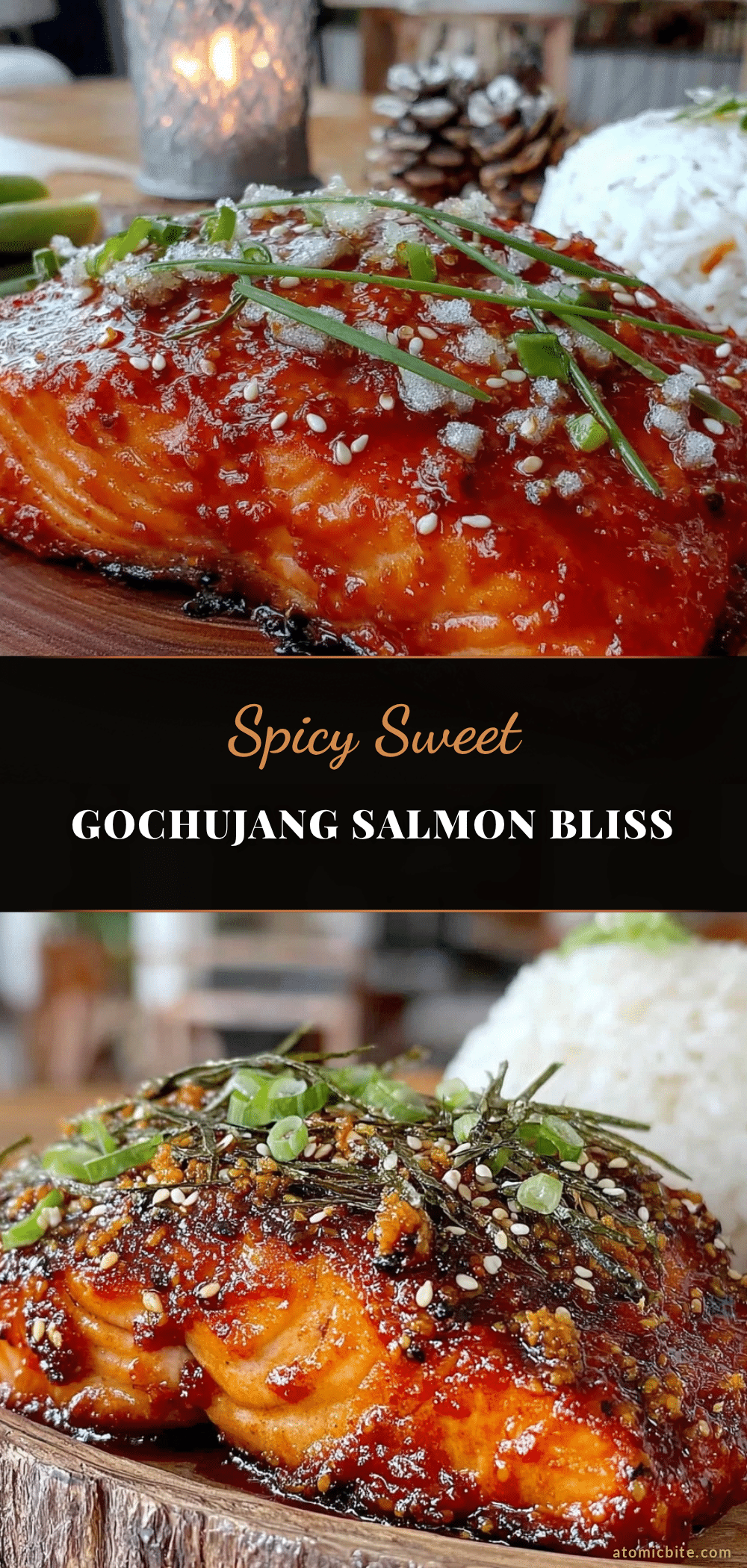
Flavorful Gochujang Salmon Recipe Easy Spicy Sweet Glaze Guide

A quick and easy salmon recipe featuring a spicy-sweet gochujang glaze that caramelizes beautifully in the oven, delivering bold, balanced flavors perfect for any occasion.
- Prep Time: 10 minutes
- Cook Time: 17 minutes
- Total Time: 27 minutes
- Yield: 4 servings 1x
- Category: Main Course
- Cuisine: Korean
Ingredients
- 4 salmon fillets, skin-on, about 6 ounces each
- 3 tablespoons gochujang (Korean chili paste)
- 2 tablespoons honey
- 2 tablespoons low sodium soy sauce
- 1 tablespoon rice vinegar
- 1 teaspoon sesame oil
- 2 cloves garlic, minced
- 1 teaspoon fresh ginger, grated (optional)
- Black pepper, to taste
- Sesame seeds, for garnish
- Green onions, thinly sliced, for garnish
Instructions
- Preheat the oven to 400°F (200°C). Line a baking sheet with foil or parchment paper for easier cleanup.
- In a medium bowl, whisk together gochujang, honey, soy sauce, rice vinegar, sesame oil, minced garlic, and grated ginger until smooth. Add a splash of water if the mixture is too thick.
- Pat the salmon fillets dry with paper towels. Place them skin-side down on the prepared baking sheet, leaving space between each piece.
- Brush a generous layer of the glaze over the top of each fillet, reserving a small amount for basting later.
- Roast the salmon for 10 minutes. Then brush the reserved glaze on top and continue roasting for another 5 to 7 minutes, or until the salmon flakes easily with a fork and the glaze is caramelized but not burnt.
- Remove from the oven and let rest for a couple of minutes. Sprinkle with toasted sesame seeds and sliced green onions before serving.
Notes
Pat salmon dry before glazing to ensure the glaze sticks and caramelizes well. Watch closely after applying the second glaze to prevent burning. The glaze can be adjusted for heat by reducing gochujang or mixing with tomato paste. Leftovers keep well refrigerated for up to 2 days and reheat best in a skillet or oven to preserve glaze texture.
Nutrition
- Serving Size: One 6-ounce salmon f
- Calories: 350
- Sugar: 8
- Fat: 15
- Carbohydrates: 12
- Protein: 34
Keywords: gochujang salmon, spicy salmon glaze, Korean salmon recipe, easy salmon recipe, sweet and spicy salmon, weeknight dinner, healthy salmon