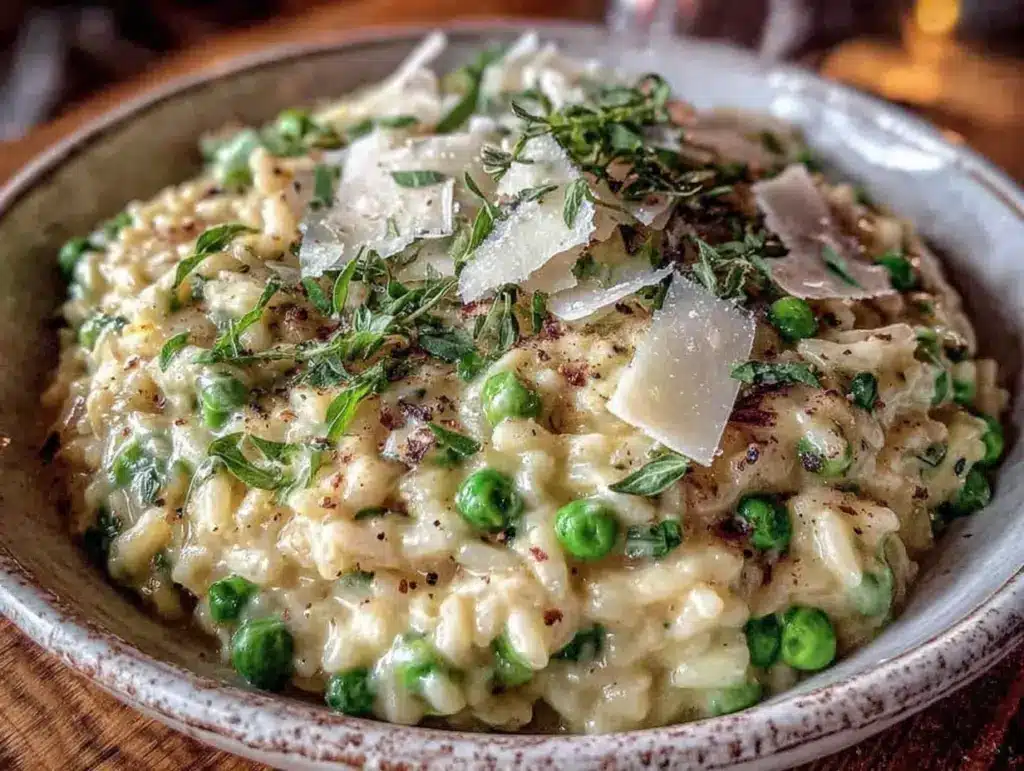
Let me tell you, the moment the aroma of tender spring peas mingled with garlic and fresh herbs filled my kitchen, I knew I had stumbled upon something truly special. The first time I made this creamy spring pea risotto with fresh herbs, it was on a breezy Saturday afternoon when I was knee-high to a grasshopper—well, not literally, but you get the idea! The kind of moment where you pause, take a deep breath, and just smile because you know you’re onto a dish that feels like a warm hug on a plate. Honestly, it’s dangerously easy and delivers pure, nostalgic comfort that brightens even the dullest day.
Years ago, I found myself craving a dish that celebrated the fresh flavors of spring without fussing over complicated techniques. This risotto came to life on a rainy weekend, inspired by my grandma’s garden bounty and her knack for turning simple ingredients into magic. My family couldn’t stop sneaking spoonfuls while it was still warm—(and I can’t really blame them). This recipe has since become a staple for family gatherings and potlucks, always earning those “wow, what’s in this?” questions.
You know what makes this creamy spring pea risotto with fresh herbs so irresistible? It’s the balance of silky Arborio rice, bright garden peas, and the fragrant pop of fresh herbs like parsley and mint. Perfect for impressing guests without stress, or just a sweet treat for yourself when you want something cozy and satisfying. I’ve tested this recipe multiple times—in the name of research, of course—and it’s one you’re going to want to bookmark for those breezy spring evenings or whenever you feel like a little culinary sunshine.
Why You’ll Love This Creamy Spring Pea Risotto with Fresh Herbs
This creamy spring pea risotto with fresh herbs isn’t just any risotto—it’s a recipe I’ve honed through countless trials and cozy kitchen sessions. Here’s why it stands out:
- Quick & Easy: Ready to serve in under 40 minutes, making it perfect for busy weeknights or last-minute dinner plans.
- Simple Ingredients: You likely have everything in your pantry and fridge—no elaborate grocery runs required.
- Perfect for Spring: Celebrates fresh peas and herbs at their peak, but just as lovely with frozen peas on short notice.
- Crowd-Pleaser: Kids and adults alike love its creamy texture and fresh, vibrant flavor.
- Unbelievably Delicious: The creamy, slightly chewy rice combined with sweet peas and herbaceous notes gives you comfort food with a fresh twist.
What really makes this recipe different? It’s the way you cook the rice slowly, stirring patiently to coax out that luscious creaminess without drowning it in cheese or cream. Plus, adding fresh herbs at the end gives it a bright lift that feels like spring in every bite. Honestly, this risotto is the kind that makes you close your eyes after the first spoonful and think, “Yep, this is exactly what I needed.” Whether you’re looking to impress dinner guests or just want a soulful meal to savor, this recipe delivers every time.
What Ingredients You Will Need
This creamy spring pea risotto with fresh herbs uses simple, wholesome ingredients to deliver bold flavor and a satisfying texture without the fuss. Most are pantry staples, and a few fresh finds make all the difference.
- Arborio rice: 1 ½ cups (300 g) – the key to that creamy risotto texture
- Spring peas: 1 ½ cups fresh or frozen (about 225 g) – sweet and tender, the star of the show
- Vegetable broth: 5 cups (1.2 liters), warmed – I prefer a low-sodium brand like Imagine for best control over salt
- Dry white wine: ½ cup (120 ml) – optional, but adds a lovely depth of flavor
- Shallot: 1 small, finely chopped – brings a subtle sweetness
- Garlic: 2 cloves, minced – for that aromatic punch
- Unsalted butter: 3 tablespoons (45 g), divided – adds richness and silkiness
- Parmesan cheese: ½ cup grated (about 50 g) – freshly grated for best melting
- Fresh herbs: 2 tablespoons chopped parsley and 1 tablespoon chopped mint – brightens the dish with herbal notes
- Olive oil: 1 tablespoon – for sautéing
- Salt and freshly ground black pepper: to taste
- Lemon zest: from 1 lemon – optional but highly recommended for a fresh zing
Ingredient tips: If you can get your hands on the freshest spring peas from a farmer’s market, all the better. Frozen peas work well too and keep this recipe accessible year-round. For a dairy-free option, swap butter with vegan margarine and omit Parmesan or use a plant-based alternative. I recommend using good-quality vegetable broth, as it’s the backbone of the flavor here.
Equipment Needed
- Large heavy-bottomed skillet or sauté pan: Essential for even heat distribution and gentle stirring.
- Medium saucepan: to keep the vegetable broth warm throughout cooking.
- Wooden spoon or silicone spatula: for stirring the risotto without damaging the pan.
- Measuring cups and spoons: to keep ingredient amounts precise.
- Fine grater or microplane: for zesting lemon and grating Parmesan cheese.
If you don’t have a heavy-bottomed pan, a thick stainless steel or non-stick skillet will work fine. I’ve also found that a stand mixer with a stir attachment can be a time-saver, but honestly, stirring by hand is part of the fun and helps you connect with the dish. For budget-friendly options, consider a cast iron skillet which lasts forever and improves with use.
Preparation Method
- Warm the broth: Pour 5 cups (1.2 liters) of vegetable broth into a medium saucepan and keep it warm over low heat. This step keeps the risotto cooking smoothly without cooling the rice down.
- Sauté aromatics: In a large heavy-bottomed skillet, heat 1 tablespoon olive oil and 1 tablespoon butter over medium heat. Add the finely chopped shallot and sauté for about 3 minutes until softened and translucent, but not browned. Toss in the minced garlic and cook for another 30 seconds until fragrant.
- Add Arborio rice: Stir in 1 ½ cups (300 g) Arborio rice, coating each grain with the butter and oil mixture. Toast the rice for about 2 minutes, stirring constantly, until the edges turn translucent and it smells nutty.
- Deglaze with wine: Pour in ½ cup (120 ml) dry white wine, stirring continuously until the liquid is mostly absorbed—about 2-3 minutes. If you’re skipping wine, start adding warm broth now.
- Cook the risotto: Add ½ cup (120 ml) warm vegetable broth to the rice and stir gently but continuously until most of the liquid is absorbed. Repeat this process, adding broth ½ cup at a time and stirring often. This should take about 25-30 minutes. The rice will be creamy and tender but still have a slight bite (al dente). If you reach the end of your broth but the rice isn’t quite done, continue adding hot water a little at a time.
- Add peas: About 5 minutes before the rice is finished, stir in 1 ½ cups (225 g) fresh or frozen peas. This keeps them bright green and tender without overcooking.
- Finish with butter and cheese: Remove the pan from heat and stir in the remaining 2 tablespoons (30 g) butter and ½ cup (50 g) grated Parmesan cheese. Season generously with salt and freshly ground black pepper to taste. Add the lemon zest for a fresh pop.
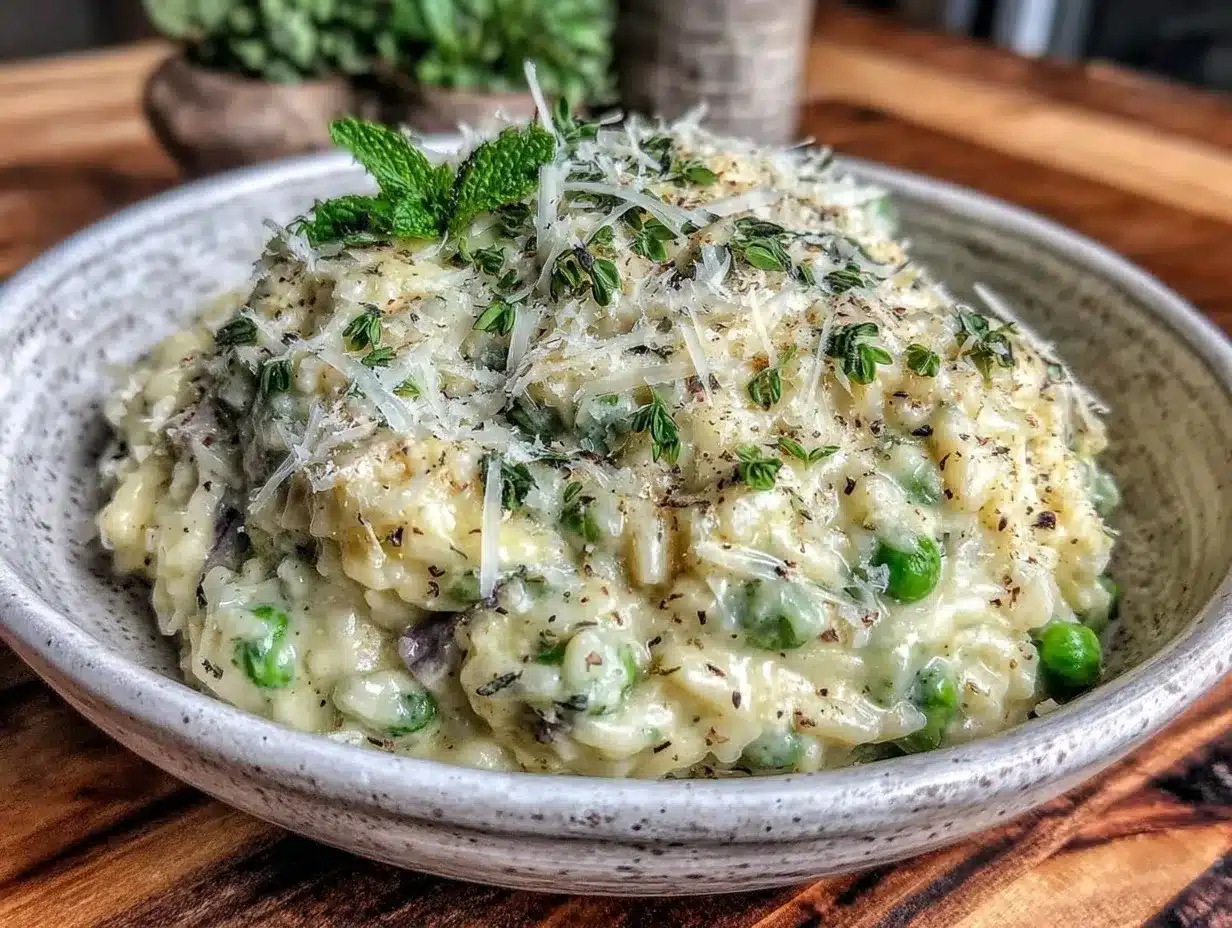
- Stir in herbs and serve: Gently fold in the chopped parsley and mint. Serve immediately, garnished with extra Parmesan and a sprinkle of fresh herbs if you like.
Pro tip: Resist the urge to rush the stirring. This slow coaxing of starch from the rice is what gives risotto its signature creaminess. If it looks too thick, add a splash of broth or water just before serving to loosen it up. The texture should be creamy, not dry or sticky.
Cooking Tips & Techniques
Risotto can sound intimidating, but honestly, it’s all about patience and technique. Here are some nuggets I’ve picked up along the way:
- Keep broth warm: Adding cold liquid slows cooking and can lead to uneven texture. Warm broth ensures gentle, steady cooking.
- Stir often but not obsessively: Stirring releases starch, which thickens the risotto, but you don’t need to stir every second. A good swirl every 30 seconds to a minute keeps things moving.
- Use quality Arborio rice: Short-grain rice varieties like Carnaroli or Vialone Nano work great too, but Arborio is widely available and forgiving for beginners.
- Don’t rush the liquid addition: Adding broth too quickly turns risotto soupy. Let each addition absorb before adding more.
- Season gradually: Salt early but adjust at the end after cheese and butter are added to avoid over-salting.
Learning to cook risotto means embracing the process. One time, I got impatient and added all the broth at once—let’s just say it turned into a sticky mess. Now, I keep a timer handy and enjoy the meditative stir. Plus, multitasking by prepping garnish or setting the table during those few minutes is a great way to stay productive.
Variations & Adaptations
This creamy spring pea risotto with fresh herbs is wonderfully versatile. Here are a few ways to make it your own:
- Vegan version: Swap butter for olive oil or vegan margarine, and replace Parmesan with nutritional yeast or a vegan cheese alternative. The result is still creamy and flavorful.
- Seasonal swaps: Use fresh asparagus or baby spinach instead of peas for a different green twist. Mushrooms sautéed with shallots make a cozy autumnal version.
- Protein boost: Stir in cooked shrimp, grilled chicken, or crispy pancetta for a heartier meal.
- Herb variations: Try basil and tarragon instead of parsley and mint for a sweeter, aromatic profile.
- Gluten-free: Risotto is naturally gluten-free, so no changes needed here.
Personally, I once added a handful of lemon thyme from my garden and it transformed this dish into a fragrant dinner party standout. Don’t be afraid to experiment with herbs and veggies you love!
Serving & Storage Suggestions
This creamy spring pea risotto with fresh herbs is best served hot and fresh—the texture is at its peak and the flavors really shine. Plate it with a sprinkle of extra Parmesan and a few whole pea shoots or herb sprigs for a pretty presentation. It pairs beautifully with a crisp white wine like Pinot Grigio or a light sparkling water with lemon.
If you have leftovers (which can happen if you’re feeding just one or two), cool the risotto quickly and store it in an airtight container in the refrigerator for up to 2 days. To reheat, add a splash of broth or water and warm gently on the stove, stirring to bring back that creamy texture. Microwave reheating works too but watch for drying out.
Flavors actually deepen a bit after resting, so sometimes I make the risotto a few hours ahead and finish with fresh herbs and cheese just before serving. That little extra step keeps it tasting vibrant.
Nutritional Information & Benefits
This creamy spring pea risotto with fresh herbs offers a balanced combination of carbs, protein, and healthy fats. One serving (about 1 cup or 250 g) contains approximately:
| Calories | 320 kcal |
|---|---|
| Protein | 9 g |
| Carbohydrates | 45 g |
| Fat | 8 g |
| Fiber | 4 g |
Peas are a great source of plant protein and fiber, plus vitamins A, C, and K, which support immune function and bone health. Fresh herbs add antioxidants and flavor without calories. Using vegetable broth keeps this recipe lighter than cream-based risottos, making it a smart choice for a satisfying yet wholesome meal.
This recipe is naturally gluten-free and can be adapted for dairy-free diets. Just watch out for the Parmesan if you have a dairy allergy or intolerance.
Conclusion
If you’re looking for a creamy spring pea risotto with fresh herbs that’s easy enough for beginners but delicious enough to impress, this recipe is a keeper. It’s one of those dishes that feels like a little celebration of springtime in every bite—bright, fresh, and comforting all at once. I love how it brings together simple ingredients into something that tastes far more sophisticated than the effort involved.
Don’t hesitate to make it your own by swapping herbs, adding proteins, or turning it vegan. I’d love to hear how you customize this recipe, so please leave a comment or share your tweaks! It’s a joy to pass along recipes that feel like a warm kitchen hug, and this one certainly fits the bill. Happy cooking!
Frequently Asked Questions about Creamy Spring Pea Risotto with Fresh Herbs
Can I use frozen peas instead of fresh peas?
Absolutely! Frozen peas work wonderfully and are a great off-season option. Just add them a bit earlier during cooking to ensure they’re heated through.
What if I don’t have white wine?
No worries—just skip the wine and start adding warm broth after toasting the rice. The risotto will still be delicious.
How do I know when the risotto is done?
The rice should be tender but still have a slight bite (al dente). The dish should look creamy, not dry or soupy.
Can I make this risotto ahead of time?
Risotto is best fresh, but you can prepare it a few hours ahead. Store refrigerated and reheat gently with a splash of broth, adding fresh herbs and cheese just before serving.
What can I substitute for Parmesan cheese?
For dairy-free, try nutritional yeast or a plant-based cheese alternative. For a different flavor, some like Pecorino Romano or Grana Padano.
Pin This Recipe!
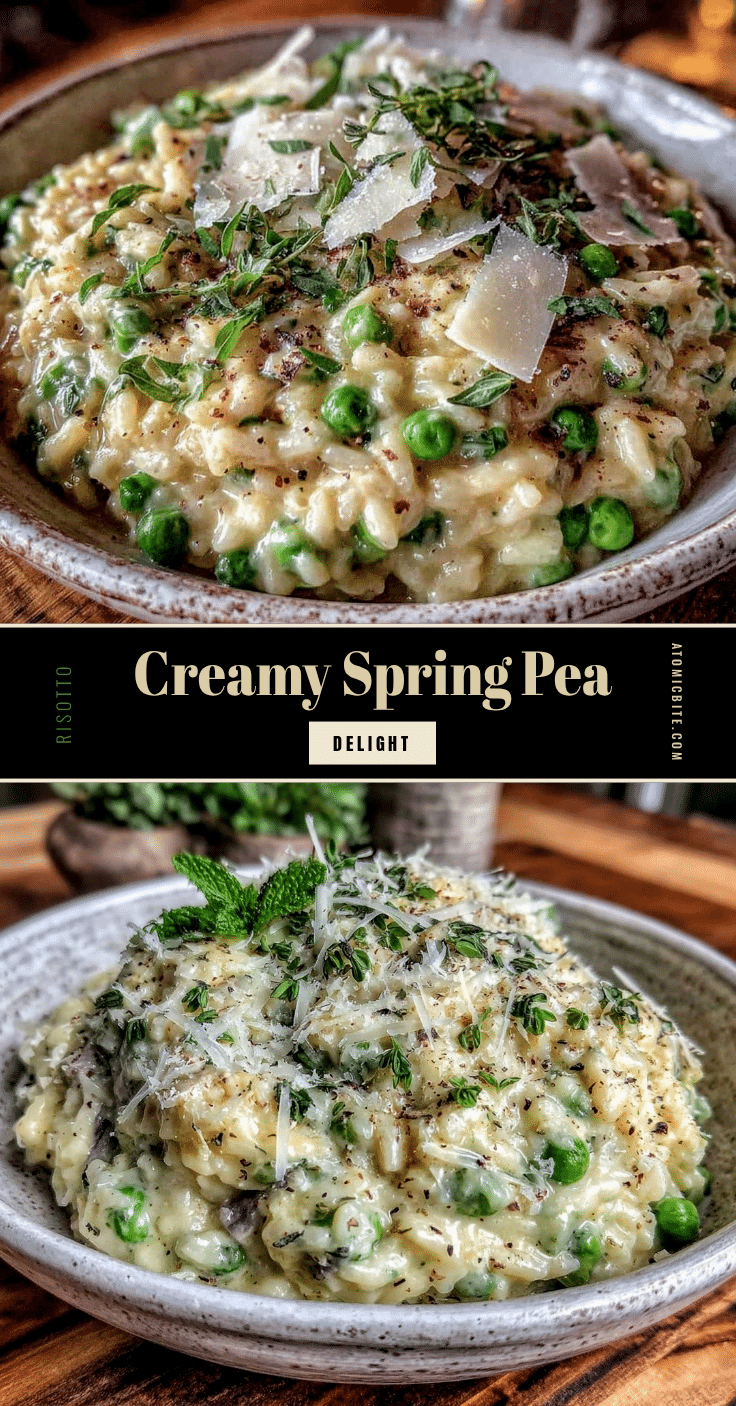
Creamy Spring Pea Risotto with Fresh Herbs

A creamy and comforting risotto featuring tender spring peas and fresh herbs, perfect for springtime or any cozy meal. Easy enough for beginners and versatile for various dietary preferences.
- Prep Time: 10 minutes
- Cook Time: 30 minutes
- Total Time: 40 minutes
- Yield: 4 servings 1x
- Category: Main Course
- Cuisine: Italian
Ingredients
- 1 ½ cups (300 g) Arborio rice
- 1 ½ cups fresh or frozen spring peas (about 225 g)
- 5 cups (1.2 liters) vegetable broth, warmed
- ½ cup (120 ml) dry white wine (optional)
- 1 small shallot, finely chopped
- 2 cloves garlic, minced
- 3 tablespoons (45 g) unsalted butter, divided
- ½ cup (50 g) grated Parmesan cheese
- 2 tablespoons chopped fresh parsley
- 1 tablespoon chopped fresh mint
- 1 tablespoon olive oil
- Salt and freshly ground black pepper, to taste
- Lemon zest from 1 lemon (optional)
Instructions
- Warm the vegetable broth in a medium saucepan over low heat and keep it warm.
- In a large heavy-bottomed skillet, heat olive oil and 1 tablespoon butter over medium heat. Add the chopped shallot and sauté for about 3 minutes until softened and translucent, but not browned. Add minced garlic and cook for another 30 seconds until fragrant.
- Stir in Arborio rice, coating each grain with the butter and oil mixture. Toast the rice for about 2 minutes, stirring constantly, until edges turn translucent and it smells nutty.
- Pour in dry white wine (if using), stirring continuously until mostly absorbed, about 2-3 minutes. If skipping wine, start adding warm broth now.
- Add warm vegetable broth ½ cup at a time, stirring gently but continuously until most liquid is absorbed before adding more. Continue this process for about 25-30 minutes until rice is creamy and tender but still al dente. If broth runs out before rice is done, add hot water a little at a time.
- About 5 minutes before the rice is finished, stir in the spring peas to keep them bright green and tender.
- Remove pan from heat and stir in remaining 2 tablespoons butter and grated Parmesan cheese. Season with salt and freshly ground black pepper to taste. Add lemon zest for a fresh zing.
- Fold in chopped parsley and mint gently. Serve immediately, garnished with extra Parmesan and fresh herbs if desired.
Notes
Keep the broth warm to ensure even cooking and creamy texture. Stir gently but regularly to coax out starch without overworking the rice. If risotto becomes too thick, add a splash of broth or water before serving. For dairy-free, substitute butter with vegan margarine and Parmesan with nutritional yeast or vegan cheese.
Nutrition
- Serving Size: About 1 cup (250 g)
- Calories: 320
- Sugar: 5
- Sodium: 400
- Fat: 8
- Saturated Fat: 5
- Carbohydrates: 45
- Fiber: 4
- Protein: 9
Keywords: risotto, spring peas, fresh herbs, creamy risotto, easy risotto recipe, vegetarian, gluten-free, comfort food