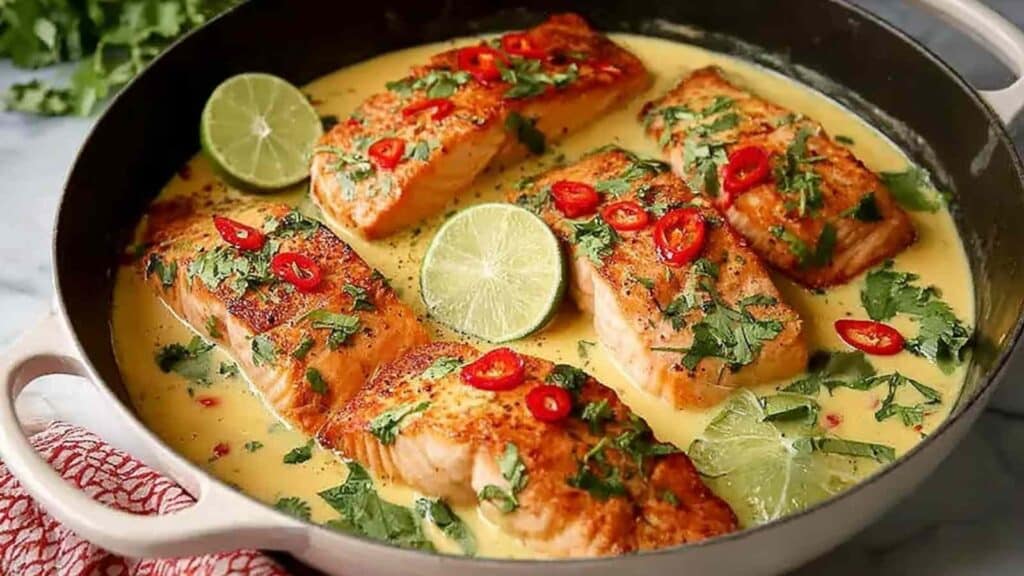
The first time I made this fresh poached salmon in creamy coconut lime sauce, I was honestly skeptical. I’d picked up a gorgeous salmon fillet on a whim, but didn’t have much else planned for dinner. I remember staring at my fridge, the clock creeping towards dinnertime, and a vague craving for something light yet comforting. I figured, why not try poaching the salmon gently and whip up a quick sauce with coconut milk and lime I had on hand? It was a total experiment born out of a busy weeknight scramble — no fancy ingredients, no fuss.
As the kitchen filled with the bright scents of lime zest and creamy coconut, I realized this was one of those rare recipes that just clicks. The salmon stayed tender and silky, perfectly infused with the velvety sauce. And that vibrant tang from the lime? It woke up the whole dish, making each bite feel fresh but indulgent at the same time. Honestly, it quickly became a go-to when I wanted something that felt special but didn’t require a ton of effort. It’s funny how sometimes the best dishes come from those spontaneous, “what do I have?” moments.
What really sold me was how this recipe managed to be both simple and satisfying — no drowning in heavy cream, just that gentle coconut creaminess balanced by a hint of citrus. Over time, I tweaked it here and there, but the core stayed the same. Now, when I make this salmon, it feels like a quiet little celebration of good ingredients and easy technique. I love how it pairs so well with a side of fluffy rice or even a crisp salad, making it perfect for a relaxed dinner or an unplanned guest.
And if you’re anything like me, juggling busy days and craving something nourishing yet quick, this recipe just might become your new favorite. It’s the kind of dish that feels like it was made just for those evenings when you want to reset, breathe, and enjoy honest-to-goodness flavors without stress.
Why You’ll Love This Recipe
This fresh poached salmon in creamy coconut lime sauce isn’t just another fish dinner — it’s a little slice of comfort and freshness rolled into one. I’ve tested this recipe multiple times, making sure it’s reliable and easy enough for any day of the week, and honestly, it’s always a hit.
- Quick & Easy: Ready in under 30 minutes, making it ideal for a busy weeknight or last-minute dinner plans.
- Simple Ingredients: Uses pantry staples like coconut milk and lime juice, plus fresh salmon — no exotic spices or complicated prep.
- Perfect for Dinner Parties: The creamy coconut lime sauce adds a touch of elegance, making it great for impressing guests without the fuss.
- Crowd-Pleaser: The mild, flaky salmon with the tangy, creamy sauce wins over both seafood lovers and those new to fish dishes.
- Unbelievably Delicious: The silky texture of the poached salmon combined with the bright, tropical sauce is seriously next-level comfort food.
What sets this recipe apart? It’s all about the poaching method — gently cooking the salmon in a lightly flavored broth keeps it moist and tender, never dry. Plus, blending the coconut milk with fresh lime juice and zest gives the sauce a perfect balance of creaminess and zing. It’s not overly rich or heavy, which means you get that indulgence without feeling weighed down.
Honestly, this recipe makes me close my eyes and savor every bite — that’s the kind of dish it is. Whether you’re looking to turn a simple meal into something memorable or want a fresh alternative to heavy cream sauces, this one fits the bill. Plus, it pairs beautifully with easy side dishes like steamed jasmine rice or the crispy baked turkey sliders I love for casual gatherings.
What Ingredients You Will Need
This recipe uses simple, wholesome ingredients to bring together bold flavor and a satisfying texture without any fuss. Most of these are pantry staples or fresh basics you likely have on hand.
- Salmon fillets, skin-on or skinless, about 6 ounces (170 g) each — fresh is best for that tender texture
- Coconut milk, full-fat (about 1 cup or 240 ml) — this gives the sauce its creamy richness; I prefer Thai Kitchen brand for consistency
- Fresh lime juice (from 1-2 limes) — adds brightness and balances the creaminess
- Lime zest (1 teaspoon) — for an added punch of citrus aroma
- Garlic cloves, minced (2 cloves) — brings subtle depth to the sauce
- Ginger, freshly grated (1 teaspoon) — a warm, spicy note that pairs beautifully with the coconut
- Low-sodium chicken or vegetable broth (1 cup or 240 ml) — base for poaching liquid; can substitute water if needed
- Olive oil (1 tablespoon) — for sautéing garlic and ginger
- Salt and pepper, to taste — seasoning is key to bring everything together
- Fresh cilantro or basil, chopped (optional, for garnish) — adds freshness and color
If you want to swap things up, you can use almond milk mixed with a bit of coconut extract instead of coconut milk for a lighter version. For a dairy-free and gluten-free option, this recipe already fits the bill, but double-check your broth to be sure.
In the summer, tossing in some fresh cherry tomatoes or baby spinach at the end can add color and an extra burst of flavor. And if you’re curious about a little heat, a pinch of red pepper flakes stirred into the sauce wakes things up without overwhelming the delicate salmon.
Equipment Needed
- Medium saucepan or skillet with lid: For poaching the salmon gently in the broth and coconut milk mixture. A pan with a lid helps keep the moisture in and cooks the salmon evenly.
- Fine grater or microplane: To zest the lime — zesting fresh is a game changer for flavor.
- Sharp knife: For slicing the salmon and chopping garlic, ginger, and herbs.
- Measuring cups and spoons: For precise measurements of liquids and spices.
- Wooden spoon or silicone spatula: Useful for stirring the sauce without scratching your cookware.
If you don’t have a microplane for zesting, a regular fine grater works just fine. I once used the edge of a vegetable peeler very carefully to get thin strips of zest when I was in a pinch. Also, a fish spatula helps if you want to gently transfer the cooked salmon without breaking it.
Preparation Method
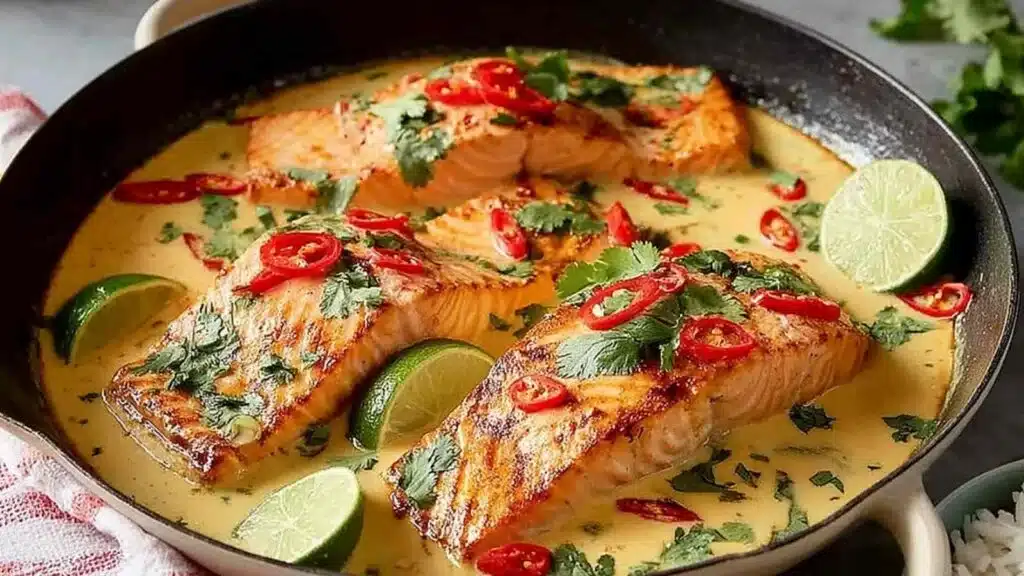
- Prepare the poaching liquid: In your medium saucepan, heat 1 tablespoon of olive oil over medium heat. Add the minced garlic and grated ginger, sautéing for about 1 minute until fragrant but not browned.
- Add liquids: Pour in 1 cup (240 ml) of low-sodium chicken or vegetable broth and 1 cup (240 ml) of full-fat coconut milk. Stir to combine and bring the mixture to a gentle simmer, about 3-4 minutes. Watch closely — you want it to bubble softly, not boil vigorously.
- Season the broth: Stir in the lime zest (1 teaspoon), fresh lime juice from 1-2 limes (about 2 tablespoons), and a pinch of salt and pepper. Taste the liquid — it should be creamy, tangy, and balanced. Adjust seasoning if needed.
- Poach the salmon: Carefully add the salmon fillets skin-side down (if using skin-on) into the simmering liquid. Cover the pan with a lid and poach gently for 8-10 minutes, depending on thickness. The salmon should turn opaque and flake easily with a fork.
- Remove and rest: Using a slotted spatula, gently lift the salmon from the poaching liquid and set it on warmed plates or a serving dish. Tent loosely with foil to keep warm.
- Reduce the sauce: Turn the heat back up to medium-high and let the poaching liquid simmer uncovered for 3-5 minutes until it thickens slightly to a creamy sauce consistency. Stir occasionally to prevent sticking.
- Final seasoning and garnish: Taste the sauce and adjust salt, pepper, or lime juice if it needs a bit more zing. Pour the sauce over the salmon fillets and garnish with freshly chopped cilantro or basil if desired.
- Serve immediately: Pair with steamed jasmine rice or a crisp side salad for a complete meal.
One tip I learned is to not rush the poaching process — gentle heat keeps the salmon moist and silky. If the liquid boils too hard, the salmon can turn tough. Also, letting the sauce reduce uncovered intensifies the flavors and thickens it up nicely without adding extra fats.
Cooking Tips & Techniques
Poaching salmon can feel intimidating, but it’s honestly one of the easiest and most forgiving methods. Here are some tips I’ve picked up after a few kitchen misadventures:
- Keep the heat low: The key to tender salmon is gentle poaching — simmer, don’t boil. If your broth bubbles too much, your fish might get chewy.
- Use fresh ingredients: Fresh lime juice and zest make a huge difference in the brightness of the sauce. Bottled lime juice just doesn’t deliver the same zing.
- Don’t overpoach: Salmon cooks quickly — usually 8-10 minutes depending on thickness. Check it early by flaking the thickest part with a fork.
- Reduce the sauce on medium heat: After removing the salmon, don’t rush the sauce reduction. A slow simmer thickens it without curdling the coconut milk.
- Multitask smartly: While the salmon poaches, prep your sides or chop fresh herbs to save time.
- Keep skin on if possible: It helps hold the fillet together during poaching and adds flavor if you decide to crisp it up later.
I once accidentally poached my salmon too long — it turned crumbly and dry. Since then, I learned to set timers and rely on visual cues like opacity and easy flaking. Also, stirring the sauce gently while reducing prevents it from sticking or separating, which can happen if temperature spikes.
Variations & Adaptations
This fresh poached salmon recipe is a great base that you can tweak depending on your mood or dietary needs.
- Spicy Kick: Add a pinch of red pepper flakes or a dash of sriracha to the sauce for heat that complements the creamy lime flavor.
- Herb Twist: Swap cilantro for fresh dill or basil for a different herbal note that pairs beautifully with salmon.
- Low-Carb Option: Serve the salmon and sauce over cauliflower rice or steamed greens instead of jasmine rice for a lighter meal.
- Vegetarian Adaptation: Replace salmon with firm tofu or portobello mushrooms — poach gently in the same coconut lime sauce for a plant-based version.
- Seasonal Veggies: Stir in snap peas, baby spinach, or thinly sliced bell peppers near the end of cooking for added crunch and color.
Personally, I tried stirring in some mango chunks last summer, which added a sweet tropical contrast that was surprisingly delightful. For a richer sauce, a spoonful of almond butter blended in at the end adds creaminess and depth.
Serving & Storage Suggestions
This salmon is best served immediately while the sauce is warm and the fish is tender. I like to plate it with fluffy jasmine rice or a light quinoa salad to soak up the creamy coconut lime sauce. A crisp cucumber salad or steamed green beans make lovely, fresh sides that balance the richness.
If you have leftovers, store the salmon and sauce separately in airtight containers in the refrigerator. The salmon holds well for up to 2 days, and the sauce can be reheated gently on the stove or microwave — just watch the heat so the coconut milk doesn’t split.
When reheating, warm the sauce slowly and add a splash of water or broth if it thickened too much. The flavors actually deepen overnight, so sometimes the next-day lunch tastes even better. Just be sure to reheat the salmon gently to keep it from drying out.
For a quick meal, spooning the coconut lime sauce over cooked noodles or roasted vegetables is a fantastic way to use leftovers. If you’re looking for a cozy dinner idea, this salmon pairs beautifully with the creamy one pan butter parmesan pasta from my other recipes.
Nutritional Information & Benefits
This fresh poached salmon recipe offers a healthy balance of protein, healthy fats, and vitamins. A typical serving (one 6-ounce fillet with sauce) provides approximately:
| Nutrient | Amount |
|---|---|
| Calories | 350-400 kcal |
| Protein | 35 grams |
| Fat | 22 grams (mostly healthy fats) |
| Carbohydrates | 5 grams |
| Fiber | 1 gram |
Salmon is rich in omega-3 fatty acids, which support heart and brain health. Coconut milk adds medium-chain triglycerides (MCTs), which some find helpful for energy metabolism. Plus, fresh lime juice provides vitamin C and antioxidants.
This recipe is naturally gluten-free and dairy-free, making it a good choice for many dietary needs. Just be sure to check your broth if you have allergies or sensitivities.
From a wellness perspective, I love this dish because it combines nourishing ingredients without feeling heavy. It’s satisfying, wholesome, and kind to digestion — great for those days when you want to eat clean but still enjoy rich flavors.
Conclusion
Fresh poached salmon in creamy coconut lime sauce is a dish that balances simplicity with impressive flavor. It’s easy enough for a weeknight but special enough to serve guests without stress. I love how the poaching technique keeps the salmon tender and flaky, while the coconut lime sauce adds a bright, tropical creaminess that feels just right.
Feel free to tweak the herbs, add a little spice, or swap out sides to make it your own. Cooking is all about making recipes fit your life and taste buds, and this one’s flexible enough to handle that with grace.
If you’ve enjoyed dishes like the crispy baked turkey sliders or the sticky garlic chicken noodles, you’ll find this salmon recipe just as comforting and reliable.
Give it a try, and I’d love to hear how you make it yours. Cooking should feel joyful and approachable, and this recipe fits that perfectly — a quiet little winner that’s easy to love.
Frequently Asked Questions
Can I use frozen salmon for this recipe?
Yes, but thaw it completely before poaching to ensure even cooking. Pat dry to remove excess moisture for better sauce adherence.
Is it necessary to use full-fat coconut milk?
Full-fat coconut milk gives the best creamy texture and richness, but you can use light coconut milk for a lighter sauce. Just expect a thinner consistency.
How do I know when the salmon is done poaching?
The salmon should be opaque and flake easily with a fork. Typically, 8-10 minutes at a gentle simmer works for average fillet thickness.
Can I prepare the sauce ahead of time?
You can make the coconut lime sauce in advance and gently reheat it before adding the freshly poached salmon. This saves time on busy days.
What can I serve with this salmon?
Steamed jasmine or basmati rice, quinoa, or a crisp green salad all pair beautifully. Roasted vegetables also complement the creamy sauce well.
Pin This Recipe!
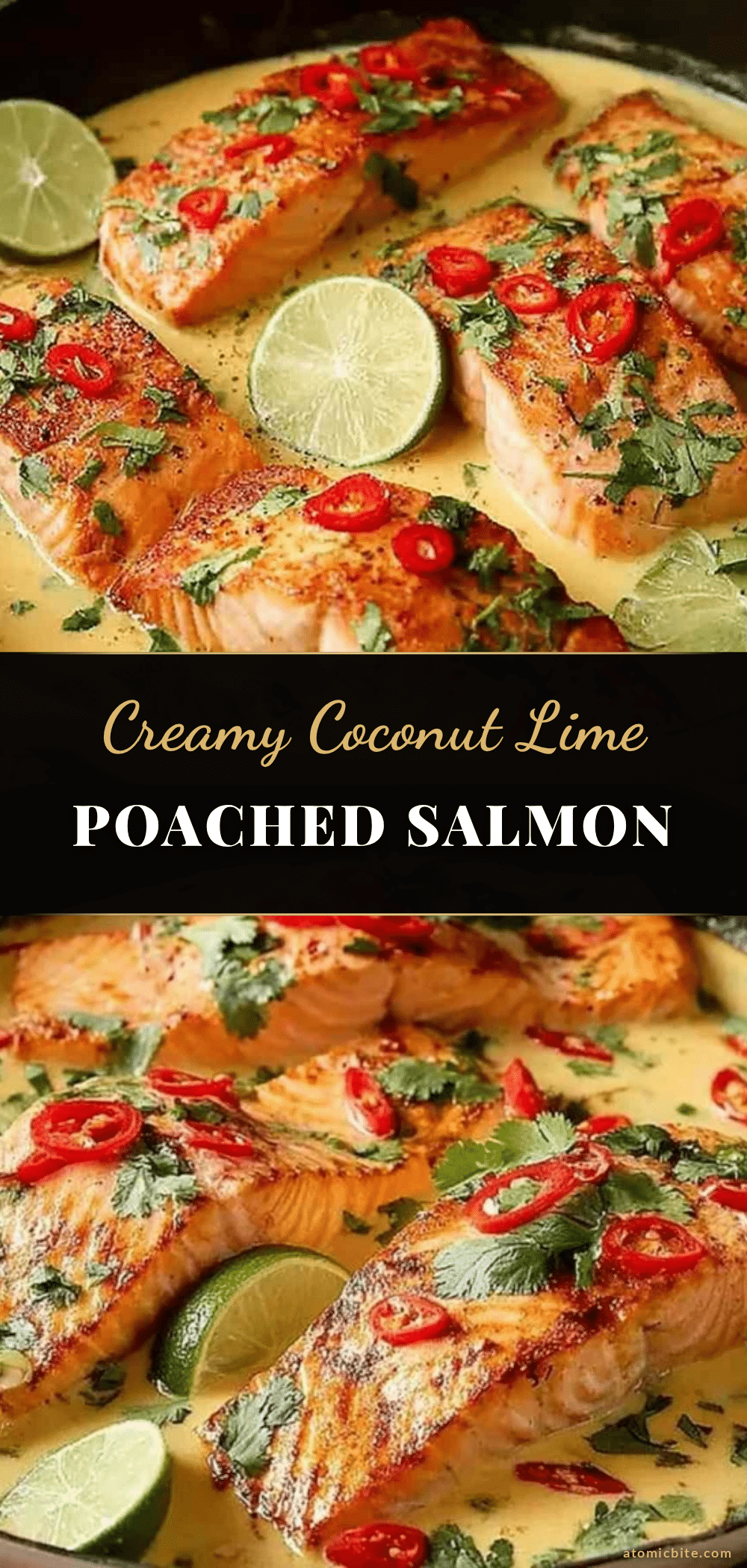
Fresh Poached Salmon Recipe Easy Creamy Coconut Lime Sauce

Tender poached salmon fillets served in a creamy coconut lime sauce that is light, fresh, and perfect for quick weeknight dinners or elegant gatherings.
- Prep Time: 10 minutes
- Cook Time: 15 minutes
- Total Time: 25 minutes
- Yield: 2 servings 1x
- Category: Main Course
- Cuisine: Fusion
Ingredients
- 2 salmon fillets, about 6 ounces (170 g) each, skin-on or skinless
- 1 cup (240 ml) full-fat coconut milk
- Juice of 1–2 fresh limes (about 2 tablespoons)
- 1 teaspoon lime zest
- 2 garlic cloves, minced
- 1 teaspoon freshly grated ginger
- 1 cup (240 ml) low-sodium chicken or vegetable broth (can substitute water)
- 1 tablespoon olive oil
- Salt and pepper, to taste
- Fresh cilantro or basil, chopped (optional, for garnish)
Instructions
- Heat 1 tablespoon olive oil in a medium saucepan over medium heat. Add minced garlic and grated ginger and sauté for about 1 minute until fragrant but not browned.
- Pour in 1 cup chicken or vegetable broth and 1 cup full-fat coconut milk. Stir to combine and bring to a gentle simmer, about 3-4 minutes. Avoid boiling vigorously.
- Stir in lime zest, fresh lime juice, and a pinch of salt and pepper. Taste and adjust seasoning as needed.
- Carefully add salmon fillets skin-side down (if using skin-on) into the simmering liquid. Cover with a lid and poach gently for 8-10 minutes until salmon is opaque and flakes easily with a fork.
- Using a slotted spatula, gently lift salmon from the poaching liquid and place on warmed plates. Tent loosely with foil to keep warm.
- Increase heat to medium-high and simmer the poaching liquid uncovered for 3-5 minutes until it thickens slightly to a creamy sauce consistency, stirring occasionally.
- Adjust sauce seasoning with salt, pepper, or lime juice if needed. Pour sauce over salmon fillets and garnish with chopped cilantro or basil if desired.
- Serve immediately with steamed jasmine rice, quinoa, or a crisp salad.
Notes
Keep the heat low to gently poach the salmon to maintain tenderness. Avoid boiling the poaching liquid to prevent tough fish. Reduce the sauce slowly to thicken without curdling the coconut milk. Fresh lime zest and juice are key for bright flavor. Use skin-on salmon to help keep fillets intact during poaching. Leftovers can be stored separately and reheated gently to preserve texture.
Nutrition
- Serving Size: 1 salmon fillet with
- Calories: 375
- Sugar: 2
- Sodium: 150
- Fat: 22
- Saturated Fat: 18
- Carbohydrates: 5
- Fiber: 1
- Protein: 35
Keywords: poached salmon, coconut lime sauce, easy salmon recipe, quick dinner, healthy seafood, creamy sauce, weeknight meal, gluten-free, dairy-free